What is Zapier?
No-code automation platform, founded in 2011, now carrying a product surface area that's quietly become hard to summarize. The core mechanic hasn't changed: connect two apps, set a trigger, set an action, let it run. What's changed is everything built on top of that. Native AI agents, chatbots, MCP connectivity, Tables for structured data storage, Forms, a canvas builder. It's a lot.

The basic unit is still the Zap, a workflow that moves data between apps when something happens. Simple framing. It held up fine for years. But Zapier has spent the last couple of years adding enough layers that "no-code connector" genuinely undersells what the product has become, at least on paper.
We cross-referenced their current docs with what users were describing on Reddit and in the official community forum. The honest picture: most people are running a fraction of what's available. They automate one or two painful things and stop there. Zapier has built well past where most of its users live.
That's not a problem exactly. But it shapes how you should think about paying for it.
Zapier Features: Workflows, AI Agents & Automation Capabilities

The visual builder is the most-used feature, and it holds up. Conditional paths, logic branches, and AI processing steps are all accessible without writing code. For anyone who wants to go deeper, a Code step supports JavaScript or Python on paid plans. Not every competitor offers that at the same tier. Fair.
On the AI side, there are three distinct things shipping right now. Zapier Agents handles autonomous task execution, separate from the AI chatbot layer you can deploy inside workflows, and separate again from Zapier Copilot, which builds Zaps from plain-language descriptions. Those are genuinely different tools. Easy to conflate them from the outside.
The data layer has grown too. Tables gives you structured storage inside Zapier itself, so you're not always routing data out to a spreadsheet. Forms plug directly into workflows. These aren't afterthoughts anymore, they're load-bearing parts of how the platform holds together.
Human-in-the-loop steps are supported. That matters for agent workflows where someone needs to approve an action before it proceeds. Several competitors handle this poorly. Zapier does it, according to their docs and what we saw described in forum threads.
Error handling is real, not cosmetic. Custom notifications, Zap version control, retry logic settings. Honestly, that's more than some nominally enterprise-grade tools bother shipping at the base level.
Zapier Automation Power: How Complex Can Your Workflows Get?
Multi-step Zaps with conditional logic sit behind the Professional plan. The Free tier is capped at two-step Zaps, and that cap is real. Anyone who's tried to automate something genuinely non-trivial on the free plan has run into it fast.
Trigger types are wide. Webhooks, scheduled runs, email triggers, form submissions, and HTTP polling all make the list. Most business workflows have a trigger that fits somewhere in there. That breadth is one of Zapier's cleaner wins over narrower competitors.
At the higher tiers, SAML SSO, shared app connections, and shared Zap workflows with folders land at the Team level. The Enterprise tier adds audit trails, log streaming, SCIM provisioning, and what the pricing page calls observability. Those aren't marketing words on a feature checklist. Teams running mission-critical automation will actually need some of them.
Reddit threads from 2024 surface a consistent complaint about task counting. Each action in a multi-step Zap counts as a separate task. A four-step workflow burns four tasks per run. Users who discovered this on their bill rather than in the docs were not happy. We're not surprised. The model is functional but it's designed to scale costs upward as your workflows grow more complex.
Plan accordingly, because the pricing page makes this easy to miss.
Zapier AI Agent Capabilities: What Can It Actually Do Autonomously?
Zapier Agents can operate without a human triggering each step. They complete multi-step tasks autonomously and connect into existing Zap workflows. That last part is the differentiator. Most agent tools are siloed. Zapier's agents draw from the same app library the rest of the platform runs on.
The MCP layer is worth understanding separately. It's an action layer that lets external AI models and agent frameworks talk to Zapier's integrations without breaking when app connections shift. Practically, if you're running a custom AI setup outside Zapier, you can still route actions through Zapier's connectors. We're skeptical of how clean that is in practice, given older threads complaining about API reliability, but the architecture is genuinely interesting.
The AI model layer isn't locked to one provider. OpenAI and Anthropic are the primary providers, with Google Gemini and others accessible through integrations. You pick the model at the workflow or agent level. That flexibility is real, not theoretical.
Chatbot functionality is included too. Deploy an AI chatbot inside a Zap, routed through whatever provider you've connected. G2 reviewers in operations roles flagged this as useful for internal support deflection. Fair. It's not a full chatbot platform, but it handles basic routing.
Community forum threads from late 2024 had open questions about agent failure behavior and retry logic. Answers weren't always clear. We'd treat the agent features as capable but still developing.
Is Zapier Easy to Set Up Without Code?
For simple automations, setup is fast. Pick a trigger app, pick an action app, map fields, turn it on. Zapier Copilot can build the Zap from a plain-English description. That works better than we expected based on mid-2024 user feedback.
The learning curve bends at multi-step workflows with conditional logic. That's where non-technical users start reaching for the docs or the forum. The forum is active, which helps. The help content sometimes lags behind new feature releases.
Webhooks are locked to Professional and above. So anyone trying to do real work with external systems on the Free plan will hit that wall.
Capterra feedback showed a consistent pattern. Marketing ops users called setup intuitive. Developers called it slow compared to writing the same thing in code. Both are right. The setup experience is built for people who don't want to write code, not for people who are indifferent about it.
The template library came up repeatedly. Pre-built Zaps for Slack routing, HubSpot lead handling, and a few others. They work as starting points. Most users modified them within the first session. That's the right way to use them, not as finished solutions.
Zapier Pricing: Is It Worth It vs Zapier or Make?

The Free plan gives you 100 tasks per month, two-step Zaps, Tables, Forms, and Zapier Copilot. That's a real free plan. Not a trial with a countdown.
Professional starts at $29.99 per month on the monthly billing cycle. You get multi-step Zaps, conditional logic, webhooks, unlimited premium app access, and email plus live chat support. That's the minimum viable tier for anything business-critical.
Team starts at $103.50 per month, and it's where shared Zap workflows with folders, shared app connections, SAML SSO, and priority support land. Most small teams in the reviews we read were on Professional or Team.
Enterprise is custom pricing, contact sales, no public floor number. We'd rather see at least a ballpark. That's a complaint you could make about half the industry, so.
On refunds: Zapier publicly states that purchases are generally non-refundable, subject to limited exceptions in its legal terms. That covers monthly plans, annual plans, renewals, upgrades, and add-ons. Worth knowing before you commit to an annual billing cycle without testing the tier first.
The task-counting model is the thing to model out before picking a plan. Complex multi-step workflows burn tasks faster than the comparison table implies. This came up in enough reviews that it's not a fringe concern.
Zapier vs Make (Integromat): Which Automation Platform Wins?
Make is the most common alternative in the conversations we followed. The difference is real.
Make's visual builder rewards technical users who want a detailed picture of complex branchy workflows. Routing, iterators, error paths. Our coverage of Make goes into that, but the short version is that Make rewards effort. Zapier rewards speed.
Zapier's advantage is breadth and polish. The integration library is larger. Setup for a non-technical user is faster. The AI agent layer is more developed right now. Make doesn't have a native equivalent to Zapier Agents at comparable maturity.
On pure task economics, Make generally costs less per operation at volume. That's why you see Make recommended in cost-conscious Reddit threads and Zapier in threads about ease and reliability. Both are accurate reads.
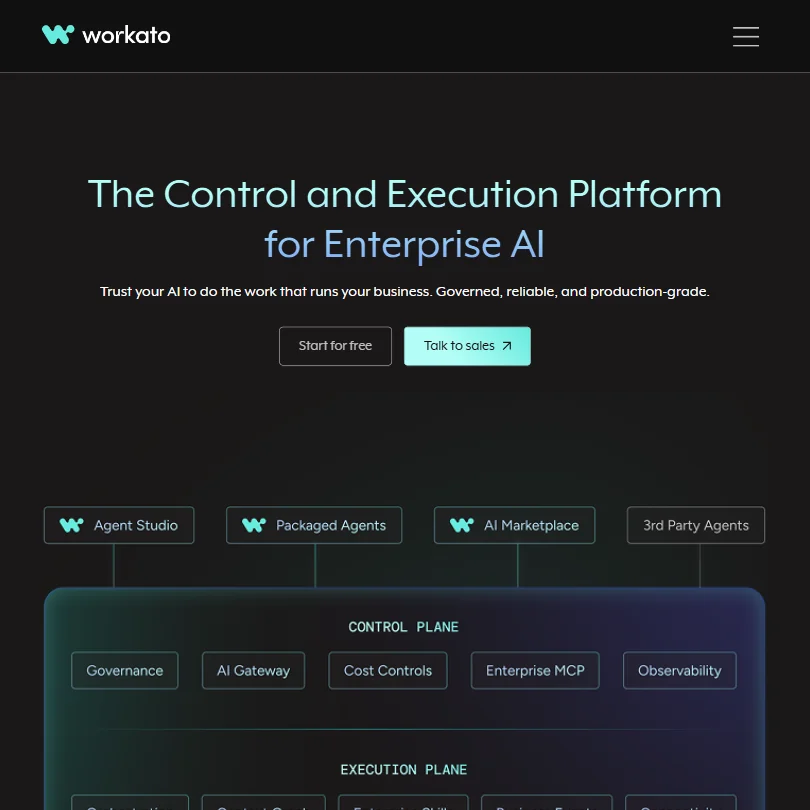
Technical teams with resources to maintain workflows should look at Make or n8n seriously. n8n is self-hostable, which matters when data residency is in play. Workato and Tray.io are a separate conversation, competing at the enterprise end where procurement cycles are part of the picture.
Who Should Use Zapier? (And Who Shouldn't)
Business teams with a mix of technical and non-technical members. One person builds the Zap, everyone else benefits. The shared workspace features on Team support exactly that dynamic.
SMBs handling sales pipeline and lead routing. The Salesforce and HubSpot integrations are well-maintained. G2 reviewers in sales operations flagged those two consistently as reliable. That tracks.
Non-technical founders building their first automations. Copilot and the template library exist for this group specifically.
Developers who want to write and version-control workflows in code. They'll find Zapier frustrating at the edges. Also not a great fit: high-volume automation at tight budgets, where the task-counting model will cost you.
Teams with hard data residency requirements should read the Enterprise terms carefully before committing. The lower plans don't offer the control that self-hosted tools like n8n provide.
Zapier Review Verdict
Thirteen years of integrations, a genuinely broad AI layer, and a product that's made real decisions about scope. That combination is hard to find in this category.
The complaints are real too. The task-counting model gets expensive as workflow complexity grows, and the step from Professional at $29.99 to Team at $103.50 is a meaningful jump if your needs grow faster than your budget. The non-refundable purchase policy deserves attention before you buy an annual plan. Agent features are capable, not mature.
Compare it to the category though, and the honest answer is that Zapier has more working in its favor than against. The integration library is unmatched. The AI agent layer is ahead of most competitors right now. The free plan is usable, not a trap.
We'd recommend it without much hesitation for business teams who want automation that works without a developer on standby. Go in with a real estimate of how many tasks your workflows will actually burn.
How Zapier compares
Zapier scores 8.0 out of 10 among the workflow automation tools we rate. These three do the same job and are the closest to it, compared on what each vendor publishes.
Make
Zapier connects to 10,076 apps, well beyond Make's 3,000, and adds email and live chat support that Make does not offer beyond its community forum. Zapier's Professional plan costs $29.99 a month against Make's Core plan at $10.59. Make hosts data in the US and EU; Zapier hosts only in the US. Both give you branching, webhook triggers and a visual builder.
Pick Make if you want a lower price and eu data hosting.
Pick Zapier if you want more app connectors and direct support channels.
n8n
Zapier connects to 10,076 apps and adds live chat support alongside email and community; n8n's pricing page names only a community forum. n8n counters with a self-hosted edition and agents that work together across nested AI Agent Tool nodes, neither of which is confirmed on Zapier's site. Zapier's Professional plan costs $29.99 a month against n8n's Starter plan at $25.92. Both support webhook triggers and conditional branching on their paid plans.
Pick n8n if you want self-hosting and agents that work together.
Pick Zapier if you want more support channels and app connectors.
Workato
Workato supports HIPAA compliance and gives you separate development, test and production environments. It also lets agents work together in what it calls Agent Orchestration, coordinating multi-agent workflows for tasks like accounts payable and churn prevention. Workato connects to 14,000 apps against Zapier's 10,076. We could not find Workato's monthly price to compare against Zapier's Professional plan at $29.99 a month.
Pick Workato if you need hipaa compliance and multi-agent orchestration.
Pick Zapier if you want a clear published price and wide app support.
Frequently Asked Questions
Does Zapier's free plan actually support AI features?
Yes. The Free plan includes Zapier Copilot, so you can describe a workflow in plain English and get a Zap built from it without paying anything. Tables and Forms are included too. The real constraints are the 100-task monthly limit and the two-step Zap cap. Anything genuinely complex runs into those fast.
How does Zapier handle errors when a Zap fails mid-workflow?
Custom error notification settings exist, along with advanced options for retry behavior and Zap version control. Version control means you can roll back a broken workflow without losing the previous state. What we kept seeing in community forum threads is that default error visibility is workable on base plans. The deeper logging and observability tools are Enterprise features. For most users running standard workflows, the default error emails catch problems well enough. Ops teams running mission-critical automations should ask about the Enterprise observability layer specifically before signing.
Is Zapier better than Make for most users?
For most non-technical users, yes. Setup is faster, the template library is larger, and the AI features are more developed. Make is the better call if you need complex routing logic or want lower per-operation costs at high volume. Start with Zapier if you want automation running by end of day. Revisit Make later if the task economics stop making sense for your volume.