We started pulling research on Make expecting to find a Zapier clone with a shinier interface. What we found, after going through G2 reviews, Capterra write-ups, Reddit threads, and the vendor's own documentation, is something genuinely different. This make review is the result of that digging. Make, originally launched as Integromat back in 2012 out of Prague, rebranded in 2022 and has since grown past 500,000 users. The product is not a minor player. It's become the go-to answer for anyone who's hit Zapier's ceiling and doesn't want to write full code.

The core pitch is a visual canvas where you build automation scenarios by connecting app modules with lines. Simple enough to explain. Complicated enough that it takes real time to learn well. That tension shows up in almost every review we read.
What is Make?
Make is a no-code automation platform built around a drag-and-drop visual builder. You construct scenarios, which is Make's term for automated workflows, by placing app modules onto a canvas and drawing connections between them. Each module does one thing: pulls data from somewhere, transforms it, or sends it somewhere else.
What separates Make from a lot of its peers is how it handles complexity. Routers let a single scenario branch into multiple paths. Iterators process items one by one from an array. Aggregators collect individual outputs back into a single bundle. That's the machinery that lets Make handle genuinely complicated multi-step logic without a single line of code. Most competing tools handle linear workflows well. Make handles the weird, branchy, conditional stuff too.
Founded in 2012, Prague-based, and sitting on a user base that crossed 500,000 accounts, Make is no longer a scrappy alternative. It's a category fixture. The free plan gives you 1,000 operations per month and two active scenarios. Paid plans start at $10.59 a month. That's the Core tier. Pro is $16 a month and Teams lands at $29 a month. Enterprise pricing is custom.
We kept seeing G2 reviewers describe it as "the most powerful no-code tool they'd ever used." We also kept seeing the follow-up sentence: "but it has a learning curve." Both things are true.
Make Features: Workflows, AI Agents & Automation Capabilities

The visual builder is the headline. Real-time data flow visualization means you can watch data move through your scenario module by module, which is genuinely useful when something breaks. Most automation tools show you a log after the fact. Make shows you the flow as it happens.
Beyond the canvas, the feature set is deep. Custom code modules support JavaScript and Python, so technical users aren't blocked when native tools run out. Data transformation tools are built in: text parsers, JSON and XML handlers, aggregators, iterators. You don't need a separate data manipulation layer. It's all there.
Error handling is more mature than most competitors at this price point. Break and resume directives let a failing scenario stop gracefully and restart from the point of failure rather than from the top. Rollback support exists for scenarios where partial execution would cause more damage than none. Honestly, that's more than we expected at $10.59 a month.
The execution history gives you full data inspection at each module. You can see exactly what data went in and what came out. When we cross-referenced the docs with user reviews, this was one of the features people cited most often as a reason they stayed on Make rather than switching back to something simpler.
Scheduling is flexible. Runs can be set from every minute to custom intervals. Trigger types cover webhooks, scheduled polling, instant real-time triggers, email, RSS, and manual. That's not a short list. Worth noting that the 1-minute minimum polling interval only applies on paid plans. Free plan users are limited to 15-minute intervals.
Team features land on the Teams plan at $29 a month. Below that, role-based permissions and shared scenario access aren't available. Solo users and small teams on Core or Pro are working in a single-user environment. That's a meaningful limitation for agencies or small teams who need to collaborate.
Make Automation Power: How Complex Can Your Workflows Get?
This is where Make pulls ahead of most competitors. Not slightly ahead. Clearly ahead.
The router and iterator system is what makes the difference. In a basic automation tool, your workflow goes A to B to C. In Make, you can go A, then branch to B1 and B2 based on conditions, loop through an array at B1, aggregate the results, and then route to C or D depending on what came back. All on the same canvas. All without code.
We dug through Reddit threads from 2024 and 2025 and the pattern is consistent: people who migrate to Make from Zapier don't go back. The specific complaint about Zapier that keeps surfacing is the lack of native iteration over arrays. Make handles that natively with the iterator module. For anyone processing lists of records, that matters a lot.
3,000+ integrations cover most of the stack a modern SMB or agency would need. OpenAI, Google Workspace, Slack, HubSpot, Airtable are all there. The app library isn't as large as Zapier's 9,000+ connector catalog, and that gap is real. But the depth of what Make can do with each connection tends to offset the breadth difference for users who've thought about it carefully. We're not dismissing the gap. It matters in certain scenarios. For most workflows, 3,000+ integrations is plenty.
The conditional logic layer is genuinely one of the strongest we've seen at this price point. Filters can be nested. Routers can fan out to many parallel paths. You can set up error handler branches that catch failures and route them to a separate notification flow. That's not standard. Most tools require workarounds or paid add-ons to get there.
One thing we kept seeing in Capterra reviews: people initially underestimate how much time the initial scenario setup takes. A simple two-step automation is quick. A ten-module scenario with conditional logic, iterators, and error handling takes real planning. That's not a flaw in the product. It's just the nature of building complex things. But first-time users who expect Zapier-level simplicity are sometimes caught off guard.
Make AI Agent Capabilities: What Can It Actually Do Autonomously?
Make added an AI Agent module that's designed for autonomous multi-step task execution. The agent can make decisions, call tools, and loop through steps without being explicitly told what to do at each one. That's the right architecture for an AI agent. Whether the execution lives up to the design is a harder question.
The module connects to OpenAI's GPT models via Make's existing OpenAI integration. You're not running a proprietary model here. Make handles the orchestration layer, and the model does the reasoning. That's a sensible split for a platform that isn't in the model-building business.
We're skeptical of how mature this actually is. The AI Agent module is newer than the rest of the platform, and the review trail on it is thinner. G2 reviews from late 2024 mention the agent capability mostly in passing, not as a core reason to choose Make. Most power users are still building their intelligence into the scenario logic itself rather than relying on the agent module to reason its way through decisions.
Human-in-the-loop support exists via manual triggers and approval steps. That's important for anyone building workflows where an AI decision needs a human check before it does something irreversible. The fact that it's supported natively is good. Whether users are actually configuring it correctly is another matter entirely.
The honest read on Make's AI agents is that they're a real addition to the platform, not a marketing checkbox. But they're not the reason to choose Make over purpose-built agent platforms. If autonomous AI agents are your primary use case, something like CrewAI is built for that problem specifically. Make's strength is the surrounding automation infrastructure, with agents as one capable component inside a larger workflow.
Is Make Easy to Set Up Without Code?
Relative to its power, yes. Relative to Zapier, no.
The visual canvas is genuinely intuitive for basic scenarios. Drop a trigger module, connect an action module, configure the fields. First workflow in 20 minutes for most people. That's the good news. The trouble starts when you need to do something non-trivial. Mapping data between modules requires understanding Make's internal data structure. Iterators require understanding what an iterator actually does. Routers require you to think about logic in a way that isn't obvious if you've never built conditional flows before.
G2 reviewers in operations roles consistently flag the learning curve as the main barrier. Not the design. Not the performance. The conceptual model. Make asks you to think about data the way a developer thinks about it, even if you never write a line of code. That's a real ask.
The help center is described as comprehensive in their docs, and the community forum is active. We cross-referenced that claim with Reddit discussions and it mostly holds. There are tutorials for common use cases. The community has built a decent library of pre-made scenario templates. But if you get stuck on something specific, support beyond the community forum isn't publicly documented. Free and Core users are on email and the community. That gap will frustrate new users who run into a wall.
Worth noting: Make's documentation is genuinely good. Not just "good for a no-code tool." Actually well-organized, detailed, and useful. That offsets some of the support access problem. But it doesn't replace having someone to ask when the docs don't cover your edge case.
Make Pricing: Is It Worth It vs Zapier or Make?

At face value, the pricing is very competitive. Free gives you 1,000 operations and two active scenarios per month. Core is $9 a month. Pro is $16. Teams is $29.
The catch is operations. In Make, every module execution counts as an operation. A ten-module scenario that runs 100 times a month uses 1,000 operations. That's your entire free plan. Power users will chew through the lower tiers faster than the headline prices suggest. We dug into the pricing page and the operations math isn't front and center. You have to work for it.
That's a real transparency issue. Not a scandal. But the pricing page undersells how quickly operations compound on complex scenarios, and that surprises users who sign up on the Core plan expecting it to cover their use case and then find themselves needing to upgrade within a month.
Compared to Zapier, Make is cheaper at equivalent capability levels. Zapier's free plan limits you to 100 tasks a month and single-step Zaps. Make's free plan allows multi-step scenarios. That's a meaningful difference. Zapier's paid plans also escalate in price faster once you need advanced features. For users who've outgrown Zapier's free tier, Make's $10.59 Core plan is a reasonable landing spot.
There's no publicly stated refund policy. That's a gap. Not unusual for SaaS, but worth knowing before you commit to an annual plan.
Make vs Zapier: Which Automation Platform Wins?
The honest answer is that they're solving slightly different problems.
Zapier is easier. Full stop. The setup is faster, the interface is more forgiving, and the 9,000+ app library is a real advantage for anyone who needs a specific connector. If your automations are mostly linear, two or three steps, and you want them running in 10 minutes, Zapier is the better choice.
Make wins on complexity. If your workflow has conditional branches, arrays to iterate over, or error handling requirements, Make handles that better than Zapier at every price point. The visual canvas also gives you a clearer picture of what a complicated scenario is actually doing. Debugging a Zapier Zap with multiple paths is harder than reading a Make scenario on the canvas.
The pricing gap is real. Make's $29 Teams plan covers what Zapier charges significantly more for at the multi-user level. For agencies building automations for multiple clients, that math matters.
The integration gap cuts the other way. 1,800 versus 9,000+ is a real difference when you're trying to connect a niche tool. If the tool you need isn't in Make's library, you're either building a custom integration via the REST API or switching platforms. Most mainstream tools are covered. Edge cases aren't.
That tracks with what we saw on Reddit: users who moved from Zapier to Make stayed for the power and occasionally ran back to Zapier when they needed a connector Make didn't have. Many end up running both. Not ideal, but that's the current state of the category.
Who Should Use Make? (And Who Shouldn't)
Agencies building automations for clients. That's the strongest fit we found in the research. The scenario structure is shareable, the pricing is manageable, and the complexity ceiling is high enough to handle most client requests.
SMBs running complex internal operations. Inventory management, lead routing, multi-system syncs. Make handles multi-step, conditional workflows better than simpler tools, and the price doesn't punish you for it.
Technical non-developers. People who think logically about data but don't write code. Make rewards that mindset. The JavaScript and Python modules are there if you need them. You often won't.
Absolute beginners who want their first automation running in five minutes. Zapier is probably the right starting point. Make will get there, but not in five minutes.
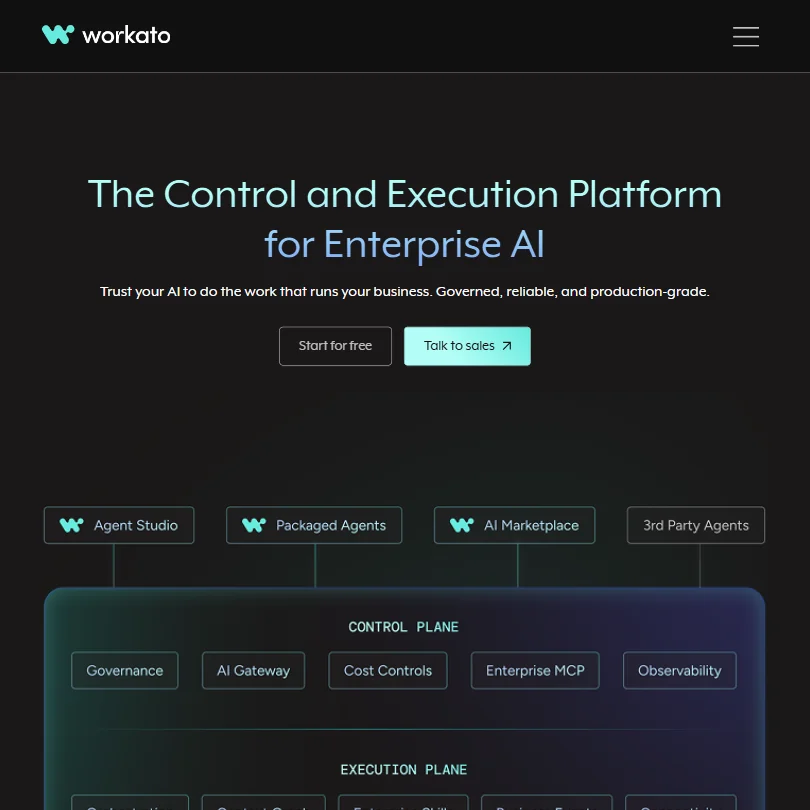
Enterprise teams with strict compliance requirements or deep integration needs at scale. The Teams plan has role-based permissions, but the enterprise tier is custom-priced and lightly documented publicly. Teams at that scale might want to look at what Workato offers before committing to Make's enterprise tier.
Make Review Verdict
Make is one of the better automation platforms available right now. Not one of the better no-code tools. One of the better automation platforms, full stop. The visual scenario builder, the iterator and router system, and the error handling architecture put it ahead of most competitors for anyone building anything non-trivial.
The pricing is fair. The free plan is genuinely useful, not a token offering. The paid tiers are well-priced relative to what you get and relative to Zapier at comparable capability levels.
Two things hold it back from being an obvious first recommendation for everyone. The learning curve is real and the operations pricing can surprise you. Neither is a fatal flaw. Both are things you should know before signing up.
The platform earns a strong recommendation for agencies, operations-focused SMBs, and anyone who's hit a wall with simpler tools. It's not the easiest place to start. It's one of the best places to land once you know what you're doing. That's a reasonable trade.
We don't have concerns about the product's direction. The AI Agent module is developing. The integration library is growing. The community is active and the documentation is solid. For a platform founded in 2012, Make has aged well and adapted to where the category is going. Hard to argue with that.
How Make compares
Make scores 7.1 out of 10 among the workflow automation tools we rate. These three do the same job and are the closest to it, compared on what each vendor publishes.
Zapier
Make's Core plan costs $10.59 a month, well under half of Zapier's Professional plan at $29.99. Zapier connects to far more apps, 10,076 against Make's 3,000, and adds email and live chat support that Make does not offer beyond its community forum. Make hosts data in both the US and EU; Zapier hosts only in the US. Both give you a visual builder, branching and webhook triggers on every plan.
Pick Zapier if you need more app connectors and direct support channels.
Pick Make if you want a lower price and a choice of data region.
n8n
n8n lets agents work together and includes tools to test and evaluate them; Make offers neither of those. n8n also has a self-hosted edition, which Make does not. Make's Core plan costs $10.59 a month against n8n's Starter plan at $25.92, and Make connects to more apps, 3,000 against n8n's 2,174. Both keep run history on their cheapest plan, though n8n keeps only 7 days against Make's 30.
Pick n8n if you want agents that work together and a self-hosted option.
Pick Make if you want a lower price and more app connectors.
Workato
Workato lets agents work together through what it calls Agent Orchestration, and gives you separate development, test and production environments; Make offers neither. Workato also supports HIPAA compliance, which Make does not. We could not find Workato's monthly price to compare against Make's Core plan at $10.59 a month. Workato connects to far more apps too, 14,000 against Make's 3,000.
Pick Workato if you need multi-agent orchestration and separate test and production environments.
Pick Make if you want a clear, affordable published price.
Frequently Asked Questions
Is Make free to use?
Yes. Make's free plan is available indefinitely and gives you 1,000 operations per month with two active scenarios. That's enough to build and test real workflows, though power users will hit the ceiling quickly. Paid plans start at $10.59 a month for the Core tier.
How does Make compare to Zapier for complex automations?
Make handles complex, multi-branch workflows better than Zapier at every comparable price point. Zapier is easier to start with and has a bigger app library, but its native handling of arrays and conditional logic is weaker. Users consistently report migrating to Make when their Zapier workflows get complicated enough to become painful.
Does Make require coding knowledge?
No, but it rewards logical thinking about data. Most scenarios are built entirely in the visual canvas without