Our research on Tidio started where it usually does: vendor docs, then G2, then Reddit. We cross-referenced roughly 1,900 G2 reviews with what the pricing page actually says, dug into Capterra, and looked at what people complain about in support forums. Not a hands-on test. What we kept seeing is a product that's genuinely useful for a specific kind of buyer, priced in a way that'll frustrate others, and built around an AI layer that performed better than we expected going in.

Founded in 2013 and headquartered in San Francisco, Tidio has had a decade to figure out what it is. They've landed on a clear answer: live chat plus AI-powered automation, aimed at small and mid-sized businesses and e-commerce brands. 300,000+ users. That's not a rounding error.
What is Tidio?
Tidio is a customer service platform combining live chat, a ticketing system, and an AI agent called Lyro into one product. The live chat part has been around since the early days. Lyro is newer, built on a proprietary model sitting on top of Claude and OpenAI's foundations, and it's the thing Tidio is betting its future on.
Available across web, iOS, Android, Windows, Mac, and Chrome. Agents aren't locked to a desk, which matters for small teams running support on the go.
The pitch to e-commerce brands is direct: let Lyro handle the repetitive stuff. Order status, return policies, common FAQs. Your human agents deal with the edge cases. That's the model. Whether it actually works that cleanly is a different question, and we'll get to it.
Tidio Features: Chatbot, Helpdesk & Support Automation Breakdown

The feature set is wider than most people assume when they first look at Tidio. Most browse the homepage and think "live chat tool." That's underselling it.
The ticketing system handles email management, automated replies, and auto-assignment. Nothing exotic there, but it works. The Flows builder lets teams set up rule-based automations without touching code, and the Starter plan specifies 100 Flows visitors reached as its limit. Lyro AI Agent handles the conversational side, trained on data you supply through FAQ uploads, a website scraper, or by importing articles directly from Zendesk.
Human handover is built in. When Lyro can't resolve something, it passes the conversation to a human agent. Tidio calls this copilot assistance, and the handoff is supposed to be clean. In our research across G2, we kept seeing agents describe the handover quality as genuinely smooth, with context carried over. Honestly, that surprised us. Handover quality is usually where these tools fumble.
The Growth plan adds automatic chat assignment and automatic reply on top of the Starter foundation. It also includes macros, live typing preview, and viewed pages history. Those are real operational differences, not cosmetic upgrades.
What's missing? Sentiment analysis isn't publicly documented. If that matters to your team, verify with sales before committing.
Tidio Bot Quality: How Well Does It Handle Real Customer Queries?
Lyro holds up better than the average SMB chatbot. That's the honest read.
Tidio claims a 67% automated resolution rate. That's the number they put front and center. We're somewhat skeptical of single-number marketing claims like this, because resolution rate depends heavily on conversation volume, query complexity, and how well the knowledge base is built. But here's what pulled us toward believing it: the pattern in G2 and Capterra reviews backs it up. E-commerce brands in particular, especially Shopify users, report meaningful deflection of repetitive tickets.
Lyro responds in the brand's voice, not generic bot-speak. That's the consistent praise. Users in customer-facing marketing and e-commerce roles on G2 note that Lyro doesn't sound like a FAQ page. It sounds like someone who read the FAQ page and can have a conversation about it. Real difference.
Where it falls down: edge cases. Anything outside the training data gets passed to humans, which is correct behavior. But a few Reddit threads from 2024 surface complaints that Lyro sometimes hallucinates slightly when the knowledge base has gaps. Not catastrophically, but it's there. Train it well and keep the knowledge base current, or you'll pay for it in CSAT.
The CSAT feedback loop is worth calling out. Tidio surfaces actionable suggestions for improving Lyro's effectiveness over time. Most tools give you a dashboard and leave you to figure it out. This doesn't do that.
Tidio Channel Coverage: Which Platforms Does It Support?
Live chat on the website is the core. Beyond that, Tidio connects to Messenger, Instagram, and WhatsApp. Email is included. That covers most of what a small e-commerce brand actually needs.
The integrations list runs to 120+. The ones that actually matter for the target buyer: Shopify, with a native integration and direct order actions, and HubSpot. Salesforce is there too, and Zapier handles everything else.
Slack is available, but only on Premium. That's a lock-in move we noticed. Teams that want Slack notifications on a Growth budget will need to escalate. Fair, but annoying.
The notable gap is phone and SMS. Neither shows up in the feature set. If your support operation relies on those channels, Tidio isn't the full answer. Worth knowing before you get deep into a trial.
We don't see this as a dealbreaker for the core buyer. E-commerce brands running chat-first support don't usually need voice. But it limits Tidio's ceiling for brands growing into more complex multi-channel operations.
Is Tidio Easy to Set Up and Manage?
Easier than it looks. That's the honest summary from what we read. Mostly.
The free plan gets you started without a credit card. The onboarding involves connecting your website, pointing Lyro at your knowledge sources, and letting it scrape. For a Shopify store, the native integration means a lot of the product and order data is already available. Setup time for a basic deployment is measured in hours, not days.
G2 records 225 ease-of-use mentions and more than 150 easy-setup mentions across its review base. That's a signal. When people struggle with a UI, they say so, and Tidio's reviews mostly don't go there on basic setup. That said, some reviewers flag confusing page configuration and workflow design quirks. Not the dominant theme, but not absent either. We'd call the UI accessible rather than uniformly polished.
Managing Lyro over time takes more effort than the initial setup. The knowledge base needs maintenance. If your FAQs change and Lyro doesn't, the 67% resolution rate drops. That's not a Tidio-specific problem, it's an AI chatbot problem. But it's real, and it's worth building into your operational plan.
Custom training options exist for teams that need more: REST APIs, webhooks, and professional services. Larger brands aren't stuck with default out-of-the-box behavior.
Tidio Pricing: Is It Worth It for Support Teams?

The free plan gives you 50 billable conversations and 50 Lyro AI conversations, that second number being one-time, not recurring, and 100 Flows visitors reached. Enough to evaluate. Not enough to run production support.
Starter sits at $29/month, covering 100 billable conversations, with 50 Lyro AI Agent conversations included as a one-off. Growth is marked as the popular choice on the pricing page, starting at $59/month from 250 billable conversations. Both plans offer a 7-day free trial. Plus starts at $300/month plus monthly usage, with custom billable conversations and priority support. Premium requires a sales conversation. No number on the page.
The Lyro AI conversation limits are the thing that catches people. A few Capterra reviewers flagged confusion around what counts as a "conversation," and that's not a minor complaint. If you're a high-volume support team, run the math carefully before committing.
The Growth plan removes Tidio branding. Plus and Premium include full custom branding as standard. So if white-labeling matters, Growth is your entry point for the logo change, and you should confirm what additional costs apply at that tier before signing.
The refund policy isn't stated publicly. We looked. It isn't there. Annoying. Call before you buy if you're risk-averse about that.
Compared to Intercom, Tidio is substantially cheaper for a small team. Compared to LiveChat, it's in the same neighborhood but includes the AI layer natively. The 7-day free trial is short for a support tool where you really need a few weeks of real traffic to judge accuracy. Not great.
Tidio vs Intercom: Which Customer Service AI Wins?
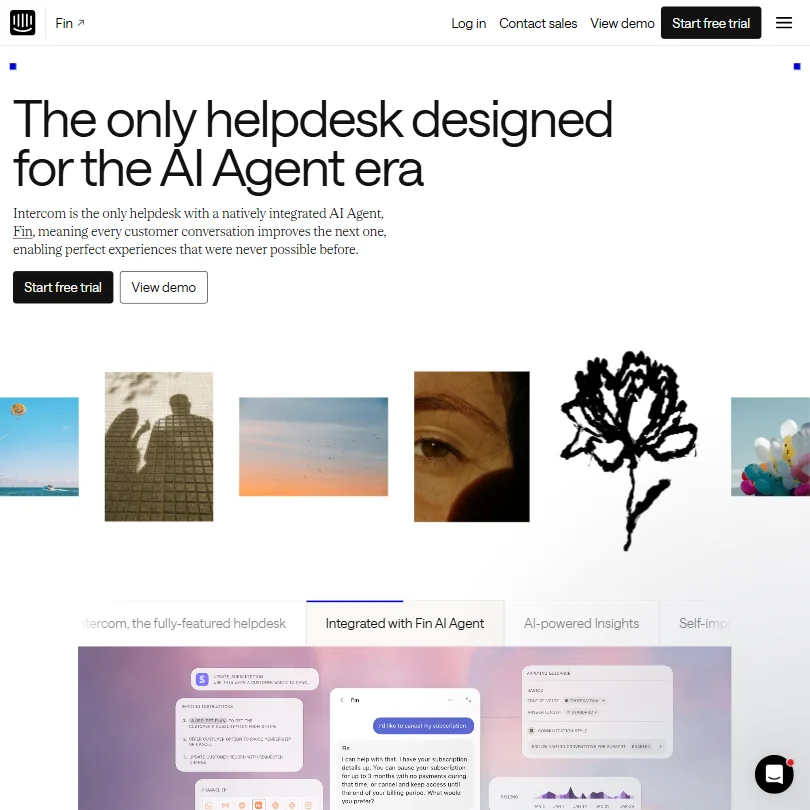
Intercom has more features, a broader integration set, and a price tag that makes small teams sweat. Their Fin AI agent is genuinely strong, and for mid-market and enterprise buyers it's probably the better call. You can look at Fin separately if that's where you're headed.
For SMBs and e-commerce brands, Tidio wins on price and setup simplicity. Intercom isn't designed around the needs of a 5-person support team at a Shopify store. Tidio is.
Where Intercom pulls ahead: depth of reporting and enterprise-grade SLA management. Tidio's analytics are functional but not deep. The Growth plan does add advanced analytics over Starter's basic analytics, but teams making data-heavy decisions about support operations will find more to work with in Intercom. That tracks.
Where Tidio holds its own: the Lyro resolution rate is competitive, the Shopify integration is tighter for e-commerce use cases, and you're not paying Intercom money to get it. Intercom's entry pricing has historically been a point of friction for small teams, and that hasn't changed.
The comparison isn't close at the enterprise level. It is genuinely close for a small e-commerce brand deciding between the two.
Who Should Use Tidio? (And Who Shouldn't)
Small e-commerce brands. Clearest fit. Especially Shopify stores that want to deflect repetitive support tickets without hiring another agent.
SaaS startups with lean support teams are a secondary fit. The live chat plus AI combo works for them, as long as they don't need deep analytics or voice channels.
Pure helpdesk operations with complex SLA requirements. Worse fit. The SLA management is there, but it's on Premium, and you're talking to sales to get the price. Gorgias is built specifically around e-commerce support and might suit that workflow better if you're deep into SLA management.
Brands that need phone and SMS baked in should look elsewhere. That's not a workaround situation, it's a product gap.
Enterprise teams won't find enough here. The integrations and API access are solid, but the reporting depth and enterprise feature set aren't at that level yet.
Tidio Review Verdict
Tidio earns its reputation among SMB and e-commerce teams. The Lyro AI agent is better than most at its price point. The setup is genuinely accessible, with some workflow quirks that can trip people up. The 300,000+ user base reflects a product that works in the real world, not just in demo conditions.
The frustrations are real too. Conversation-based pricing for Lyro needs careful attention before you scale. The analytics could be sharper. The 7-day trial is tight. And the missing refund policy is a minor but irritating gap in transparency.
The product is not trying to be Intercom or Zendesk. It knows what it is. For the buyer it's built for, that focus is mostly a good thing. A small support team that deploys this properly, keeps the knowledge base current, and doesn't need voice or SMS will probably be happy with it. One that ignores the Lyro training and expects magic will not.
Worth trying. Keep the trial expectations realistic.
How Tidio compares
Tidio scores 6.6 out of 10 among the helpdesks we rate. These three do the same job and are the closest to it, compared on what each vendor publishes.
Intercom
Tidio has a free plan with 50 conversations a month; Intercom has none, starting at $39 a month per seat against Tidio's $31.32 for Starter. Intercom's Copilot add-on helps human agents draft replies inside the workspace; Tidio sells a separate Chrome extension for that instead of a built-in agent-assist feature. Intercom also runs a customer-facing help center, which Tidio does not offer as a product. Intercom is ISO 27001 certified; Tidio is not.
Pick Intercom if you need agent assist and a real help center.
Pick Tidio if you want to start free and keep costs low.
Zendesk
Tidio has a free plan with 50 conversations a month; Zendesk has none, starting at $25 a month per agent for Support Team, below Tidio's $31.32 for Starter. Zendesk runs a customer-facing help center on its Suite plans; Tidio does not offer one as a product at all. Tidio lists more integrations, including Salesforce, HubSpot, Shopify, Slack, Zapier, Zendesk and Intercom, seven in total against Zendesk's four. Zendesk is ISO 27001 certified; Tidio is not.
Pick Zendesk if you need a real customer-facing help center.
Pick Tidio if you want to start free and connect to more tools.
Gorgias
Gorgias starts at $10 a month for 50 tickets, undercutting Tidio's $31.32 a month Starter plan, though Tidio does offer a free plan with 50 conversations a month that Gorgias does not match. Gorgias runs a customer-facing help center on every plan; Tidio does not offer one as a product. Gorgias's Gaia assistant also helps human agents summarize and tag tickets; Tidio's equivalent, Copilot, is sold as a separate Chrome extension rather than a built-in feature.
Pick Gorgias if you want a real help center and agent assist.
Pick Tidio if you want to start on a free plan.
Frequently Asked Questions
Does Tidio's free plan actually work for a real business?
It works for evaluation purposes, but the limits kick in fast. The 50 Lyro AI conversations are one-time, not monthly, which means you'll burn through them during testing before you've seen what the tool does under real traffic. The 7-day trial on paid plans is a better vehicle for a real assessment.
How does Lyro AI compare to other AI chatbots for e-commerce?
Better than most at the SMB price point. The brand-voice alignment is the standout, and the 67% resolution rate, while marketing-forward, does seem to hold up in the e-commerce context based on what we read across G2 and Capterra. The training quality matters a lot though. A poorly maintained knowledge base will tank those numbers fast.
Is Tidio good for non-e-commerce businesses?
It can work for SaaS support teams and service businesses running chat-first support. The product isn't locked to e-commerce. But the Shopify integration, the native order management features, and the whole positioning lean heavily toward retail. If your use case is far from e-commerce, the fit gets thinner, and tools with a broader helpdesk focus might serve you better.