Scenario is a model aggregator: instead of one company's image or video model, it gives access to dozens of other companies' models, from Kling and Seedance to GPT Image, in one account and one credit pool. Whether it suits you comes down to how many models you need in one place, and whether its per-model credit costs, which are not published outside the app, work for your budget.

What is Scenario?
Scenario is a model aggregator that runs in the browser around a visual workflow canvas. It has no flagship model of its own; its own contribution is custom LoRA training on your own assets. Its free plan gives 50 credits every day with no credit card required.
Other companies' models on Scenario
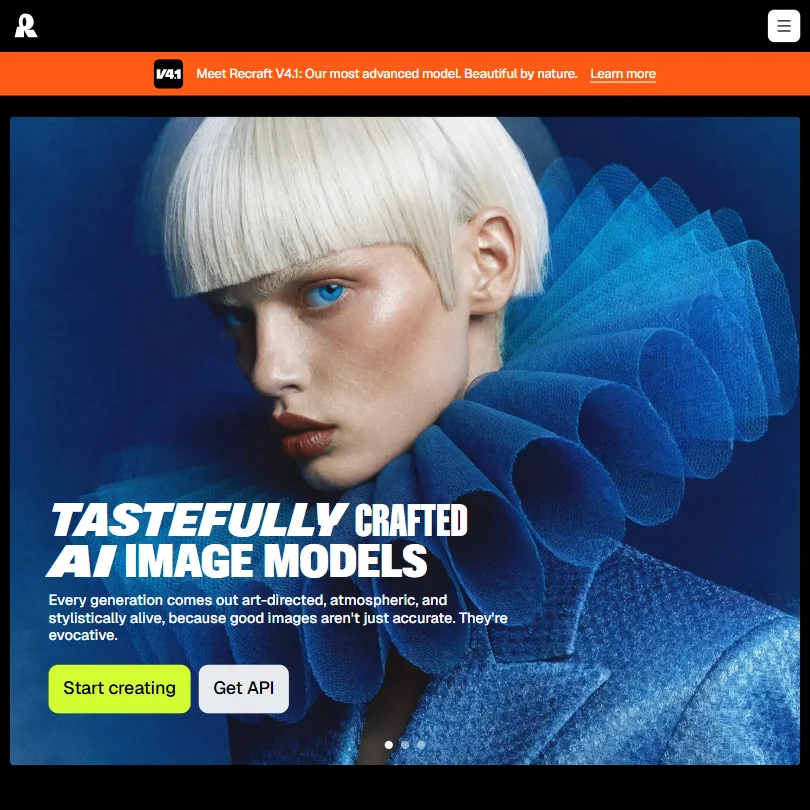
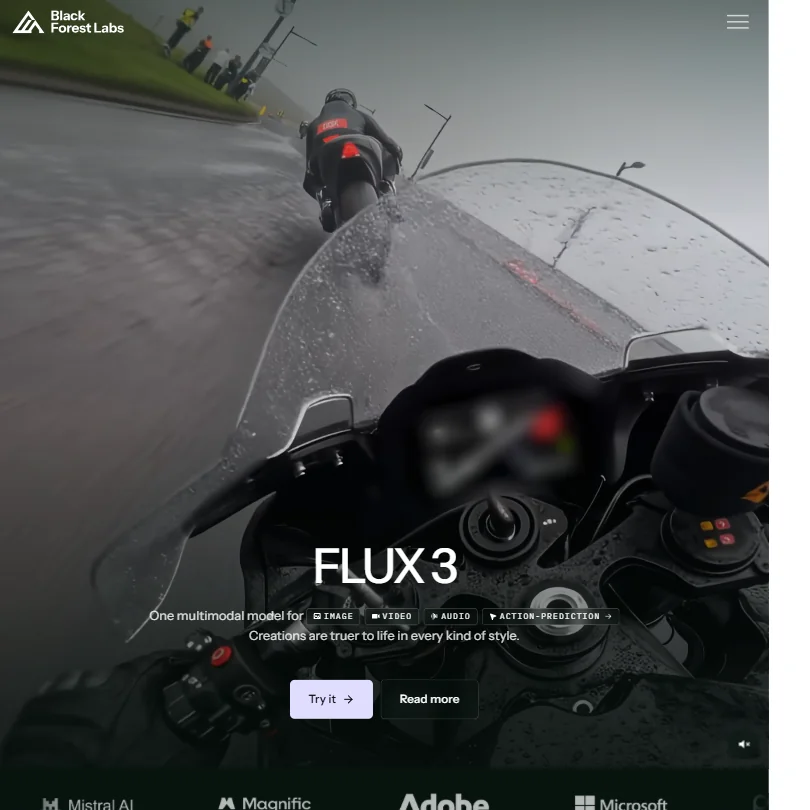
For video, Scenario lists Seedance 2.5 and Seedance 2.0 Mini, Kling V3 Omni Video and Kling V3 I2V Pro, LTX 2.3 Pro, Kling V2.6 Motion Control, HeyGen Avatar 4, Gemini Omni, Grok Imagine Video 1.5, Runway Aleph 2 and Ruby, Veed Fabric Lipsync 1.0, and its own-branded P-Video tools. Veo 3.1 is not among the models listed. For images it has GPT Image 2 with its Flare and Sunburst variants, FLUX 2 (Pro), Seedream 5.0 Pro and Lite, Ideogram V4, Z-Image and Grok Imagine Image. Google's Nano Banana 2 is listed as "Gemini 3.1"; Nano Banana Pro is not among the models listed. For audio it offers ElevenLabs' speech, sound effect and music models, Minimax Music 3.0, Google Lyria 3 Pro, Gemini 3.1 Flash TTS and xAI Grok TTS.
What you can make with Scenario

Seedance 2.0 and Kling V3 Pro support setting a first and last frame, and LTX 2.3 Pro adds optional start and end frame interpolation. Seedance 2.5 also extends a generated clip, and lip sync comes from HeyGen Avatar 4 and Veed Fabric Lipsync 1.0.
For images, editing runs through Gemini and GPT Image models, and Magnific Upscaler Creative handles upscaling. The Pro plan and above can train a custom model on your own assets, and Max adds training for custom editing models.
Workflows, agents and teams
Scenario's Workflow Engine is a visual canvas for chaining any model in any order, including a loop node for batch processing. Its Node Agent can build or edit these workflows from a text instruction and batch-generate assets. An API is available from the Pro plan up and described as MCP-ready. Max adds a shared workspace for up to 25 users. Scenario runs in the browser.
Scenario pricing: what each plan gives

Credits, called Compute Units in the API docs, pay for every model. Starter costs $15 a month ($10 a month billed yearly) for 1,500 credits. Pro costs $45 a month ($30 billed yearly) for 5,000 credits and adds unlimited relaxed generations with a priority queue, every editing model from Gemini, GPT and Runway, and custom model training. Max costs $75 a month ($50 billed yearly) for 10,000 credits and adds training for custom editing models plus the 25-seat workspace. Enterprise pricing is not published.
Generating an image costs 2 to 15 credits depending on the model, enhancing or upscaling costs 5 to 15 credits, and training a custom model costs 100 to 500 credits depending on complexity. Scenario does not publish exact costs for named models such as Kling or Nano Banana; these are platform-wide ranges only, shown precisely in the app before you run.
Privacy and support
Scenario's privacy policy says it may use your content and anonymized insights to improve its services and AI on standard accounts, with no opt-out offered. Only Enterprise customers under a signed contract get a guarantee that their content is not used for training. Scenario holds SOC 2 Type II compliance, and its privacy policy has a full GDPR section, including EU-U.S. data framework certification and standard contractual clauses. Paid plans include a full commercial license; the free plan is for personal and evaluation use only.
Support runs through a Discord community and ticket-based email on paid plans, with Slack support and SSO on Enterprise.
Who Scenario suits
Scenario suits teams who want a very wide range of image, video and audio models in one workflow canvas, with enough credits to try several models on one job rather than committing to a single vendor's tool. The Node Agent and API make it workable for teams who want to batch-generate assets or wire generation into their own stack.
It suits less well anyone who specifically needs Veo 3.1 or Nano Banana Pro, since neither is on Scenario's list, or anyone who wants their content excluded from training without an Enterprise contract.
How Scenario compares
Scenario scores 7.8 out of 10 among the multi-model AI platforms we rate. These three do the same job and are the closest to it, compared on what each vendor publishes.
Krea
Scenario's cheapest plan is $15 a month, well under Krea's $35, but Krea lists far more models, 34 video and 27 image against Scenario's 19 and 17, and adds Veo 3.1, which Scenario does not offer. Both include unlimited generation on some models, a free plan, canvas workflows, an AI agent, an API and single sign-on. Scenario trains AI on your uploads by default.
Pick Krea if you want the widest model selection regardless of price.
Pick Scenario if you want a much lower price with the same core toolset.
RunDiffusion
RunDiffusion's cheapest plan is $10.99 a month against Scenario's $15, though Scenario adds unlimited generation on some models, which RunDiffusion does not offer. RunDiffusion offers Veo 3.1, which Scenario does not list, while Scenario offers Seedance 2, which RunDiffusion does not. Both include LoRA training, canvas workflows, an API and a free plan. RunDiffusion confirms it does not train AI on your uploads; Scenario trains on uploads by default.
Pick RunDiffusion if you want Veo 3.1 and no AI training on your uploads.
Pick Scenario if you want Seedance 2 and unlimited generation.
Magnific
Scenario's cheapest plan is $15 a month. Magnific prices its plans by location, so its price is not compared here. Magnific lists far more models, 31 video and 21 image against Scenario's 19 and 17, and runs on web, iOS, Android and Windows. Magnific confirms it does not train AI on your uploads; Scenario trains on uploads by default. Both include SOC 2, GDPR compliance and single sign-on.
Pick Magnific if you want the most models and no AI training on your uploads.
Pick Scenario if you want a free plan and a price in US dollars.
Frequently Asked Questions
Does Scenario have a free plan?
Yes. It gives 50 credits every day with no credit card required, though the output is for personal and evaluation use only and carries no commercial rights.
Which models does Scenario offer?
Scenario has no model of its own beyond custom LoRA training. It lists other companies' models, including Kling V3, Seedance 2.5, GPT Image 2, FLUX 2 and Seedream 5.0 for image and video, and ElevenLabs and Minimax for audio.
What do Scenario's paid plans cost?
Starter is $15 a month, Pro is $45 and Max is $75, each cheaper when billed yearly, for 1,500, 5,000 and 10,000 credits a month. Enterprise pricing is set per account.
Can I train a custom model on Scenario?
Yes, from the Pro plan up. Training a model costs 100 to 500 credits depending on complexity, and Max adds training for custom editing models.