Planable is a social media management tool built around approval workflows, where posts are drafted, reviewed and signed off before anything goes out.

The product has been around since 2017, which is long enough to have figured things out, and in a lot of ways they have. But "long enough to figure it out" is doing some work there, because there are still gaps that bother us.
What is Planable?
Approvals. That's the actual product. Not scheduling, not AI captions. Planable is a social media management and content collaboration tool built around the idea that getting sign-off on content is the part that breaks teams, and it's been trying to fix that since 2017. It is headquartered in Wilmington, Delaware.
The visual interface mimics how posts look on the actual social platforms. You're not reviewing a list of text strings. You're looking at something that resembles a real Facebook post or a real Instagram grid. The feedback loop is tighter because the visual context is built in. Clients don't have to squint and imagine what something will look like when published.
That's a real differentiator. We don't say that often.
Planable Features: Scheduling, AI Content & Analytics

The feature set is more capable than the modest homepage makes it look. Post scheduling exists on every plan, though the caps matter considerably. Basic allows 60 posts per workspace monthly, Pro raises that to 150, and unlimited only arrives at Enterprise. For a busy agency managing multiple brands, those caps become a genuine planning constraint.
Content views come in Feed, Calendar, Grid, and List modes. Not all tools bother with Grid view for Instagram planning. Planable does.
The multi-level approval workflow is the core feature of the product. Content moves through a staged process before anything goes live. There's a kanban-style approvals tab, version history, private notes, and text annotations. Teams can flag posts as internal drafts so clients never see work that isn't ready. That's a workflow most competing tools handle awkwardly or not at all.
Analytics exist but come as an add-on, priced at $14 per workspace per month on both Basic and Pro. Page-level and post-level metrics are included, along with audience insights, reports, and best-time-to-post recommendations. A Competitor Analytics feature was announced recently. Honestly, bundling analytics as a paid add-on feels like a decision that made sense four years ago and doesn't anymore. The core scheduling tools are solid. The extras cost extra.
Planable Platform Support: Which Networks Does It Cover?
Nine platforms. Facebook and Instagram are covered, along with LinkedIn and Twitter/X. TikTok and YouTube are in. Pinterest, Google Business Profile, and Threads round it out.
Google Business Profile inclusion is rarer than it should be among tools in this category, and it will matter specifically to local marketing teams. Threads support is also worth flagging. A lot of tools dragged their feet on Threads. Planable didn't.
There's no mention of hashtag research tools anywhere in the documentation. That's a gap. Buffer does it. Later does it. Planable apparently doesn't, or if it does, they're not talking about it. We're not going to assume it's there.
Planable AI Content Creation: Caption & Copy Quality
Planable has an AI post generate feature and an AI post rewrite feature. Proprietary model, not something built on a named third-party API they'd discuss publicly.
AI rewrite is a legitimately useful function when you're already inside an approval workflow and an editor wants to suggest a different angle on a caption. But hashtag suggestions are not documented anywhere, which is a basic AI feature that's standard elsewhere. Not great.
Is Planable Easy to Use?
The visual-first interface works in its favor.
That said, the workspace and posting cap structure creates friction for agencies with volume needs. Hitting 60 posts per workspace monthly on Basic doesn't take long if you're managing a few active accounts. You'll spend time either restructuring workspaces or upgrading. It's not a usability failure exactly, but it creates a ceiling that affects daily workflow.
The Public API is available on Pro and above. So is the MCP Connector, which shows up on Basic too according to the pricing page. Canva integration is listed, but which plans it applies to isn't stated.
Planable Pricing: Is It Worth It for Creators & Agencies?

The free tier is genuinely free. Fifty posts total, no time limit, no credit card required. That's a legitimate way to evaluate the product, not a watered-down 7-day window. Fair.
After that, Basic runs $33 per workspace per month and Pro runs $49, based on the current pricing page. Enterprise is custom. The post caps make Basic feel narrow for professional use pretty quickly. Pro at $49 is competitive for teams, especially given that it includes unlimited users per workspace, 10 social pages, and API access.
The Social inbox is an optional add-on at $9 per workspace per month, available on both Basic and Pro. Analytics runs $14 per workspace per month, also optional on both plans. Neither add-on is bundled into the core tiers, which means the real per-workspace cost climbs faster than the headline prices suggest. Tools like Buffer publish analytics bundled. Planable doesn't, and that matters when you're trying to budget.
On refunds: Planable generally treats sales as final, but offers limited 14-day refund exceptions for eligible first-time Basic or Pro purchases and certain annual renewals. The formal terms are still conservative. The Help Center documents the exceptions. Worth knowing before you commit annually.
Planable vs Buffer: Which Social Media Tool Wins?
Buffer is the natural comparison because both tools are pitched at agencies and smaller marketing teams. But they've drifted into different shapes.
Buffer's strength is straightforwardness. You schedule posts, you get basic analytics, you move on. The interface is lean and pricing is transparent all the way down to the dollar. What Buffer doesn't do well is collaborative review. The approval workflow in Buffer is thin compared to what Planable has built. Solo content managers posting for their own brand will find Buffer is probably enough.
Planable wins on collaboration, full stop. The multi-step approvals, the visual feedback, the kanban tab, the annotation tools. Buffer doesn't come close on that axis. Where Buffer wins back ground is on pricing clarity and analytics being bundled rather than bolted on as a paid extra.
An agency where clients need to be looped into approvals regularly should pick Planable. A solo operator who just needs things scheduled and wants to know what's working faces a harder case for Planable's pricing structure.
Who Should Use Planable? (And Who Shouldn't)
Social media agencies. That's the core fit. Specifically ones where client approvals are a recurring bottleneck. The visual feedback and multi-step workflow exist to solve exactly that problem, and they solve it better than most.
For teams where content has to clear multiple stakeholders before publishing, the kanban approvals tab and version history matter.
Freelancers managing more than one or two clients are a reasonable fit, assuming the 50-post free tier doesn't cover them long term.
Solo creators? Probably not. The approval tooling is overhead you don't need if there's no one to approve. At $33 per month for Basic with post caps, there are cheaper options. SocialBee is worth a look for solo operators who want scheduling plus content recycling without the collaboration layer.
Planable Review Verdict
Planable does what it set out to do and does it genuinely well. The approval workflow is the product's real engine, and it's more thoughtfully built than what you find in most competitors. Nine platform integrations, a visual interface that mirrors native feeds, and unlimited users on paid plans are all real strengths.
The weak spots are real too. Analytics and social inbox both sitting behind separate per-workspace add-on fees is a frustration, not a minor footnote. The post caps on lower tiers create a ceiling that agencies will hit faster than Planable's marketing implies. And the AI features exist but don't lead the room.
Solid product for a specific buyer. It earned its place in the market. But "solid for a specific buyer" is different from "great for everyone," and Planable's pricing page doesn't always make that distinction clearly enough.
How Planable compares
Planable scores 5.6 out of 10 among the AI social media management tools we rate. These three do the same job and are the closest to it, compared on what each vendor publishes.
Buffer
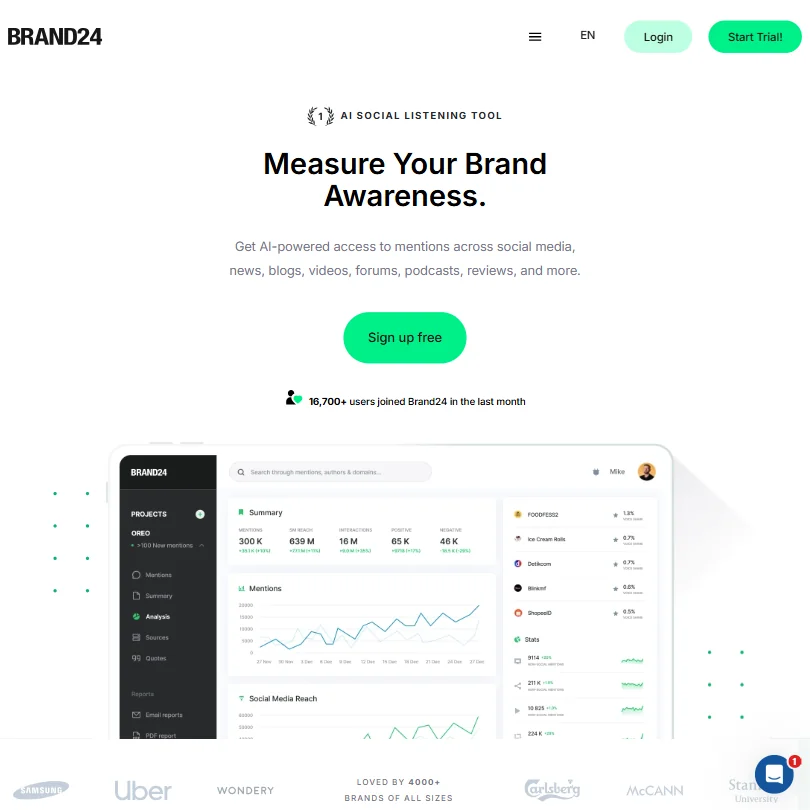
We could not find a five-profile price on Planable's site, while Buffer's five profiles run $30 a month with a free plan included. Only Planable bulk schedules posts and auto re-queues evergreen ones; Buffer does neither. Buffer covers ground Planable skips instead: a link-in-bio page, a browser extension, and turning an existing link or article into a post. Planable tracks competitor accounts and mentions beyond your own through its Analytics add-on, something Buffer's insights do not do at all.
Pick Buffer if you want a free plan, link-in-bio page or known pricing upfront.
Pick Planable if you want bulk scheduling, evergreen re-queuing or competitor tracking.
Hootsuite
We could not find a five-profile price on Planable's site; Hootsuite's five profiles run $99 a month. Hootsuite's AI generates images and writes in your brand voice, and its Wisdom agent drafts content, none of which Planable's AI does. Hootsuite also manages paid ads, finds influencers and carries a SOC 2 report, all missing from Planable. Planable answers with first-comment scheduling and evergreen re-queuing, which Hootsuite lacks, and it does not train its AI on your content.
Pick Hootsuite if you want AI-generated images, brand-voice writing or influencer discovery.
Pick Planable if you want first-comment scheduling, evergreen re-queuing or no AI training on your content.
Later
We could not find a five-profile price on Planable's site; Later's five profiles run $25 a month. Planable still publishes to X and Google Business Profile, both missing from Later's network list, and only Planable bulk schedules posts and auto re-queues evergreen ones. Later answers with a link-in-bio page, a browser extension and an influencer-marketing product, none of which Planable offers. Planable states it does not train its AI on your content and covers GDPR; Later states neither.
Pick Later if you want a link-in-bio page, browser extension or influencer marketing.
Pick Planable if you need X or Google Business support, bulk scheduling or GDPR compliance.
Frequently Asked Questions
Does Planable have a free plan?
Yes. The free tier gives you 50 posts total, no time limit, no credit card required. It's not a trial in the traditional sense because there's no clock running. That said, 50 posts will go fast if you're evaluating it seriously across multiple accounts.
What are Planable's post limits per plan?
Basic at $33 per month caps you at 60 posts per workspace monthly. Pro at $49 per month raises that to 150. Enterprise gets unlimited. These caps apply per workspace, not per account, so agencies managing multiple brands across separate workspaces will need to factor that into their planning.
How does Planable compare to Hootsuite for agency use?
Hootsuite has broader enterprise features and a longer track record in large-scale social management. Planable is narrower but sharper on the collaboration side. For agencies whose main pain point is client approvals and content review, Planable's workflow is cleaner and more purpose-built than Hootsuite's. For enterprise teams that need deep reporting and a wide integration ecosystem, Hootsuite has the edge.