We pulled vendor docs, developer forums, Reddit threads, and archived pricing data across several days before writing this. What we kept seeing is a picture more complicated than the homepage suggests. Founded in 2019 and headquartered in London, Stability AI has spent the last few years becoming one of the more technically ambitious companies in generative AI. Not just an image tool. A full platform spanning image, video, audio, and 3D generation, with a developer ecosystem that most competitors aren't trying to build. That ambition cuts both ways.

The open-source angle is real. Stable Diffusion's roots in the public model ecosystem gave Stability AI a developer base that Midjourney never had. But the company also went through turbulent years, including leadership changes and financial pressure that Reddit did not let slide quietly. We cross-referenced what users were saying in 2024 and early 2025 against the current product offering, and there's a meaningful gap between the chaos of two years ago and where the platform sits now.
What is Stability AI?
Stability AI builds and deploys generative AI models across multiple media types. Most people know them through Stable Diffusion, the open-weight image model that became the backbone of the independent AI art ecosystem. The commercial product has expanded well beyond that.
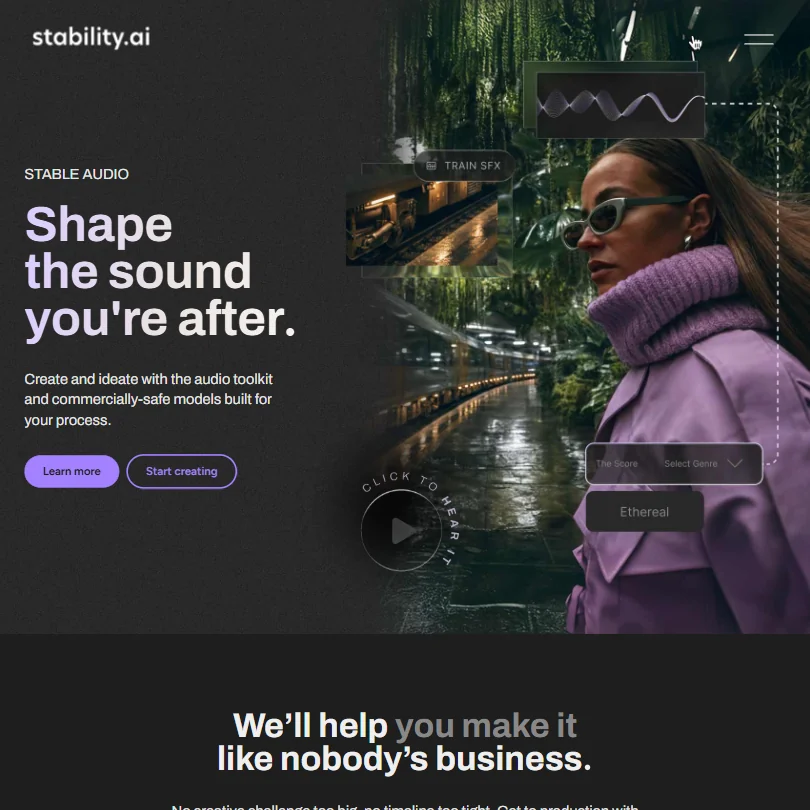
The platform covers text-to-image generation and image editing on one side, and video generation, 3D asset creation, and audio tools on the other. Stable Audio 3.0 landed in mid-2026. Brand Studio, their creative production platform for teams, launched in April 2026. These aren't vaporware announcements. They're live products.
Deployment options are wider than most competitors offer. You can use the web app, call the Platform API directly, or run models through Amazon Bedrock and Microsoft Azure. Self-hosted licensing is also on the table. That's a meaningful set of options for an enterprise buyer who doesn't want their image generation running through someone else's servers.
Honestly, the product surface area here is bigger than most reviews give it credit for.
Stability AI Image Quality: How Good Are the Results?
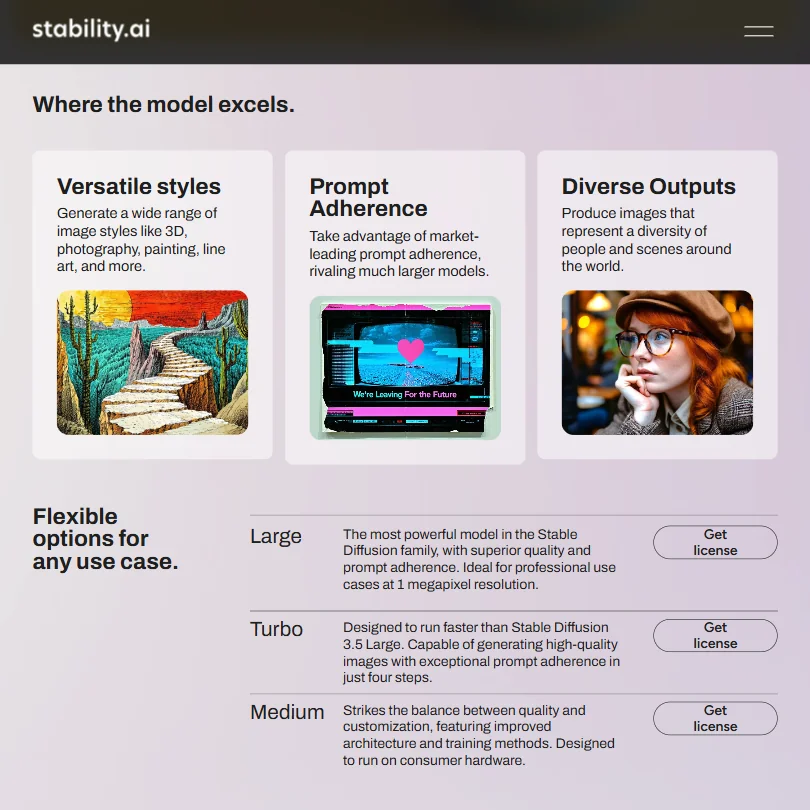
Core generation quality from SDXL and SD3 is genuinely competitive. When we dug into community feedback and third-party comparisons, the consensus is that Stable Diffusion models punch at or above their weight class for detailed, controllable outputs. Especially for users who know what they're doing with prompts.
The distinction that keeps coming up is controllability. ControlNet support and LoRA fine-tuning mean that developers and advanced creators can shape outputs in ways that more closed tools simply don't allow. Midjourney produces gorgeous results, but you can't push it the same way. That matters for production workflows where brand consistency or specific visual styles are non-negotiable.
Where quality gets messier is in the consumer-facing experience. Raw Stable Diffusion outputs without fine-tuning can be inconsistent. We saw Reddit threads from 2024 where users noted that getting reliable results required more prompt engineering than tools like DALL-E 3 demand. More power, more responsibility. That's a real tradeoff.
The Precision Inpainting tool and sketch-to-image capabilities, both available across paid plans, fill out the editing side. We've seen worse feature sets from tools charging twice the $50 Core plan price. That's not nothing.
Stability AI Features: Text-to-Image, Video & Editing Tools

The feature list here is long. Not padded-long. Actually long.
Start with the image side. Text-to-image generation is the obvious entry point, but the platform also includes sketch-to-image, recoloring, and inpainting. Upscaling and background removal are available via API. Batch generation runs at serious scale, with Stability AI's own documentation citing over 1,000 images per minute through Bedrock.
That's an enterprise-grade number. Not a hobbyist number.
On the video side, text-to-video generation and image animation are both available. Style and color grading capabilities exist. Video upscaling too. We'd caveat that video generation across the industry is still evolving fast, and "available" doesn't always mean "production-ready." The building blocks are there, and that's about as far as we'll go.
Brand Studio is the commercial feature we'd watch most closely. It's designed to enforce brand guidelines across generated assets using what they call Brand Central, which routes generation through your brand's approved visual rules. Curated Model Routing, which selects the most appropriate model for a given use case, plugs into that same workflow. For marketing teams generating high volumes of campaign assets, this is the feature that separates Stability AI from a simple image tool. We don't see anything equivalent from Midjourney at all.
LoRA support and custom model training are genuinely available, not just as an API footnote. Domain customization for enterprise customers, where Stability AI's team trains a custom foundation model on your visual data, is also on the table. Audio, via Stable Audio 3.0, is a newer surface. We're keeping expectations measured there until the tool matures, but the direction is clear.
Is Stability AI Easy to Use?
This is where the story gets honest.
Our research consistently surfaces a split user experience. Developers and technically fluent creators tend to love the platform. The API is clean, the documentation is detailed, and the options are there if you know how to find them. Less technical users, or anyone expecting a polished consumer app, run into friction.
A recurring pattern in community feedback is that raw Stable Diffusion models reward prompt fluency. Users who come from Midjourney or DALL-E 3 expecting point-and-shoot results often feel underserved at first. Ease of use came up consistently as the platform's weakest dimension in the community feedback we aggregated. That tracks.
Brand Studio may change that calculus for teams, since it wraps the complexity in a more structured workflow. Solo creators or small-business owners who just want decent images without much setup will find easier tools. Leonardo.Ai comes to mind as a more approachable option that still gives reasonable creative control without the same learning curve.
The Discord community is active, which helps. Documentation is solid. But live chat support doesn't exist, email is the path, and response times weren't something we could verify from public review data.
Stability AI Pricing: Free Plan vs Paid — Is It Worth It?

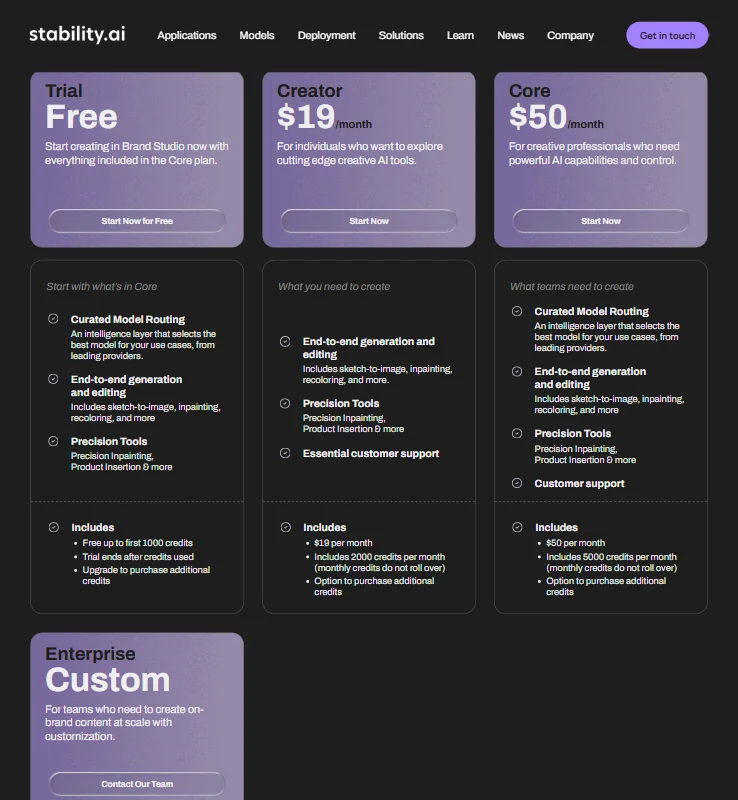
The free trial plan includes up to 1,000 credits and covers the features included in the Core plan. Not a two-image teaser. A meaningful window.
Past that, pricing starts at $19 per month for the Creator plan, which includes 2,000 credits per month. The Core plan runs $50 per month and includes 5,000 credits. Monthly credits don't roll over on either plan, and additional credits can be purchased on top. Enterprise is custom pricing, handled through direct contact.
Here's the context that matters. At $19 per month, Stability AI ranks toward the pricier end of the category by starting price. The category median sits around $12. Not egregiously expensive, but it's not cheap either. We're skeptical of that value proposition for users who haven't built up prompt fluency yet.
The refund policy isn't publicly stated anywhere we could find. That's a gap. We've seen other platforms in this space also skip publishing refund terms, but it's still worth flagging before you hit purchase.
The pricing makes more sense the higher you go. At the enterprise tier, custom foundation model training, self-hosting, and brand-level customization justify the cost for large teams. At $19 per month, you're paying above the category median for a tool that rewards skill and setup time. Good deal if you have that skill. A questionable one if you don't.
Stability AI vs Midjourney: Which AI Image Generator Wins?
Depends entirely on what you're building.
Midjourney produces consistently beautiful images with minimal effort. The aesthetic quality is high out of the box, and the direct web app is usable now. But Midjourney is a closed system. No meaningful API access for enterprise workflows, no self-hosting, no LoRA, no custom model training. What you see is what you get.
Stability AI is essentially the opposite. The flexibility ceiling is much higher, and for developers or enterprise buyers who need to build generative AI into a production pipeline, it's not really a close comparison. The Platform API, Bedrock integration, ControlNet support, and custom training options put Stability AI in a different category for that use case.
For a solo creator who just wants great images quickly, Midjourney probably still wins on raw convenience. For anyone building something, or running a team that needs brand consistency and volume, Stability AI is the stronger foundation. We've also reviewed Adobe Firefly for teams already inside the Adobe ecosystem, which competes for some of the same enterprise creative spend and is worth comparing if that's your situation.
DALL-E 3 from OpenAI is a cleaner comparison for prompt-following accuracy at the consumer level. Stability AI doesn't always win that fight on raw prompt adherence. It wins on control and customizability, and those are different things.
Who Should Use Stability AI? (And Who Shouldn't)
Developers building image generation into products. Strongest fit. The API is solid, the documentation is detailed, and the model options are broader than most competitors offer.
Enterprise marketing teams with brand consistency requirements. Brand Studio is purpose-built for this. The volume capabilities, especially through Bedrock, make it viable at real scale.
Studios and production teams in gaming or entertainment. The 3D and video tools, while still maturing, point directly at that market. The Electronic Arts partnership and UMG partnership signal that serious players are already in.
Solo hobbyists who want simple, beautiful results fast. Not the sweet spot. Someone who wants to drop a prompt and get a polished image without much configuration will likely have a better experience elsewhere.
Teams with no technical resources. The power is real, but so is the complexity. Without someone who can navigate the API or model options, a lot of that capability just sits unused.
Stability AI Review Verdict
A serious platform. Not a toy, not a simple art generator with a clean interface and a credit counter.
The feature breadth is real. Image, video, audio, and 3D in one platform, with ControlNet, LoRA, and custom model training, that's not a feature list you assemble quickly. The API is well-documented. The enterprise deployment options are genuinely flexible. Brand Studio addresses a real gap for production teams running at volume.
The main friction points are ease of use and pricing transparency. The missing refund policy is a minor irritant. The learning curve for non-technical users is a real one. And at $19 per month to start, you're paying above the category median for a tool that gives you the most value when you already know how to use it. Fair, but worth knowing before you commit.
The company's turbulent 2023 and early 2024 period raised real questions about direction. From what we can see in 2025 and 2026, the product has continued to ship. Stable Audio 3.0, Brand Studio, and ongoing model updates suggest the instability was financial, not technical. That's a meaningful distinction.
Right use case, strong platform. Wrong use case, it really doesn't fit.
Frequently Asked Questions
Does Stability AI offer a free plan?
Yes. The trial plan includes up to 1,000 free credits and covers the features included in the Core plan. That's a reasonable window to test the platform before committing to the $19-per-month Creator tier or the $50-per-month Core plan.
Can I use Stability AI for commercial projects?
Commercial use is permitted on paid plans, and Stability AI makes a point of noting that their models are trained on fully licensed data. That's a meaningful distinction compared to some other image tools where training data provenance is murkier. Read the specific plan terms before assuming all commercial uses are covered at every tier.
Is Stability AI better for developers or casual users?
Developers and technically fluent users are the stronger fit. The Platform API, ControlNet support, and self-hosted licensing options are built for people who want to build something, not just generate a few images. Casual users can still get results, but the platform rewards investment in learning it. Easier alternatives exist if that investment isn't something you're willing to make.