AKOOL is based in San Francisco. Moving fast. Whether the product keeps pace is the more interesting question.

What is AKOOL?
A platform built around a few core bets. Face swap, video translation with lip-sync, and AI avatars are the headlines, but the platform has grown well past that. Text-to-video, image-to-video, voice cloning, background replacement, talking photos. That's a lot of surface area for a two-year-old company.
The positioning targets marketing teams and agencies, not hobbyists or filmmakers. People who need to produce high volumes of video across multiple languages without a full production crew. That's a real use case, and AKOOL has clearly designed around it.
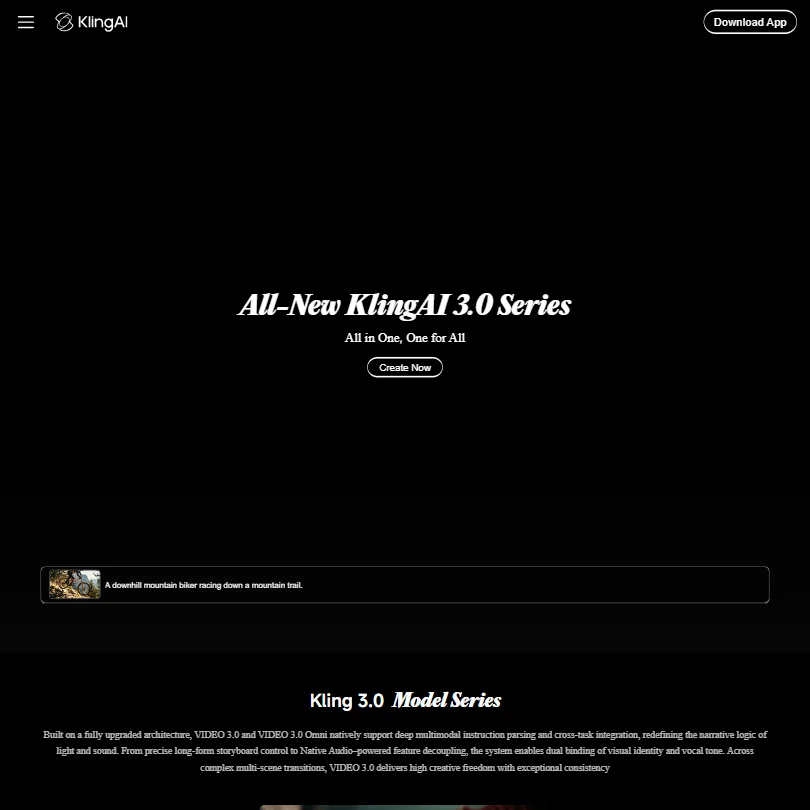
What makes the platform unusual is the model roster. Rather than building proprietary generation from scratch across every format, AKOOL integrates third-party models. Kling and Seedance are in there, so are Wan and Minimax, plus Google Veo. Two things worth saying about that: it gives users access to genuinely capable generation without AKOOL having to out-engineer OpenAI, and it also means quality and consistency depend partly on infrastructure AKOOL doesn't control. Not a dealbreaker. Just something to keep in mind.
The platform runs entirely on web. No desktop app, no mobile app. 155 languages supported for translation and voice features. API access available from Pro Max upward.
AKOOL Features: Video Generation, Editing & AI Capabilities

More here than you'd expect from a company barely two years old.
On the generation side, AKOOL's text-to-video routes through multiple models. You pick your model, write your prompt, generate. The multi-model approach has real benefits: different models handle different aesthetics better, and having options inside one tool saves a lot of tab-switching. The downside is that the experience can feel inconsistent depending on which model you're running on a given day.
Video-to-video editing is in there too, as is image-to-video and what they call reference-to-video. The agentic canvas editing feature is the more ambitious addition. Cautiously interested.
The Face Swap tool works on images and video both.
Video translation with lip-sync is a genuinely useful enterprise feature. You upload a video, pick a target language from the 155 supported, and AKOOL re-dubs it with synced mouth movement. Multilingual video production used to mean hiring a studio for each language.
Batch processing is available on the Business plan, which runs $249 a month. Up to 20 concurrent video generations and 24 concurrent images. That's a real differentiator for agencies running campaigns at scale. Below that tier, concurrency limits are tighter.
Auto subtitles come bundled into the translation and avatar workflows. Voice Clone is listed as a standalone tool. On the collaboration side, workspace features kick in at Pro Max and above. Honestly, for $59 a month at the base Pro Max rate, that's a reasonable threshold.
AKOOL Video Quality: How Good Does the Output Actually Look?
This is where things get interesting.
The resolution ceiling is aggressive. The Business plan goes up to 16K output, which is not something many competitors are advertising. Pro Max gets 8K. Starter at $12 a month caps at 1080P. The free tier gives you 720P with a full-screen watermark. No surprises there.
On raw visual quality, the multi-model approach pays off. Because AKOOL routes through models like Kling and Google Veo rather than a single proprietary backbone, users get access to output that's competitive with what you'd generate from those tools directly. Results across different prompts and model choices can swing noticeably.
AKOOL AI Avatars & Voiceover: How Realistic Are They?
AKOOL runs four avatar tiers. Instant Avatar and Studio Avatar are the accessible ones. Streaming Avatar is for live, real-time deployment, and Ultra Avatar is enterprise-only. That's a wider range than most competitors offer at equivalent price points.
Streaming Avatar is the one that's genuinely differentiated. It's designed for live, real-time avatar deployment, which opens up use cases that pre-rendered avatar tools can't touch. Customer service bots and live demos are the clearest examples.
Instant Avatar lets you create a custom avatar from a short video clip. Studio Avatar is the higher-quality, more controlled version. Ultra Avatar is the most realistic of the group per the docs, but it's locked behind enterprise pricing. No public number on that.
Voiceover quality comes from a few directions. Public AI voices are available across all plans. Voice cloning is a separate tool.
The 155-language support for translation applies to the lip-sync dubbing workflow as well, not just subtitles. For a global marketing team, that matters a lot.
Is AKOOL Easy to Use?
Complicated question. The width of the platform has a cost.
The face swap and avatar tools are focused, single-function tools. You upload, configure, generate. Not a lot of decisions to make.
The broader platform is a different story.
The Pro plan starts at 600 credits for $30 a month at $0.050 per credit, stepping up to 1200 and 2400 credits as you slide the selector. The Business plan runs from 6,000 credits up to 80,000, all at $0.042 per credit. These ranges are real, but how fast those credits disappear on specific features isn't spelled out clearly enough.
Web-only means no offline work and no deep OS integration. For video work, that's an acceptable tradeoff for some users and a dealbreaker for others.
AKOOL Pricing: Is It Worth It for Creators & Teams?

Four public tiers. A free plan exists, with the 720P cap and full-screen watermark. Starter runs $12 a month at $0.060 per credit with 200 credits. Pro starts at $30 a month at $0.050 per credit. Pro Max starts at $59 a month at $0.049 per credit, with scalable credit options running up to 9,600 credits. Business is $249 a month at $0.042 per credit. Enterprise is custom, contact sales.
The free plan is functional for testing. Not for publishing. That's fine. Most tools work this way now.
At $12, Starter gets you 1080P export and basic features. The commercial license at this tier is personal only. That matters for anyone planning to use output in paid client work. You'd need to be on the Business plan at $249 to get a business license. That's a $249 monthly commitment before you can legally use output commercially at an agency level. Meaningful jump. We'd want that spelled out more prominently during signup.
API access starts at Pro Max. Team collaboration also starts at Pro Max. Below that, you're working solo.
The refund policy is not publicly stated anywhere we could find. Not a dealbreaker. But the lack of a clear refund path is something any buyer should ask about before committing to an annual plan.
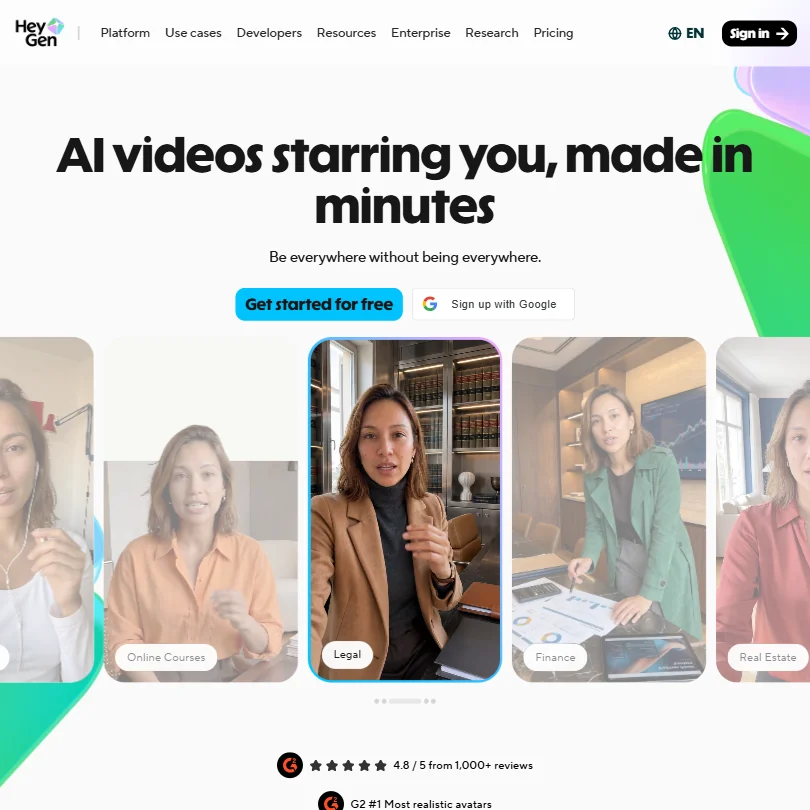
Compared to HeyGen, which starts at $29 a month for a creator plan, AKOOL's Starter at $12 looks attractive. HeyGen's creator tier includes more video minutes and a cleaner per-video cost structure. It depends on your volume and what features you actually need.
AKOOL vs HeyGen: Which AI Video Tool Is Better?
These two are the closest comparison in this category. Both do AI avatars, both do video translation with lip-sync, both target marketing teams. The differences are real, though.
AKOOL's multi-model video generation is the clearest differentiator. HeyGen doesn't give you access to Google Veo inside the same workflow. For teams that specifically want generative video alongside avatar work, AKOOL has more to offer.
HeyGen's avatar quality, particularly at the studio level, is generally regarded as slightly more consistent. That's the tradeoff. AKOOL is wider. HeyGen is arguably more polished in the specific avatar-and-dubbing workflow.
On pricing, HeyGen is more expensive to enter but the per-feature cost structure is clearer. AKOOL's credit system introduces unpredictability. Multiple reviews on both platforms point to billing clarity as a pain point, and AKOOL gets more complaints on that front specifically.
For large enterprises needing 16K resolution output and real-time streaming avatars, AKOOL has features HeyGen doesn't match. For a solo creator or small team wanting reliable avatar videos with clean dubbing, HeyGen might be the lower-friction path. Genuinely different use cases, not just preference.
Teams focused on training and internal video at enterprise scale might also consider Synthesia, which has more purpose-built L&D tooling than either.
Who Should Use AKOOL? (And Who Shouldn't)
Marketing teams running multilingual campaigns at volume. Clearest fit. The video translation with lip-sync, batch processing on the Business plan, and 155-language coverage are all built for that use case.
Agencies needing a business license for client deliverables. They'll need the $249 Business plan. Not cheap. Not unreasonable for an agency billing clients, but the sticker price needs to be clear going in.
Solo creators on tight budgets. Less ideal. The $12 Starter plan has real limits on commercial rights. The free plan watermarks everything. And the credit system can surprise you. There are simpler tools at that price point that cover fewer features but cover them more predictably.
Teams that want native integrations with Adobe Premiere or DaVinci Resolve. Not here. The integrations list is API-first, cloud-first. REST API is available from Pro Max upward. If your workflow lives in a traditional video editing suite, AKOOL doesn't plug in natively.
AKOOL Review Verdict
The feature count is real, not inflated. Multi-model generation, four avatar tiers, lip-sync dubbing across 155 languages, voice cloning, face swap, 16K output ceiling on Business. Two years old and already outbuilding tools that have been around twice as long. That's worth saying directly.
The rough edges are real too. The refund policy is invisible.
The commercial rights structure is also something buyers need to read carefully before committing. Personal license on Starter and Pro. Business license only at $249. If your work needs to be commercially distributed, know which tier you actually need before you sign up.
For the right buyer, this is a capable platform at a reasonable price. Not perfect. Definitely not simple. Built for real work at real scale, and that counts for something.
How AKOOL compares
AKOOL scores 7.7 out of 10 among the AI avatar video tools we rate. These three do the same job and are the closest to it, compared on what each vendor publishes.
HeyGen
AKOOL charges $12 a month for its cheapest plan, well under HeyGen's $29. AKOOL includes 1000 stock avatars against HeyGen's 700, and both let you make a talking avatar from one photo and hold a live conversation with a real time avatar. HeyGen adds SCORM export, quizzes and branching, screen recording and a brand kit, none of which AKOOL offers. AKOOL speaks fewer languages, 155 against HeyGen's 175, and both cap at 4K export resolution.
Pick HeyGen if you need SCORM exports, quizzes or a brand kit.
Pick AKOOL if you want more stock avatars at a lower monthly price.
Synthesia
A single photo is enough to build a custom avatar on AKOOL, while Synthesia asks for two to three minutes of recorded video instead. Synthesia's cheapest paid plan runs $29 a month against AKOOL's $12. AKOOL exports up to 4K, Synthesia tops out at 1080p. Synthesia's Enterprise plan brings SCORM export, quizzes and branching, screen recording and a brand kit, features AKOOL does not offer at all. Both require consent for a custom avatar and offer a free plan to start.
Pick Synthesia if you need SCORM exports or screen recording for training.
Pick AKOOL if you want a talking avatar made from a single photo.
D-ID
D-ID undercuts AKOOL on price, $5.90 a month against $12, but skips the free plan that AKOOL offers. AKOOL turns a document or slide deck into a presenter video and adds automatic captions, neither of which D-ID offers. AKOOL also has a shared workspace and single sign on, both missing from D-ID, and exports up to 4K against D-ID's 1080p. Both make a talking avatar from a single photo and require consent for a custom one.
Pick D-ID if you want the lowest monthly price and do not need a free tier.
Pick AKOOL if you want document to video, captions and a shared workspace.
Frequently Asked Questions
Does AKOOL have a free plan?
Yes, there's a free tier. It caps video output at 720P and applies a full-screen watermark to everything you generate. Useful for testing the tools before committing to a paid plan, but it's not realistic for anything you'd publish or share with a client. The Starter plan at $12 a month removes the watermark and bumps resolution to 1080P, with 200 credits at $0.060 per credit.
Is AKOOL's face swap feature safe to use commercially?
The face swap tool is available across plans, but commercial rights depend on your subscription tier. Personal license applies to Starter and Pro. You'd need the Business plan at $249 a month to get a business license covering commercial use. If you're using AKOOL for client work or paid campaigns, check the license terms for your specific plan before using face swap output in anything public-facing.
How does AKOOL compare to HeyGen for video translation?
Both platforms handle video translation with lip-sync, and both support a wide language range. AKOOL covers 155 languages and adds multi-model video generation that HeyGen doesn't offer inside the same workflow. HeyGen is generally seen as more consistent in avatar quality for the core dubbing use case. If multilingual video translation is your primary need and you also want generative video in the same platform, AKOOL has an argument. If you just need clean, reliable dubbing with less complexity, HeyGen is worth a direct comparison.