Cross-referencing G2 and Capterra reviews, Reddit threads from support ops communities, and Hiver's own documentation paints a fairly clear picture. Founded in 2011, headquartered in San Jose, this is not a new company figuring itself out. The niche is deliberate, the product is mature, and the limitations are just as deliberate as the strengths. That's either reassuring or frustrating, depending entirely on what you need.

What is Hiver?
Hiver sits inside your existing email client, Gmail or Outlook, and turns a shared inbox into something that actually functions like a support tool. Assignments, status tracking, and automation, all without opening a new tab or asking your team to log into yet another platform. No migration story. No retraining.
Over 10,000 businesses use it, which isn't a vanity number for a tool this narrowly focused. The differentiator is genuinely narrow: it's not trying to be Zendesk. It's trying to be the lighter, less exhausting cousin that lives where your team already spends most of the day. Whether that's clever positioning or a structural ceiling depends entirely on where you are in your growth curve.
Honestly, we think it's both.
Hiver Features: Chatbot, Helpdesk & Support Automation Breakdown

The AI layer is called Harvey AI, powered by OpenAI. Harvey summarizes threads, suggests replies, and can work toward auto-resolving repetitive queries. It can also be trained on your own knowledge base content, which matters more than it sounds. Generic AI suggestions are annoying. Suggestions shaped by your actual documentation are less so.
The rest of the feature set is solid for the price range. Shared inbox management includes collision detection so two agents don't reply to the same thread, plus assignment rules and status tracking. Automation handles routing and follow-ups. SLA policies come with breach alerts. A live chat widget appears on Growth and higher plans, and a self-service knowledge base is available for customers alongside CSAT surveys and a REST API.
Nothing exotic. Nothing embarrassing either.
Worth flagging: the screenshot we reviewed shows plans labeled Growth at $35/user/month, Pro at $65/user/month, and Elite at $95/user/month, billed monthly. The Pro plan is where the more meaningful features surface, including Customer Portal access, Slack channel integration, SLAs, and Advanced Analytics. The Growth tier at $35 gets you AI Agents and AI Copilot, but you're not getting CSAT surveys or API access until Pro. Several Elite features, including AI QA and AI Insights, are still marked "Coming Soon," which we'd want to see delivered before they factor into any buying decision.
Hiver Bot Quality: How Well Does It Handle Real Customer Queries?
Harvey AI comes up consistently in G2 reviews. Mostly positive. But here's the thing: our research cross-referenced G2's analysis of 1,280 reviews, and the themes reviewers actually mention most are ease of use, team collaboration, and email management. Email summarization, the feature Hiver's marketing leans on hardest, does not surface as a leading review theme. That's a gap worth sitting with.
G2 reviewers in customer operations roles tend to describe Harvey's reply suggestions as a useful starting point, not a finished output. They edit before sending. That tracks with what we see from AI reply tooling at this price tier broadly. High enough quality to solve the blank-page problem. Not high enough to click send without reading.
The custom training angle is where Harvey becomes genuinely interesting rather than just adequate. Reviewers who mention it tend to view it as the feature separating Harvey from a generic bolt-on. We haven't tested it directly, but the design logic is sound.
Multilingual support is not publicly documented anywhere we could find. Not great, if your team handles international volume.
Hiver Channel Coverage: Which Platforms Does It Support?
Email is the core. Obviously. But the channel surface is wider than Hiver's reputation suggests, which in most comparisons we've read still gets filed as email-only. Live chat is available. WhatsApp integration exists. Voice is connectable via Aircall as an add-on, which the screenshot confirms is available across Growth, Pro, and Elite plans. Web access, a Chrome extension, iOS, and Android round out the access points.
The product has grown past its email-only origins, and that tends to get undersold in review coverage. Fair to note.
Still. If your operation runs heavy social media volume or needs a purpose-built omnichannel routing engine, Hiver is not that. Teams with those requirements tend to end up at Zendesk, which is architected around multichannel volume from the ground up rather than adding channels to an email core.
Is Hiver Easy to Set Up and Manage?
This is where Hiver earns its strongest reviews. Full stop.
The logic is simple. If your team already lives in Gmail, there's almost nothing to configure. You install it, connect the shared inbox, and the core functionality is working. No migration. No behavioral change for your team. Capterra reviewers in small business categories flag this specifically as the reason they chose Hiver over Freshdesk or Front, after bouncing off the complexity of a traditional helpdesk. That's not a coincidence.
Ongoing admin is similarly low-friction, automation rules are straightforward to configure, and Harvey doesn't require much babysitting once it's pointed at a knowledge base. The admin experience isn't thrilling. But it doesn't create friction either.
We've seen a lot worse.
Hiver Pricing: Is It Worth It for Support Teams?

The screenshot shows three tiers billed monthly: Growth at $35/user/month at $35/user/month, Pro at $65/user/month, and Elite at $95/user/month. No free plan is listed at this view, which differs from earlier documentation we cross-referenced showing a $19/month Lite entry point. The Growth plan covers shared inbox basics, email and chat channels, and 24/7 support, but it is positioned explicitly for teams just getting started.
No refund policy is publicly documented. That's worth knowing before you commit to annual billing.
The $65/month Pro plan is where most teams will actually land once they see what's locked above Growth, including SLAs, CSAT surveys, Advanced Analytics, and API access. The Growth plan looks appealing until you see what it's missing. Growth at $35 gets you AI tooling and automations but not the analytics or customer portal that most support teams need after a few months.
For a small Gmail-native team, the math is defensible. For a team past 15 seats needing serious reporting depth, the value ceiling arrives earlier than the price implies. Reddit threads from support ops communities raise this fairly often. The complaint isn't that Hiver is expensive. It's that you hit the walls before you expect to.
We're not wild about the refund opacity either.
Hiver vs Freshdesk: Which Customer Service AI Wins?
Freshdesk comes up most often in comparisons. The answer to which wins depends on a single question: does your team live in Gmail or not.
Freshdesk is a proper standalone helpdesk. Broader channel coverage by default, more reporting depth, a larger integration marketplace. It also requires your team to use Freshdesk as their primary workspace, which is a behavioral change. Some teams make that transition fine. Others don't, and churn back to email anyway.
Hiver wins clearly on adoption friction for Gmail-native teams. It loses on raw feature breadth and automation complexity at scale. Freshdesk's AI tooling is more mature for multi-agent workflows once you're past 20 seats or so.
The honest version: smaller teams that value low disruption belong in Hiver. Teams scaling past 15 to 20 agents who need tighter routing logic and reporting control belong in Freshdesk. Neither is the right answer in the abstract.
Who Should Use Hiver? (And Who Shouldn't)
Small support teams inside Gmail or Outlook. That's the fit. Teams under 15 people, already living in email, who need structure without overhead. They're going to get real value here.
E-commerce teams scaling fast with serious ticket volume. Look at Gorgias instead, which is built specifically for that use case and has a deeper native story with Shopify than Hiver does.
Teams that need omnichannel routing from day one, with real social and voice infrastructure, shouldn't start here. They'll grow out of it and the migration will be painful.
Mid-sized companies on a different email client, or distributed teams with complex escalation logic, are probably not the audience. Hiver works because it meets you where you are. If where you are isn't Gmail, the value proposition shrinks fast. Simple as that.
Hiver Review Verdict
Hiver does what it says. That's not faint praise. Plenty of tools in this category don't.
The Gmail integration is genuinely well-executed. Harvey AI is useful rather than gimmicky, though our research suggests the AI summarization feature gets more marketing weight than it gets organic mention in actual user reviews. The setup story is the strongest in its competitive class. For a small team that's been managing a shared inbox through chaos, this product will feel like a meaningful upgrade.
The ceiling is the real issue. Teams that grow, or that need sophisticated analytics and deep integrations from the start, will find the walls sooner than the pricing implies. Several Elite features are still marked "Coming Soon" in current plan documentation, which means you're partly paying for a roadmap. The refund policy being invisible is a friction point. And the Free tier's gaps mean the real functional entry point is Growth at $35/user/month, not zero.
None of that makes it a bad product. It makes it a product with a specific fit. Inside that fit, it's worth a serious look. Outside it, the limitations won't adapt to you. They'll just wait.
How Hiver compares
Hiver scores 7.4 out of 10 among the helpdesks we rate. These three do the same job and are the closest to it, compared on what each vendor publishes.
Zendesk
Zendesk's cheapest plan costs $25 a month per agent against Hiver's $35 for Growth. Hiver bundles its AI Agents and Copilot into every plan with no separate per-resolution charge; Zendesk bills AI usage on top of the plan from a resolution allowance. Zendesk reaches more channels, including SMS, and keeps an audit log on its Enterprise plan, a feature Hiver does not offer at any tier. Both are SOC 2 audited, HIPAA compliant and ISO 27001 certified.
Pick Zendesk if you want more channels and an audit log.
Pick Hiver if you want AI included in the price with no metering.
Help Scout
Help Scout has a free plan for up to 100 contacts a month; Hiver has none, starting at $35 a month per seat against Help Scout's $30 for Standard. Hiver bundles its AI Agents and Copilot into every plan with no separate charge; Help Scout sells AI Answers as an add-on billed per resolution, though with a 3 month free trial of that add-on. Hiver is also ISO 27001 certified, which Help Scout is not.
Pick Help Scout if you want to start free and try AI Answers free first.
Pick Hiver if you want AI bundled in and ISO 27001 certification.
Front
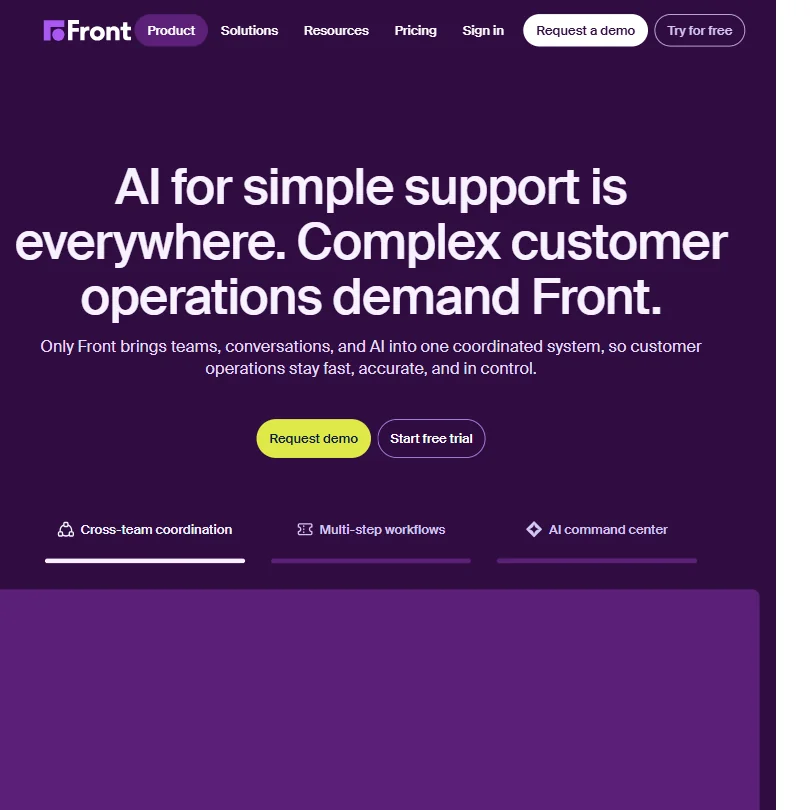
Hiver and Front both charge $35 a month per seat to start. Hiver bundles its AI into every plan with no separate usage charge; Front's Autopilot is priced per outcome, from $0.05 for a triage to $0.89 for a full resolution. Front also covers two data regions, US and EU, against Hiver's US only, and Front can remove its own chat widget branding on the Professional plan, something Hiver does not offer at any tier.
Pick Front if you want more data regions and removable branding.
Pick Hiver if you want AI bundled in with no per-outcome charges.
Frequently Asked Questions
Does Hiver work with Outlook?
Yes. Hiver supports both Gmail and Outlook. The product built its reputation inside Gmail first, and reviewers on Gmail tend to describe a slightly smoother experience overall. Outlook users don't raise major complaints in the reviews we read, but it's the secondary implementation rather than the primary one.
What is Harvey AI in Hiver?
Harvey AI is Hiver's built-in AI layer, powered by OpenAI. It handles email thread summarization, suggests replies, and can work toward resolving routine queries automatically. Training it on your own knowledge base content is the part reviewers tend to find most practically useful, once the setup is done. The summarization feature gets more marketing emphasis than it gets spontaneous mention in user reviews, which is a small but honest gap to flag.
Is there a free plan for Hiver?
Current pricing documentation shows the Growth plan at $35 per user per month, covering shared inbox basics and core channel access for teams just getting started. A 7-day free trial is also available for paid plans. The refund policy for paid tiers isn't publicly documented anywhere we could find, so we'd recommend treating the trial window seriously rather than assuming post-payment flexibility exists.