We pulled together vendor docs, a few hundred user reviews, Reddit threads going back two years, and every pricing page we could find before writing this Shopify review. That research tells a pretty clear story. Shopify is not simply an e-commerce platform anymore. It's a full merchant operating system, and Sidekick, its native AI assistant, has changed what that actually means for the people running stores on it.
Four million merchants is a real number. Shopify has been around since 2006, which is ancient in software terms. They know their audience, and it shows in the product.
What is Shopify?
Shopify started as a place to sell things online. That's still the core. But over the past two years, the company has built an AI layer directly into every store, and that layer is what makes this review necessary in 2025.
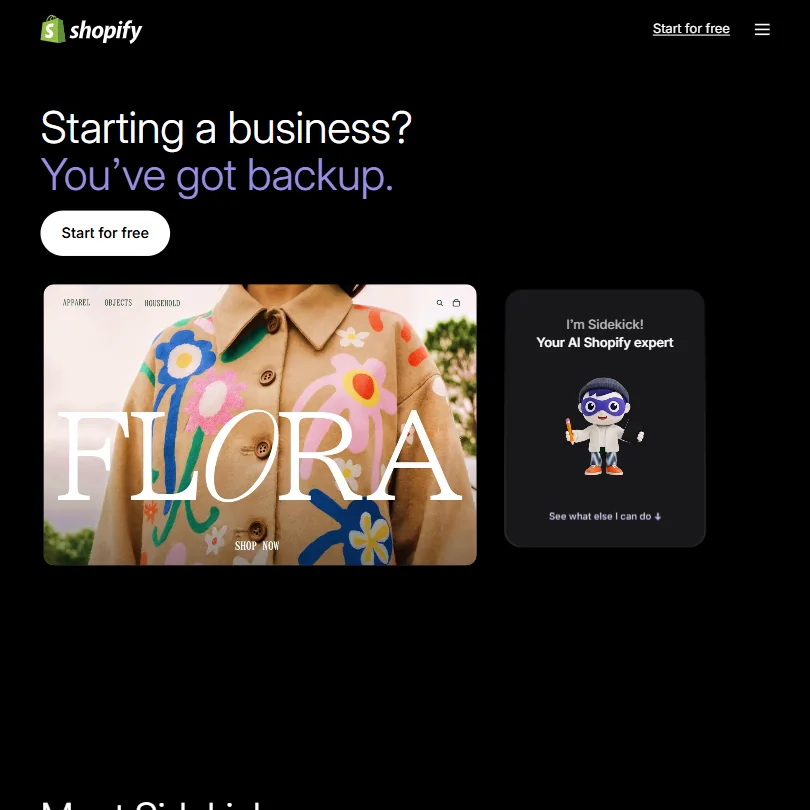
Sidekick is the AI assistant in question. It lives inside the Shopify admin. You prompt it with natural language and it can write product descriptions, analyze your pricing, draft social posts, or set up discount codes without you touching a menu. It's not a chatbot bolted on. It's wired into the actual store data.
Honestly, that's a meaningful difference from what WooCommerce or even BigCommerce is doing right now.
The platform runs on a proprietary AI model. Shopify hasn't disclosed which foundation it's built on, which is annoying but common. What they have disclosed: it's trained on commerce-specific data. That matters for quality, and we'll get into that.
Shopify runs on web, iOS, and Android. It supports 25+ languages. The platform handles everything from a single product store to enterprise operations. The Plus plan at $2,300 per month is where brands like Gymshark and Allbirds operate.
Shopify Features: Product Listings, Bulk & Marketplace Tools
The feature surface area is large. We'll focus on what's actually AI-driven and what's relevant to sellers managing product data at scale.
Sidekick ships with a set of slash commands that trigger specific workflows. `/PRODUCT-DESCRIPTION` generates SEO-focused product copy on demand. `/PRICING-STRATEGY` pulls your store data and surfaces suggestions. `/BUILD-COLLECTIONS` handles bulk product organization. `/SOCIAL-POSTS` creates content for your channels. `/DISCOUNT-CODE` sets up offers without touching the discount menu manually.
That's the core loop. Each command connects to live store data, which is the part that makes it more useful than an external AI writing tool.
The AI photo editor is a separate feature. It takes phone photos and outputs something closer to a studio shot. We cross-referenced this claim against user posts on Reddit and it's real, though the results vary. Product categories with clean backgrounds get better output. Textured apparel is less predictable.
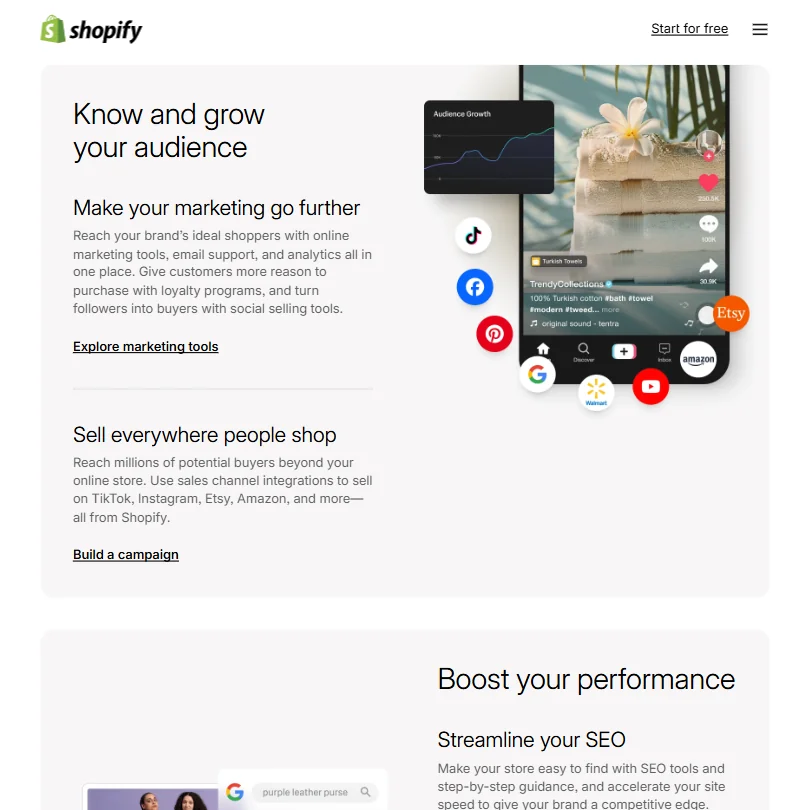
Bulk operations are available through inventory management with location support ranging from 10 locations on Basic up to 200 on Plus. For multichannel sellers, Shopify's Social & Marketplaces integration covers Amazon, Etsy, Meta, TikTok, Pinterest, and Google. That's native, not Zapier-dependent.
Review analysis and competitor monitoring aren't in the product. A/B testing isn't built in either. For those, you're shopping the App Store. That's a fair trade-off given the size of the Shopify ecosystem, but it's worth naming.
The Shopify App Store is the largest commerce app ecosystem available anywhere. That's not a claim we'd push back on.
Shopify AI Writing Quality: Are the Product Descriptions Good?
This is where the research gets interesting. Sidekick's writing output comes up constantly in user discussions, and the pattern is more nuanced than Shopify's marketing suggests.
For product descriptions, the `/PRODUCT-DESCRIPTION` prompt produces output that's genuinely usable on the first pass for simple products. Basic apparel, home goods, consumables. Things where the category is already well-understood. Reddit threads from early 2025 show sellers copying output straight into their catalogs for products like this.
Complex technical products are a different story. Electronics, specialty tools, anything requiring specification accuracy got flagged repeatedly. Users in r/shopify described needing two or three rounds of editing to get output they'd actually publish. That's not disqualifying. It's just accurate.
The SEO angle is real. Sidekick appears to structure descriptions with meta considerations built in, not just keyword stuffing. A few sellers noted improved search placement after switching to Sidekick-generated copy. We can't verify causation, but the signal is consistent enough to mention.
Ad copy and social posts via `/SOCIAL-POSTS` got warmer reviews than product descriptions did. Shorter format, lower stakes. Honestly, that makes sense. Social copy is more forgiving than a product page that needs to convert.
One thing we kept seeing: sellers who treated Sidekick as a first draft generator were happy with it. Sellers who expected finished, publish-ready output for niche categories were not.
Shopify Marketplace Support: Shopify, Amazon & Beyond
Multichannel is where Shopify has invested seriously. The Social & Marketplaces feature connects your store to Amazon, Etsy, Meta, Instagram, TikTok, and a few others from a single dashboard. Listings push out from one place. Inventory syncs back. That's the pitch, and from what we found, it mostly works.
Amazon integration in particular gets called out in positive reviews. Sellers managing both a Shopify store and an Amazon presence said the sync reduced the manual work of keeping both updated. Not eliminated. Reduced.
The Shop App is Shopify's own buyer-facing channel. It's a marketplace inside the Shopify ecosystem that gets less attention than it deserves. Sellers on it get access to buyers who are already in a Shopify purchasing mindset. The conversion rates users report are better than cold traffic. Interesting.
AI Chats is another channel worth noting. It allows buyers to interact with an AI on your storefront before purchasing. Think of it as a pre-sales assistant. We haven't seen strong data on conversion lift, but the feature exists and is live.
WooCommerce is not a channel Shopify integrates with. That's expected since they're competing platforms, not partners.
Is Shopify Easy to Use?
Look, Shopify has been iterating on this for nearly 20 years. The admin interface is genuinely polished. Onboarding walks new merchants through setup in a way that's actually logical, not just technically complete.
Sidekick makes a real dent in the learning curve for new sellers. Instead of hunting through settings menus, you prompt. "Help me set up discounts" gets you to a configured discount code faster than finding the right admin screen would. That's useful for the target audience of solo entrepreneurs who don't want to read documentation.
The setup wizard covers domain connection, payment configuration, and theme selection in a sequenced flow. Reddit users who described themselves as non-technical said they were selling within a day. We'd believe that.
Where it gets harder: advanced customization. Liquid, Shopify's templating language, has a steep curve. Shopify Markets, which handles cross-border selling, requires more configuration than the marketing copy implies. On Plus, you're also dealing with more complex workflows. Enterprise sellers in review threads often mentioned needing a Shopify Partner or developer.
Shopify Academy and the Help Center are real resources. Not just filler pages. The community forum is active. Support tiers scale with your plan: live chat on Basic, enhanced on Advanced, priority phone on Plus. That hierarchy is normal, but it means Basic plan sellers who hit a problem get chat, not a phone call. Manage expectations accordingly.
Shopify Pricing: Is It Worth It for E-Commerce Sellers?
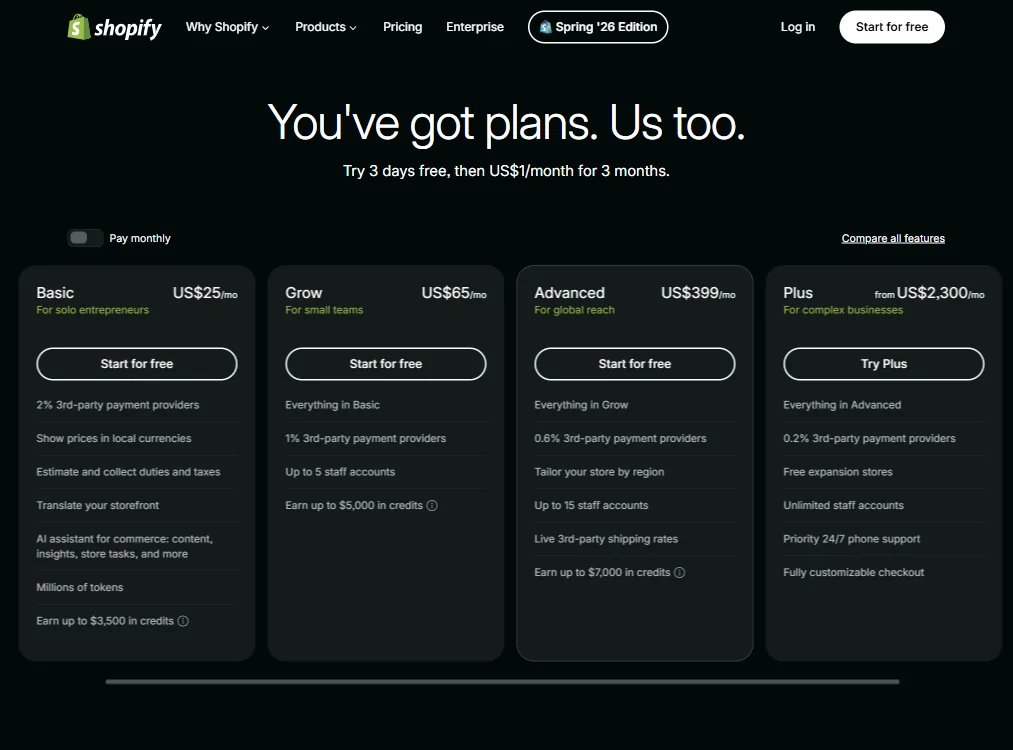
There's a trial structure here that's a little unusual. Three days free, then $1 per month for the first three months. After that, the real pricing begins.
The Basic plan at $29 per month is where most solo sellers land. It includes Sidekick, the core storefront, payments, and 10 inventory locations. The Advanced plan at $299 per month adds better reporting and lower transaction fees. The Plus plan at $2,300 per month is a different product category entirely.
Transaction fees are the hidden variable. If you're not using Shopify Payments, you pay an additional percentage on every sale depending on your plan. Basic is 2%, Advanced is 0.5%. For high-volume sellers, that math changes the real cost substantially. A $100,000 monthly GMV store on Basic with a third-party gateway is paying $2,000 in transaction fees before plan cost. That's worth calculating before you pick a plan.
Refund policy isn't publicly stated. We dug through the pricing page and found nothing. That's a legitimate annoyance.
Against WooCommerce at near-zero software cost (though hosting and extensions add up), Shopify's pricing feels premium. Against BigCommerce at similar tiers, it's roughly comparable. Against Magento for enterprise, Shopify Plus is significantly cheaper to operate. Context matters.
We're not going to pretend the pricing is cheap. It isn't. What it buys is a platform that actually works without a developer on retainer.
Shopify vs WooCommerce: Which E-Commerce AI Tool Is Better?
This comparison comes up constantly in the research. It's the right one to address.
WooCommerce is free software. Shopify is a subscription. That's the surface difference. The real difference is operational. WooCommerce requires you to manage hosting, security, updates, and plugin compatibility. Shopify manages all of that. You're paying for that managed layer.
On AI specifically, WooCommerce has no native equivalent to Sidekick. You can install AI plugins from the WordPress ecosystem, but they're not connected to your store data the way Sidekick is. The native data access is what makes Sidekick meaningfully better than bolting on an external AI writing tool.
For content at bulk scale, if you're running an enterprise catalog with tens of thousands of SKUs, something like Hypotenuse AI is worth looking at alongside Shopify. It's purpose-built for that specific problem and integrates with Shopify stores. Sidekick handles the day-to-day. Hypotenuse handles the catalog-scale content work.
WooCommerce wins on total cost at low GMV. Shopify wins on total cost of ownership once you factor in developer time and infrastructure. At scale, the math shifts further toward Shopify.
One more thing. Shopify's checkout is consistently cited as a conversion advantage. Their own documentation puts it as the best-converting in e-commerce. We've seen enough third-party confirmation to believe that's not just marketing.
Who Should Use Shopify? (And Who Shouldn't)
Solo entrepreneurs who want to be selling within a week. That's the clearest fit. Sidekick shortens the setup process, the onboarding is good, and the Basic plan covers what most small stores actually need.
Mid-market brands doing $1M to $10M in annual revenue. They're the ones who benefit most from the combination of Sidekick's day-to-day utility and the multichannel integration. The Advanced plan at $299 per month is a real tool, not a stripped-down version of something better.
Enterprise brands who want flexibility without a custom build. Shopify Plus at $2,300 per month is cheaper to operate than a Magento implementation when you count developer hours.
Now the other side.
Developers who want full backend control should look elsewhere. Shopify is opinionated by design. If you need custom server logic or a completely bespoke data model, you'll fight the platform.
Sellers with very tight margins who can't absorb transaction fees should do the math carefully before committing. The fee structure can be punishing at high volume on lower plans.
Budget-constrained sellers who need zero monthly cost. WooCommerce exists. So does Wix for simpler stores. Shopify is priced as a business tool, not a free hobby platform.
Shopify Review Verdict
Shopify is a mature, well-built platform with a native AI layer that's actually useful. Not useful in a demo sense. Useful in the sense that sellers are using it daily to write copy, manage discounts, and draft social content without leaving their admin.
Sidekick is the differentiator that's hardest to replicate quickly. It's not that the individual features are impossible to find elsewhere. It's that they're wired into your live store data, on the platform you're already using.
The pricing is real money. $29 per month for Basic is accessible, but $299 for Advanced and $2,300 for Plus are significant commitments. Transaction fee structure deserves attention before you pick a plan. And the refund policy being unpublished is a minor but genuine annoyance.
What you don't get is review analysis, built-in competitor monitoring, or native A/B testing. Those gaps are real. They're also mostly fillable with the App Store, which is both a strength of the ecosystem and a way of saying the core product doesn't do everything.
The platform doesn't claim to. It claims to be the best place to run a commerce operation. Based on our research, for most merchants, that claim holds up.
Frequently Asked Questions
Does Shopify Sidekick work on all pricing plans?
Yes, Sidekick is available on every Shopify plan including Basic at $29 per month. That's worth flagging because native AI access at the entry price point is genuinely unusual. The depth of functionality scales with your plan, particularly around reporting and analytics that Sidekick pulls from, but the core assistant is available from day one.
Can Shopify generate product descriptions in bulk?
Sidekick handles product descriptions on demand, not in true bulk batch mode the way a dedicated catalog tool would. For a handful of SKUs at a time, it's fast and practical. For merchants with thousands of products who need to enrich an entire catalog at once, the `/PRODUCT-DESCRIPTION` workflow will feel manual. At that scale, a purpose-built content tool is worth adding to the stack alongside Shopify.
Is Shopify's AI photo editor good enough to replace a product photographer?
For simple products with clean shapes and solid backgrounds, it gets you surprisingly close to a studio-quality result. For textured products, apparel with complex cuts, or anything where material detail matters to the buyer, the output is more inconsistent. Our research pulled up mixed feedback on this specifically. The tool is free and built in, so it's worth trying on your own product type before drawing conclusions.