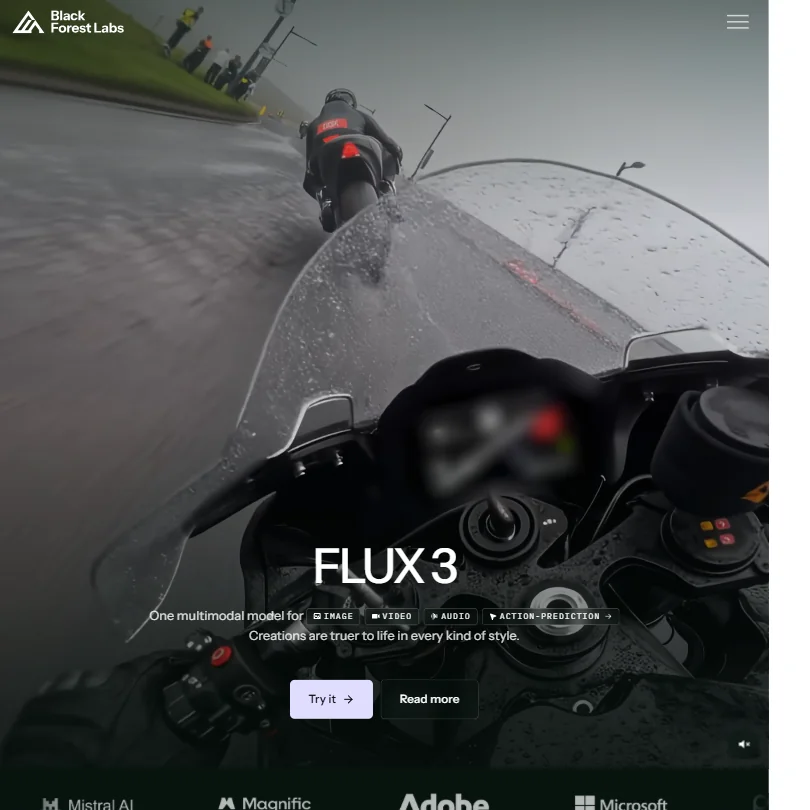
Black Forest Labs is a 2024 company trying to sit at the same table as Midjourney and Adobe. Short runway. Our research across developer forums, third-party model benchmarks, and what public user feedback exists suggests they might actually belong there, which is not something we say about most tools founded this recently.
What is Bfl?
Based in Freiburg, Germany, with a founding team that came largely from Stability AI. That background explains the open-weights instinct. The company's working theory seems to be that letting you run the model yourself is the credibility move.
Everything is built around FLUX 3, a single multimodal model covering image generation, video generation, audio generation, and robotics action-prediction. That last one is genuinely unusual. Most companies in this space are racing each other on image quality alone. BFL is apparently also trying to teach robots how to move. Honestly, that surprised us.
The positioning is developer-first, API access being the main entry point. Open weights deployment is available for teams that want everything on their own infrastructure. There's also a browser playground with no stated time limit, which is more generous than most competitors bother with. Midjourney, Stability AI, OpenAI's image tools, and Adobe Firefly are all fighting for the same attention. What separates BFL is the combination of API quality, open weights availability, and a compliance posture that larger organizations care about. SOC 2 and ISO 27001 certifications are listed on the homepage. For an enterprise sale, that's not nothing.
Bfl Image Quality: How Good Are the Results?
The quality reputation is real. Cross-referencing developer discussions on Reddit and Hugging Face community threads with vendor claims, the FLUX models consistently came up as a serious option for anyone who cares about text rendering inside generated images. Typography in AI-generated images has been a persistent problem across the category, and BFL took it seriously enough to make it a named strength across the FLUX.2 line and into FLUX 3, where high-accuracy text rendering is explicitly emphasized.
Worth being precise here, though. BFL itself publishes failure cases for its own models. So "FLUX never makes text mistakes" is not a claim we'll make, because BFL doesn't make it either. Fair. What we can say is that the track record on complex typography, infographics, and UI text is meaningfully better than what Midjourney was producing before V6, and Midjourney's current default, V8.2, has improved since then. It's a narrowing gap, not a closed one.
Stylistic range is wide. Cinematic output is mentioned as one option on the homepage, not the headline feature. That tracks with creator feedback on Product Hunt. The model doesn't seem to push every output toward a single house aesthetic. That's actually harder to build than it sounds, and the community reception when initial weights dropped on Hugging Face was strong enough that BFL clearly decided there was a real business here.
We don't have hands-on benchmark data of our own. The public reception since launch has been consistent enough, though, that we're comfortable saying: for raw output quality, BFL is sitting near the top of what's available right now.
Bfl Features: Text-to-Image, Video & Editing Tools
The feature set is bigger than most people expect. Text-to-image is the core. The FLUX TOOLS layer adds inpainting, outpainting, and upscaling on top of that. ControlNet-style structural guidance is in there, and LoRA fine-tuning is supported for teams running their own infrastructure.
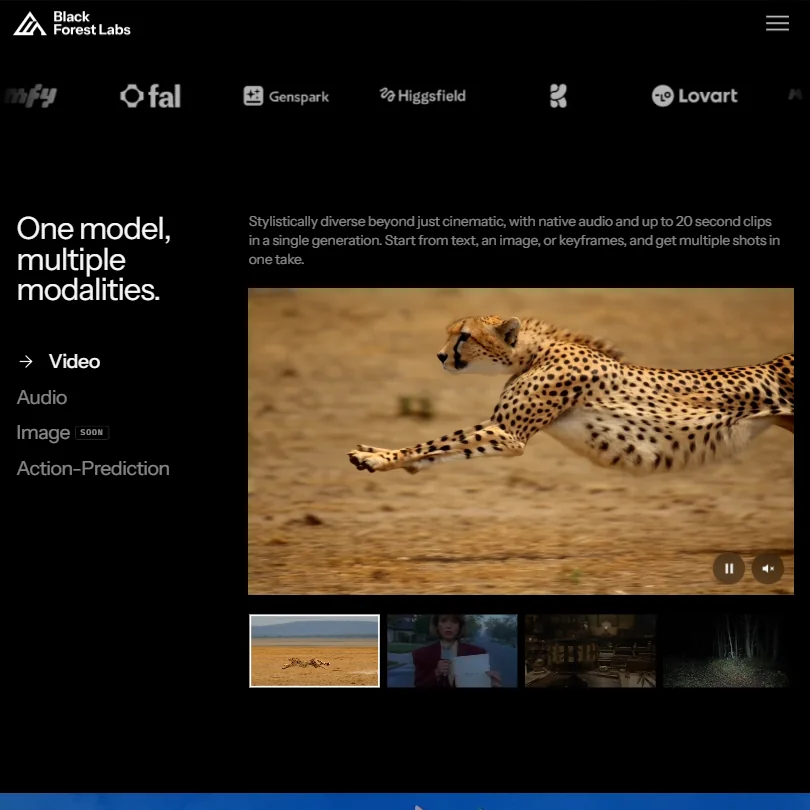
Video is newer but meaningful. Clips run up to 20 seconds from a single generation, which is a reasonable ceiling for a tool this young. You can start from text, from an existing image, or from keyframes. Multiple shots in one generation is the feature that caught our attention. Most tools make you stitch clips together yourself.
Audio adds another layer. Multilingual speech, sound effects, and ambient audio can be attached to video outputs. Optional, not forced. We like that it's opt-in rather than baked in whether you want it or not.
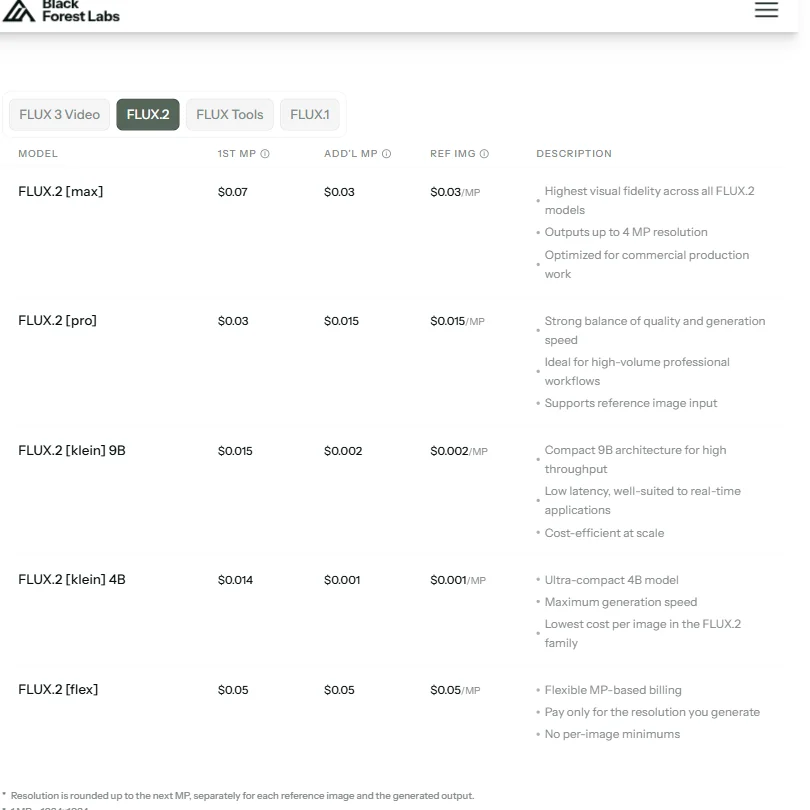
The image-to-image path takes a reference image and iterates from there. Style controls cover a wide range and aspect ratio handling works through the API, which is where most serious users will live anyway. The FLUX.2 [flex] model prices both the first megapixel and additional megapixels identically at $0.05, which is the "pay only for the resolution you generate" approach with no per-image minimums. That's a clean billing model for variable workloads.
What's missing publicly: background removal is unconfirmed, watermark behavior isn't documented, and export format specifics aren't spelled out anywhere we could find. For a tool this capable, that documentation gap is sloppy. Not great.
Is Bfl Easy to Use?
Depends entirely on who's asking. For developers, the API documentation lives at docs.bfl.ai and Hugging Face and GitHub access makes it straightforward for anyone already in that workflow. Low friction, if you know what you're doing.
For non-developers, the playground is genuinely accessible. No code required, no time limit, some free credits included. The interface doesn't appear to be the product's priority, but it works for experimentation.
What BFL doesn't have: a Photoshop plugin, a Figma integration, or a Canva connector. Designers working inside those tools will hit a wall that a developer wouldn't notice. You'd need to treat BFL as a standalone generation step or build the connection yourself via API. Not hard for someone who codes. A real barrier for someone who doesn't.
No live chat support. Email and a help desk exist. Community forums don't appear to be a thing yet. For a company founded in 2024, that's understandable. Still, if something breaks at 2am on a production pipeline, you're reading docs alone. Ease of use lands somewhere in the middle of what we've reviewed. Not the hardest, not the most polished. Fine for the audience they're actually building for.
Bfl Pricing: Free Plan vs Paid — Is It Worth It?
Here's where BFL gets frustrating. The playground is free. Enterprise pricing is custom. Everything in between is largely invisible.
The FLUX.2 model pricing visible in vendor documentation shows some structure. FLUX.2 [max] runs $0.07 for the first megapixel and $0.03 for additional megapixels, positioned as the highest visual fidelity option optimized for commercial production work. FLUX.2 [pro] drops to $0.03 and $0.015 respectively, described as the balance between quality and generation speed. The [klein] 9B model at $0.015 and $0.002 is the compact, high-throughput option suited to real-time applications, and the [klein] 4B bottoms out at $0.014 and $0.001, the lowest cost per image in the FLUX.2 family. That per-megapixel billing structure is concrete, but broader tier pricing, volume commitments, and what enterprise contracts actually look like remain opaque.
Reddit threads from early FLUX users show a recurring question: "What does this actually cost at scale?" Nobody posts a clean answer. That's a pattern we don't like seeing.
Open weights users sidestep the billing question entirely. Download the model, run it yourself, pay compute costs on your own infrastructure. Real option. Not a small lift, and it doesn't help the person who wants to call an API at a predictable rate without building anything.
We're not chasing a custom sales call to find out what a mid-tier plan costs. That's our concern, and it'll be a concern for any solo developer or small team considering BFL before they're enterprise-sized.
Bfl vs Midjourney: Which AI Image Generator Wins?
Different tools. Different users. Midjourney is a Discord-based text-to-image tool with a strong aesthetic identity and pricing that starts around $10 per month and is publicly listed. It's beloved by artists and designers. Text rendering has been a known weak point, though Midjourney has been improving it since V6, and its current default of V8.2 is meaningfully better than earlier versions. It's harder to integrate programmatically. No open weights.
BFL is API-first. Text rendering is a genuine, documented strength. The multimodal scope is broader. Compliance certifications make it more viable for enterprise contexts. Pricing is opaque.
For creative exploration with a polished interface, Midjourney still wins on experience. For building a product that generates images at scale, FLUX via API is the more serious option. That's not a close call.
What about Stability AI? The overlap is real. Both offer open weights and API access. Stability has a longer track record, more model variety, and a messier corporate history. BFL is newer, more focused, and moving faster on multimodal. We'd watch both. BFL's trajectory since launch has been sharper.
Adobe Firefly is the choice if you're already inside the Adobe ecosystem. For everyone else, it's not a primary option.
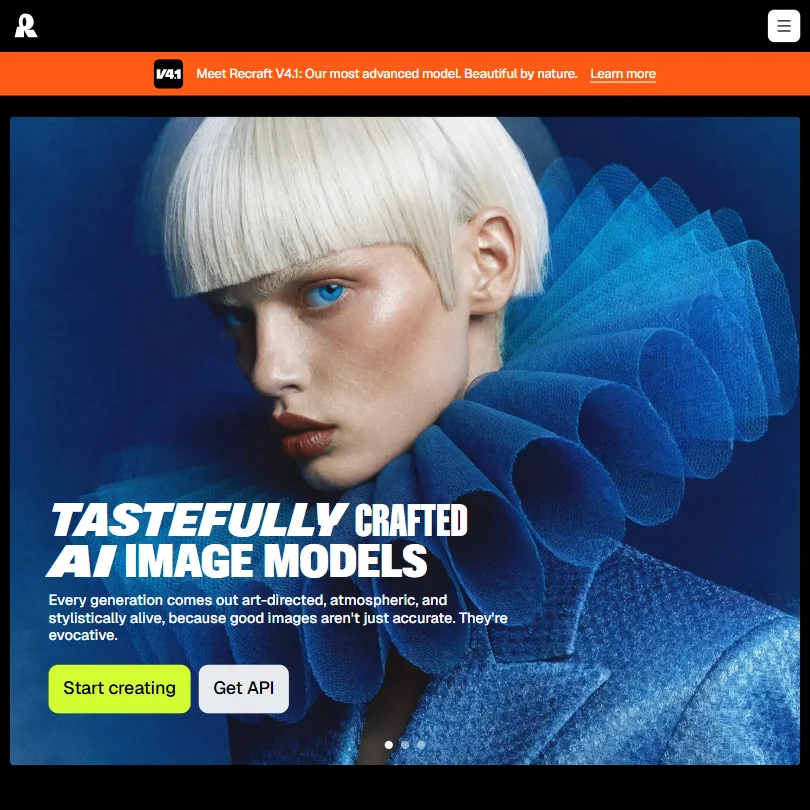
Recraft is worth a look if you want strong image generation in a more design-focused interface. No open weights available there, but it's not purely API-only either. Recraft has a full browser-based Studio with image generation, vectors, mockups, and editing built in. The UI is considerably more polished for non-developers. Different tradeoff, not a worse one, depending on who's using it.
Who Should Use Bfl? (And Who Shouldn't)
Developers building image or video generation into a product. That's the clearest fit. Production-grade API, strong model quality, workable documentation, and text-in-image capability that holds up under real use.
Enterprise teams with compliance requirements. SOC 2 and ISO 27001 certifications narrow the field considerably in this category. Most AI image tools can't claim either.
ML teams and researchers. Open weights access and fine-tuning support on your own infrastructure makes BFL worth taking seriously if you need control over the model itself.
Solo designers looking for a simple generator to bolt onto a Figma or Canva workflow. Not the fit. The integrations aren't there, and the pricing isn't transparent enough to plan around.
Small teams that need upfront pricing before committing will bounce too. The sales-first pricing approach filters out a certain user type by design. We don't think that's accidental.
Bfl Review Verdict
BFL is one of the more impressive entrants in this space since launch. The FLUX model family is legitimately strong. Text rendering, complex prompt handling, a multimodal scope covering video and audio, open weights deployment, enterprise compliance certifications. That's a compelling stack for a company that's been operating for about a year.
The frustrations are real. Pricing is largely a black box beyond the per-megapixel model rates. Support is thin for a tool that developers will depend on in production. There's no community layer, no self-serve tier that lets a small team plan a budget, and documentation gaps on basic export and watermark behavior that shouldn't exist at this stage. For a developer-focused product, that opacity creates unnecessary friction before the first API call is even made.
What keeps BFL in serious contention is the combination of things nobody else has put together quite like this. A single model covering image, video, and audio. Open weights for the privacy-conscious. Production-grade API for the integration-focused. Compliance certs for the enterprise-cautious. That's a specific position, not a generic one.
We'd recommend BFL without hesitation for the right use case. The recommendation comes with an asterisk: get the rate card before you build a dependency on the API, not after.
Frequently Asked Questions
Does Bfl offer a free plan?
Yes. The playground is free with no stated time limit and includes some credits to experiment without writing code. Genuinely useful for testing image quality before committing to an API plan. Credits do run out, and paid pricing beyond the per-megapixel model rates isn't listed publicly once you want to scale up. That's the limitation worth knowing going in.
Is Bfl good for commercial use?
Yes, under the right license. API users get commercial rights through their API license. Teams running open weights on their own infrastructure access a commercial open weights license separately. We'd recommend reading both before going to production. The distinction matters depending on how you're deploying, and conflating them is a real risk.
How does Bfl compare to Midjourney for image quality?
Depends on what you're generating. FLUX has a documented, consistent advantage on text rendering inside images, which has been a known weak point for Midjourney. Midjourney has improved text handling since V6, and its current V8.2 default is better than earlier versions, so the gap is narrowing rather than fixed. For pure aesthetic output in artistic or cinematic styles, it's subjective and closer than the text rendering gap. BFL's bigger structural advantages are the API access, open weights availability, and multimodal capability. Midjourney doesn't offer any of those.