Luigi's Box is an AI ecommerce tool for product discovery, combining site search, recommendations and analytics for stores of any size.

What is Luigi's Box?
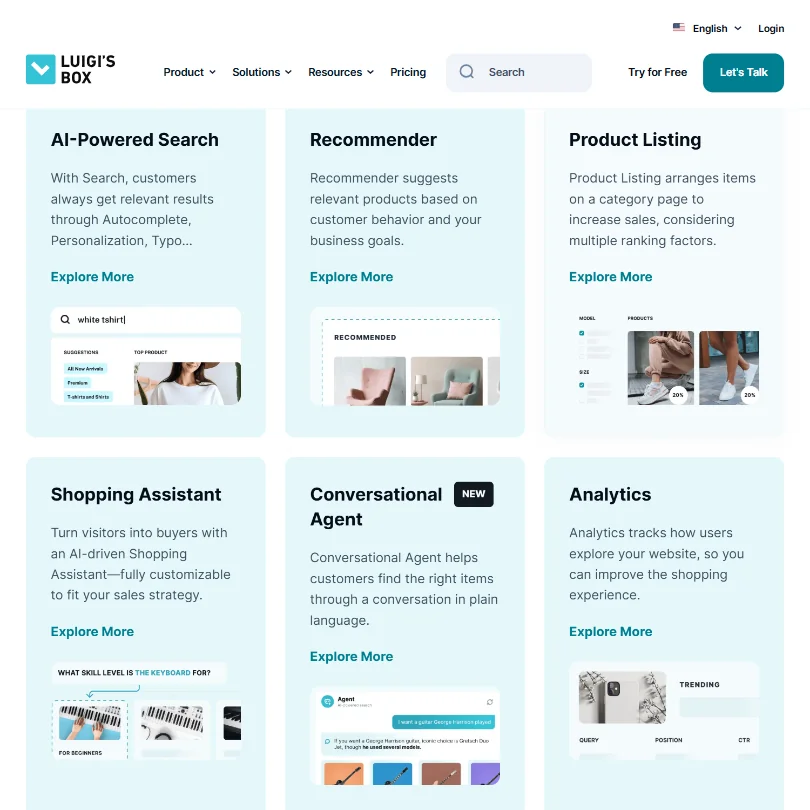
The core offering is an AI-powered product discovery suite built specifically for e-commerce. Not a general search tool that someone bolted onto a shop. Purpose-built. The main products are site search, a recommender engine, product listing pages, an analytics layer, and a shopping assistant that now includes a conversational agent. The conversational agent is labeled "NEW" on the homepage, which suggests it's recent, though there's no public launch date we could nail down. What the platform is selling, essentially, is the idea that your current site search is leaving money on the table. That pitch is common. Luigi's Box backs it with case study numbers, including a claimed 38.46% increase in average order value for 11teamsports. Skeptical? Fair. But that's a specific enough number that it doesn't smell like marketing rounding.Luigi's Box Features: Product Listings, Bulk & Marketplace Tools
Luigi's Box AI Writing Quality: Are the Product Descriptions Good?
Here's where the heading and the product don't quite match. Luigi's Box doesn't generate product descriptions. At all. There's no AI writing component in the traditional sense. What the AI does is understand search intent, surface relevant products, and adjust rankings based on behavioral data. That's genuinely sophisticated. The AI model is proprietary, which means there's no public benchmark to hold it against. G2 reviewers in technical and e-commerce manager roles frequently call out the search relevance as a standout improvement over whatever they ran before. We kept seeing comments about zero-result searches dropping after implementation. That's the real writing quality here. Not copy. Discovery accuracy. We're not going to call this a weakness. It's just a different product than the section header implies. Know what you're buying.Luigi's Box Marketplace Support: Shopify, Amazon & Beyond
Native integrations cover Shopify and WooCommerce. Also Magento, Shopware, PrestaShop, and OpenCart. BigCommerce too. That's a solid spread for mid-market e-commerce. A full API is available at docs.luigisbox.com if none of those fit. Amazon is a hard no. Luigi's Box is an on-site tool, not a marketplace listing platform. If your primary sales channel is Amazon and you're hoping Luigi's Box helps there, it doesn't. Etsy, same story. No Zapier integration is publicly documented. That's a friction point for teams running multi-tool automations without developer support. Not a dealbreaker, but it's a gap that Algolia and some others quietly fill.Is Luigi's Box Easy to Use?
This is where our research gets a bit complicated. The platform scores well on outcomes in reviews but implementation comes up repeatedly as a variable. Some teams get through setup fast with the native integrations. Others hit friction, particularly on custom implementations. Luigi's Box offers three setup tiers: Self-Integration, Custom Integration, and Enterprise. The Self-Integration plan is aimed at teams who can follow docs and plug in. Custom Integration involves more hand-holding. The gap between those experiences seems meaningful based on what we read. Their help resources are genuinely good. Help Center, Academy (flagged as new), documentation, implementation guides, and e-books. That's not a placeholder support library. G2 reviewers who flagged implementation complexity often followed it with notes about responsive support from the team. That tracks. Honestly, for smaller shops expecting a plug-and-forget setup, there may be a learning curve that the homepage undersells.Luigi's Box Pricing: Is It Worth It for E-Commerce Sellers?
Luigi's Box vs Algolia: Which E-Commerce AI Tool Is Better?
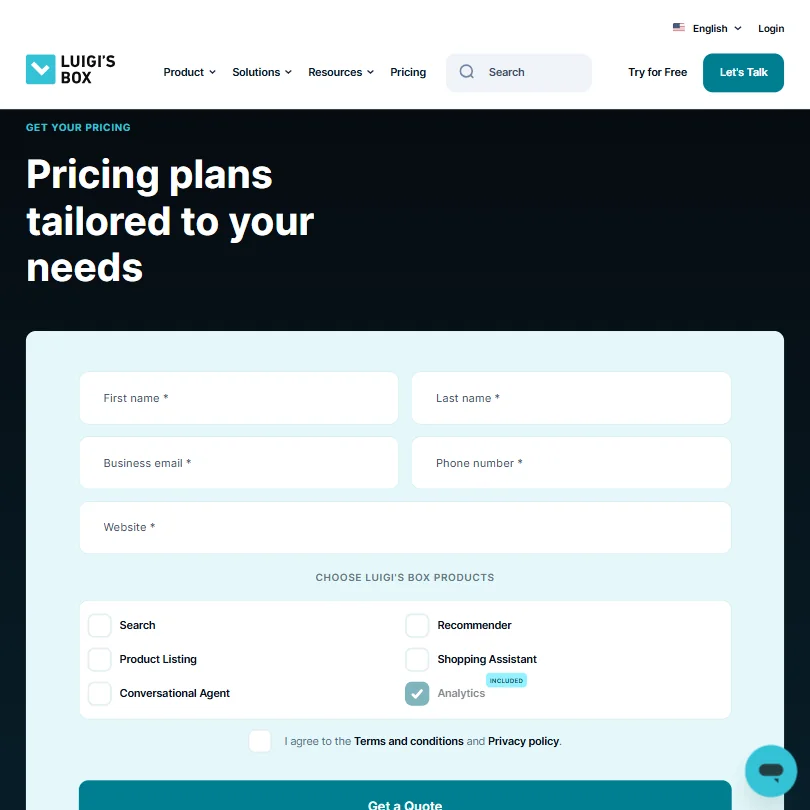
Algolia is the obvious comparison. Both do site search with AI-powered ranking. Both target e-commerce. The differences are real, though. Luigi's Box is more vertical. It's built for e-commerce and doesn't try to be a general-purpose search API. Algolia is more flexible and developer-friendly, which can be a feature or a problem depending on your team's resources. Algolia has public pricing. Luigi's Box doesn't. If you're a smaller team and budget certainty matters, that asymmetry is worth thinking about before you get into a sales cycle with either. On reviews, Luigi's Box has a higher G2 rating than Algolia at the time of our research. Whether that gap reflects product quality or review strategy is genuinely hard to say. We'd say both. The recommendation relevance improvements reviewers describe for Luigi's Box feel real. We don't buy the idea that a 4.8 average is purely manufactured. Bloomreach and Coveo are also in the conversation for enterprise buyers. Both are more complex and priced accordingly. Luigi's Box sits in a useful middle band.Who Should Use Luigi's Box? (And Who Shouldn't)
Mid-sized e-commerce operations. That's the fit. Stores with real product catalogs that are losing revenue to poor search results and thin discovery. The ROI story is most believable at that scale. Enterprise retailers with custom stacks can also work with Luigi's Box, particularly through the API and the Enterprise plan. Nespresso and Škoda are listed as case study clients. Those aren't small implementations. Marketplace sellers, though. Not the fit. If the business runs primarily through Amazon or Etsy, Luigi's Box offers nothing there. And very small shops on tight budgets should be cautious. Custom pricing without a self-serve tier means even the trial requires a sales touchpoint eventually. Teams that need bulk product description generation should look elsewhere. Hypotenuse AI does that part of the job. Luigi's Box picks up where content ends and discovery begins.Luigi's Box Review Verdict
Built 2017. Profitable-looking niche. Strong G2 reputation. The product is genuinely purpose-built for the problem it solves, and the problem is real. Poor site search costs e-commerce stores money every day. What holds it back slightly is opacity. No public pricing means every evaluation starts with a sales call, which adds friction for buyers who want to research on their own time. No refund terms publicly stated. The conversational agent is new and hard to evaluate without hands-on access. But the core product, the search and recommender and product listing trio, gets consistent praise from reviewers with actual implementation experience. That's a harder thing to fake than star ratings. We'd recommend putting it through the 30-day trial if you're in the mid-market e-commerce space with a real catalog problem. Just go in knowing what it does and what it doesn't.Frequently Asked Questions
Does Luigi's Box offer a free plan?
No free plan exists. There's a 30-day free trial, which gives you enough time to test the core search and recommender features against your actual catalog. After that, you're on a custom paid plan.
Which e-commerce platforms does Luigi's Box integrate with?
Shopify and WooCommerce are the most common starting points. Magento and Shopware are also natively supported. Beyond those, there's a full API for custom builds, and the docs at docs.luigisbox.com are detailed enough that a developer can work from them independently.
How does Luigi's Box compare to Algolia for a mid-sized store?
Luigi's Box is more focused on e-commerce out of the box, which typically means less configuration work to get relevant product search running. Algolia is more flexible but also more hands-on to set up well. The pricing comparison is hard to make publicly since Luigi's Box doesn't publish rates, but reviewers on G2 suggest Luigi's Box becomes more cost-competitive at higher query volumes.