Founded in 2023. No G2 page, no Capterra listing, no public pricing. We pulled research on Decagon expecting a standard AI chatbot vendor and found something harder to categorize than that, which is both more interesting and more frustrating to write about.
What is Decagon?
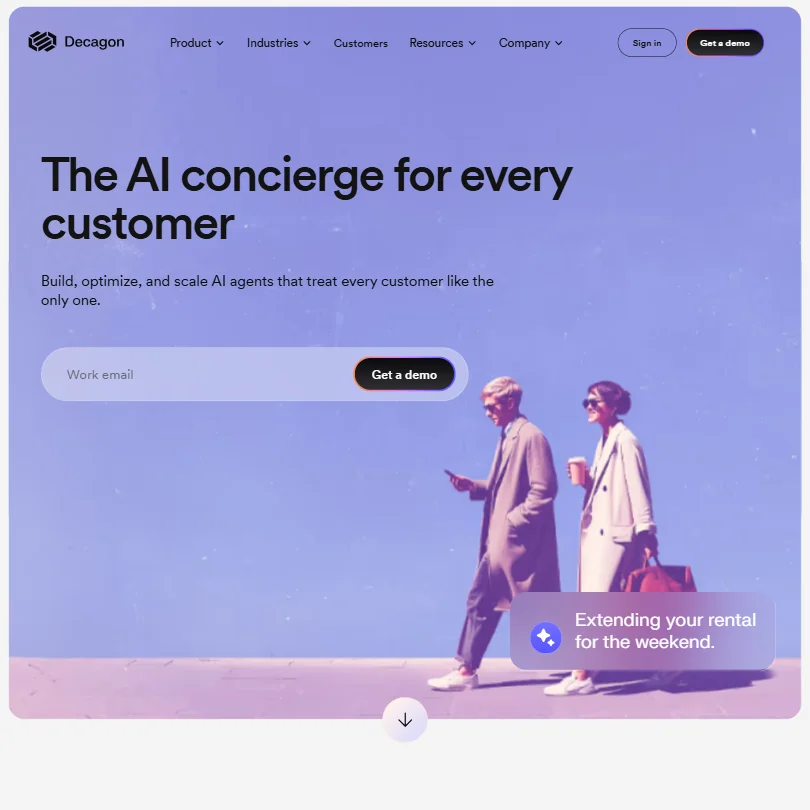
Decagon is an AI concierge platform aimed squarely at enterprise customer support operations. The core pitch is replacing brittle, code-heavy chatbot configuration with something support teams can actually manage without filing a ticket to engineering. They call their workflow system Agent Operating Procedures, or AOPs. Write the agent's behavior in natural language, update it when policies change, skip the developer dependency.
Their public customer list leans toward fintech, retail, and travel. Chime is the most visible name they surface. That case study cites 70% resolution across chat and voice combined. Real number. Unverified methodology.
San Francisco-based. Enterprise-only conversations, no self-serve funnel. That positioning tells you most of what you need to know before you even look at the features.
Decagon Features: Chatbot, Helpdesk & Support Automation Breakdown
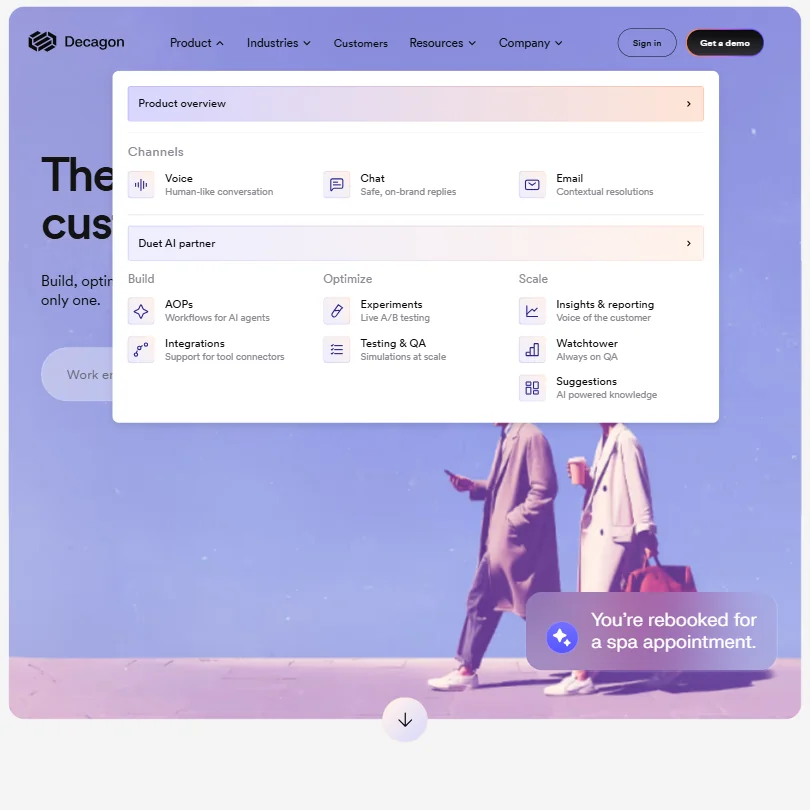
The AOP system is what actually separates Decagon from most customer support automation tools in this tier. Most vendors still run flow builders or decision trees with a thin AI coating. Decagon pushes natural-language-first configuration throughout the whole build process, covering what the agent does, how it handles edge cases, and what it escalates, all in plain text.
Channel coverage is documented: chat, voice, and email all sit inside the same intelligence layer. Chat specifically includes web live chat, SMS, and WhatsApp, among others. That's more comprehensive than we initially had on record, and we've updated our notes accordingly.
Their Watchtower feature handles oversight and escalation. The name is a bit much, but the function matters: real-time monitoring of live conversations with handover logic when the AI hits its ceiling. Whether that handover is graceful or clunky is the kind of thing that only surfaces in actual use.
Ticket lifecycle management and an analytics suite are both listed. The analytics framing is around converting conversation data into customer insights. Fine in theory. Test whether the reporting layer holds up outside a demo environment.
Integrations are now documented more clearly than early sources suggested. Salesforce is explicitly named. Intercom and Zendesk appear on the integrations page as well. Anyone who needs a HubSpot connection should raise it directly during the demo.
Decagon Bot Quality: How Well Does It Handle Real Customer Queries?
This is where the research gets genuinely thin. No G2 presence. No Capterra trail. No Reddit threads with practitioner-level feedback. No Trustpilot data. For a tool this new and this enterprise-focused, that's not automatically a red flag. It does mean almost everything we're working from is vendor-supplied.
The Chime result, 70% resolution across voice and chat, is a credible number for a fintech company fielding complex member queries, assuming the methodology is solid. We don't have the methodology. Fair.
The AOP approach has real logic behind it. Natural-language workflow definition should, in theory, produce more coherent agent behavior than flow-builder alternatives, because intent is expressed the way a human would express it rather than as branching logic that fractures on unusual inputs. We've seen this argument made before and watched it fall apart the moment an agent hit an edge case no one anticipated. Whether Decagon avoids that at scale is genuinely unknown from outside.
We're cautiously positive. Architecture is sound. Independent validation is absent.
Decagon Channel Coverage: Which Platforms Does It Support?
Chat, voice, email. All documented. Chat coverage specifically includes web live chat, SMS, and WhatsApp, which is broader than earlier third-party sources indicated, and broader than we originally had on file.
The voice piece is where Decagon looks most confident. The Chime deployment calls out cross-channel memory: a conversation starting in chat that moves to voice doesn't lose context. That's a real capability gap in most AI support agent platforms right now. Honestly, it's the single most notable thing about the product.
Gorgias has deeper ecommerce and social-channel positioning, and that's a legitimate distinction for retail brands evaluating both. But the earlier characterization that Decagon lacked WhatsApp or SMS coverage is no longer accurate based on current documentation. Worth knowing before you rule it out.
Is Decagon Easy to Set Up and Manage?
The AOP framing is explicitly about cutting engineering dependency. Every agent update shouldn't require a sprint or a vendor ticket. That's a real problem the product is designed to solve, and the logic holds up at the conceptual level.
In practice, enterprise AI tooling is rarely as frictionless as the homepage implies. Even so, if a support team can write a standard operating procedure in plain English, they can theoretically define agent behavior in Decagon without waiting on a developer. That's meaningful if the implementation matches the marketing.
The testing and observability layer they reference matters here. Rapid iteration across the agent lifecycle with pre-deployment testing is what separates a serious AI agent platform from a prototype dressed up as one. Ask for granular specifics on how that testing works.
No self-serve trial. No free plan. You're booking a demo to get started, which means you can't see the onboarding experience before you commit. Frustrating for anyone running a budget evaluation before a sales call.
Decagon Pricing: Is It Worth It for Support Teams?
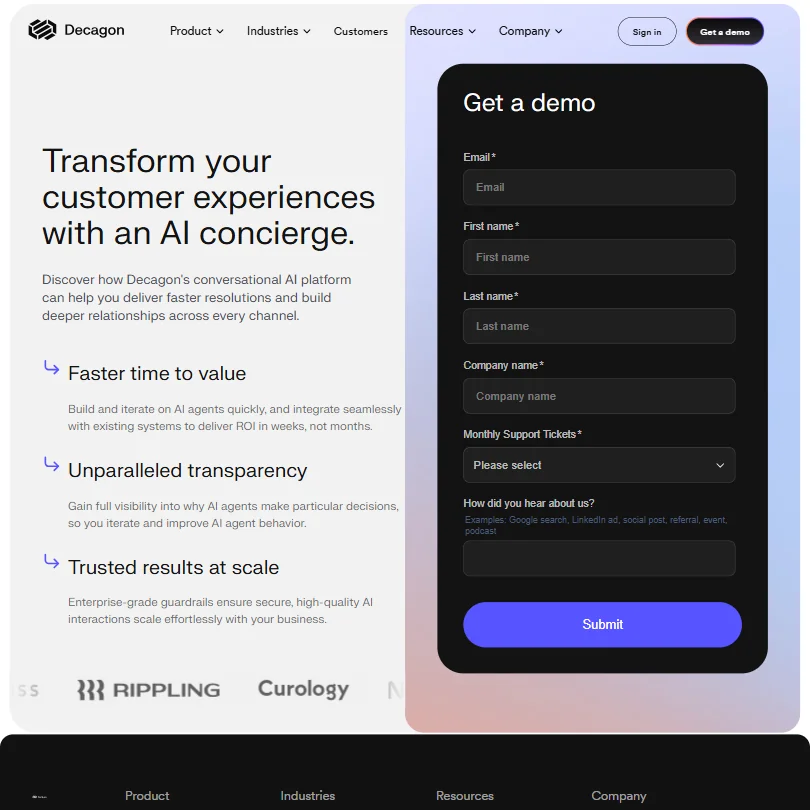
No public pricing. Nothing on the site. No starting figures, no plan tiers, no per-seat ranges. The demo form, which asks for your monthly support ticket volume as a required field, tells you something about how they're qualifying inbound interest. Enterprise custom pricing only.
No free trial either. You're committing to a sales conversation before you've seen the product handle a single query. For a $50K ARR deal, that's standard enough. For a team still in the exploration phase, it's a real friction point.
Of the 43 AI customer service tools we've reviewed, 16 offer a free plan. Decagon is not one of them. That's a deliberate market choice. Not a criticism. Just a fact worth knowing before you fill out that form.
Decagon vs Intercom Fin: Which Customer Service AI Wins?
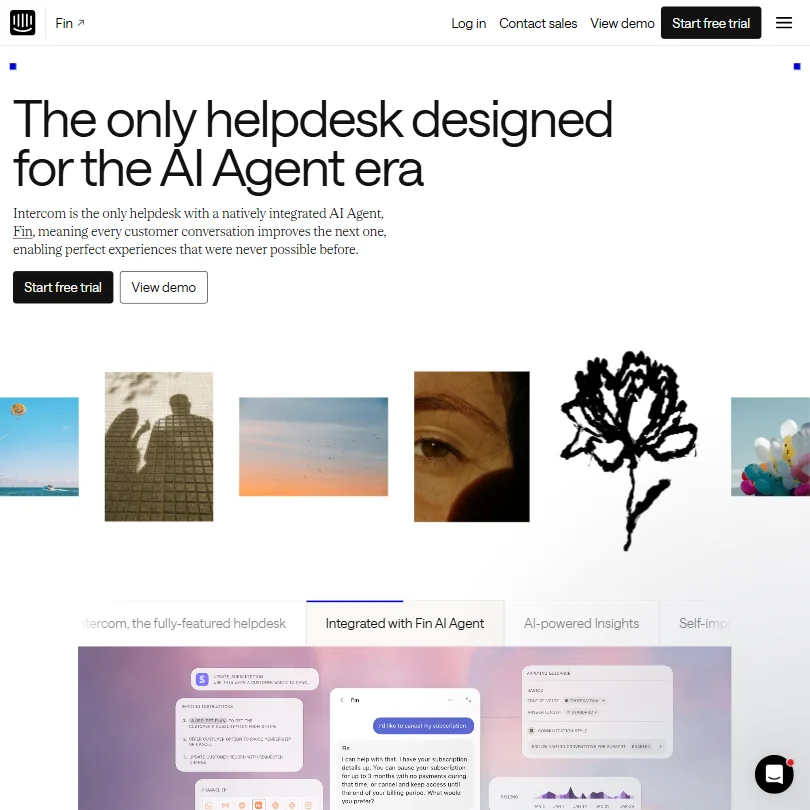
Fin is the obvious comparison. Both target enterprise-grade AI resolution. Both wrap AI agents in escalation and oversight logic. Both are pitching actual ticket closure rather than deflection theater.
The difference is surface area. Fin inherits the full Intercom ecosystem, meaning a CRM layer, a helpdesk, and a broader integration catalog without additional stitching. Real advantage for teams that don't want separate tools for separate functions.
Decagon's edge is the AOP system. If the core pain is that every chatbot update requires a developer, natural-language workflow definition is a more direct answer to that problem than anything Intercom currently offers. The tradeoff is a younger company, a thinner public track record, and pricing that requires a conversation to understand. Neither comparison resolves cleanly without talking to both vendors.
Decagon wins on architecture philosophy. Fin wins on ecosystem depth. That tracks.
Who Should Use Decagon? (And Who Shouldn't)
Enterprise brands with high support volume and budget for a custom deal. Fintech companies, mid-to-large retail operations, and travel platforms where cross-channel memory matters more than deflection rates. Support ops leaders tired of waiting on developers to update agent logic should take the demo.
SMBs and early-stage teams. Not great. No self-serve access, no free plan, and no transparent pricing means this isn't built for teams still deciding whether AI support tooling is worth it at all. Teams with a specific HubSpot integration dependency should also confirm that directly in the demo rather than assuming it's covered.
Decagon Review Verdict
Genuinely interesting product. Frustrating lack of external validation. The AOP approach is smart. The omnichannel coverage, especially voice with cross-channel memory, is ahead of most tools in this category. The Chime case study is compelling if you take it at face value, and right now face value is mostly what we have.
No public reviews. No pricing. For a company founded in 2023, that's not surprising. It still makes a confident recommendation harder.
The integration picture is clearer than it was, with Salesforce, Intercom, and Zendesk confirmed publicly, but HubSpot and a few others remain unconfirmed, and that's a practical question any enterprise buyer should resolve before the contract stage.
This is a tool you research, demo, and decide on deliberately. Not one you stumble into. Decagon gives you no other option, which is a product positioning choice as much as it's an inconvenience. Budget allocated, evaluation underway, team ready for a sales process. That's the fit.
Frequently Asked Questions
Does Decagon offer a free trial?
No. No free trial, no free plan. The entry point is a demo request form that asks for your monthly support ticket volume before you've seen the product do anything. Consistent with enterprise positioning. Not helpful if you're still in early evaluation mode.
What makes Decagon different from other AI chatbot platforms?
The Agent Operating Procedures system. Instead of flow builders or proprietary scripting languages, teams write agent behavior in plain language and update it without developer involvement. That's the core differentiator, and it's more substantive than most feature-list distinctions in this category.
Is Decagon suitable for small businesses?
No. Custom enterprise pricing, no self-serve access, and a sales-first onboarding process make this a poor fit for smaller teams. There are plenty of AI helpdesk tools with transparent pricing and trial periods designed for teams still scaling. This isn't one of them.