Founded in 2014, Bengaluru-based KaptureCX has been around long enough to accumulate real opinions. It just hasn't accumulated many public ones. G2 and Capterra don't surface ratings. Trustpilot is quiet too. That's thinner evidence than you'd get from a Freshdesk or a Zendesk, and it makes this kind of research harder than it should be. What we did find was a company that has made a clear architectural bet on agentic AI, and a pricing page that tells you exactly nothing about what any of it costs.

Worth stress-testing.
What is KaptureCX?
KaptureCX positions itself around something called AgentOS, a single execution layer where AI agents, human oversight, quality auditing, and operational intelligence are supposed to live together rather than hand off between separate tools. The bet is that context loss happens at handoff points, and eliminating the handoff eliminates the problem. That's a cleaner architectural thesis than most platforms in this category actually commit to.
The target is mid-to-large enterprises. Banking, insurance, retail, travel, fintech. Their own website names 1,000+ global enterprise customers, citing logos including Cathay Pacific, Aegon, and Jio Digital Life, among a few others. We can't independently verify the count, but the industry-specific solution pages suggest genuine vertical depth rather than generic feature repackaging.
Not trying to be Freshdesk for a 12-person startup. They're not.
KaptureCX Features: Chatbot, Helpdesk & Support Automation Breakdown
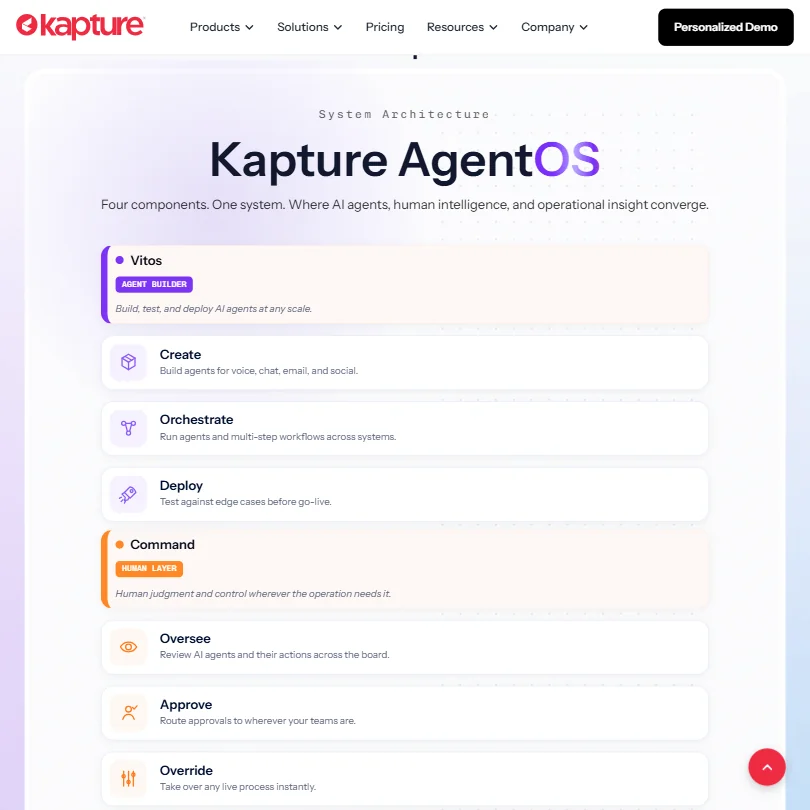
AgentOS breaks into four named layers. Vitos Agent Builder is where AI agents get created, configured, and deployed across voice, chat, email, and social channels. No-code, the vendor claims. More usefully, Vitos includes pre-deployment validation: teams can replay historical interactions, stress-test against edge cases, and use a private sandbox environment before anything goes live. That's the part that actually matters. Most no-code builders let you launch first and fix in production.
Command is the human oversight layer. It routes approvals, surfaces AI actions for review, and lets a human take over any live process immediately. That tracks with what regulated enterprises actually need from AI automation, not full autonomy but auditable control.
Calibrate is the audit and coaching layer. Every interaction gets logged against SLAs. Quality scores run automatically. Sentiment and tone signals are recorded alongside individual transcripts at the interaction level. Calibrate also builds coaching material directly from interaction gaps, and produces a Best Practice Library from successful ones. That last feature is less common than it should be, even at higher price points.
Worth separating out: Kapture also ships a distinct GenAI Knowledge Base product that handles support articles, FAQs, external self-service, and knowledge management. That's a different thing from Calibrate's coaching library, even though both involve accumulated content. The distinction matters for procurement.
Pulse is the broader intelligence layer. It queries operational data, identifies patterns across interactions rather than flagging individual ones, and can apparently surface recommendations that execute without manual steps. We're mildly skeptical of that last claim until we see it in a real deployment. The trend-level sentiment features sit here too, distinct from Calibrate's interaction-level signals.
KaptureCX Bot Quality: How Well Does It Handle Real Customer Queries?
The review trail is thin. No public G2 or Capterra data, no Reddit threads with real-world stress tests, no Trustpilot sample to pull from. What we have is architecture, and the architecture is credible.
The Vitos pre-deployment sandbox is the structural detail that separates this from most chatbot tools. Replay historical interactions, test edge cases, validate before you ship. In BFSI or travel ops, where a bad bot response carries compliance consequences, that's not a nice-to-have.
Honestly, we'd want hands-on time before saying anything definitive here. The design is sound. The execution is unverifiable from outside a live deployment.
KaptureCX Channel Coverage: Which Platforms Does It Support?
Voice, chat, email, and social run through the Vitos layer. The platform operates on web, iOS, and Android. Human agents work through Command, so live takeover is available across those same channels. That's solid baseline coverage.
What's absent from the public documentation: any mention of multilingual support. For a platform targeting global enterprises in banking and travel, that's a real gap in what's findable, even if the capability exists behind the scenes.
Integrations are where we hit a wall. Kapture references connections to existing enterprise tooling, and a dedicated integrations page apparently lists specific names. We couldn't surface that data cleanly. No confirmed Salesforce connection, no Shopify, nothing on Slack or Zapier. That doesn't mean those integrations don't exist. It means the company hasn't made them easy to find during an outside evaluation. For procurement teams on a timeline, that friction is genuinely annoying.
Is KaptureCX Easy to Set Up and Manage?
Enterprise software is rarely easy to set up. That's the category, not a specific knock. KaptureCX doesn't pretend otherwise. The demo-only entry path makes clear this is a configured deployment sale, not a trial license.
The no-code Agent Builder is the clearest accessibility signal. Build and orchestrate agents without engineering resources. Whether that means genuinely no-code or "no-code if you have a capable CX ops person" is impossible to say from the outside. We've seen both described the same way.
Older blog copy on the site mentions a free trial. Those links currently redirect to demo request pages. No active self-serve trial exists. Kapture does describe sandbox environments, including a private sandbox for employee-experience agents and the Vitos validation environment, but those are accessed through deployment, not as a pre-sales evaluation tool. The gap between "sandbox exists" and "you can evaluate it before signing" is real.
KaptureCX Pricing: Is It Worth It for Support Teams?

Nothing. No pricing on the site. No starting figure, no tier breakdown, no ballpark. The pricing page is a demo request form. Custom enterprise only.
Not unusual. Zendesk and Salesforce Service Cloud do the same at certain tiers. But the complete absence of any signal, even a "starting from" number, makes it hard to know whether you're looking at a $50K annual contract or a $500K one. For enterprises in early-stage budget planning, that opacity is a real friction point, not just an inconvenience.
No public refund policy either. Enterprise norm. But worth knowing going in.
KaptureCX vs Freshdesk: Which Customer Service AI Wins?
Not a fair fight in either direction. They're solving different problems.
Freshdesk has transparent pricing, a free plan, a self-serve trial, and a large review base. You know what you're buying. KaptureCX has deeper agentic architecture, and the Calibrate audit layer alone is more sophisticated than anything Freshdesk ships natively. Command-layer oversight and pre-deployment sandbox validation don't exist in Freshdesk's standard helpdesk model.
A 50-person support team with predictable ticket volume should look at Freshdesk. A regional bank running thousands of daily interactions across voice and digital channels, who needs AI agents that can coordinate multi-system workflows without constant human babysitting, should make the Kapture sales call.
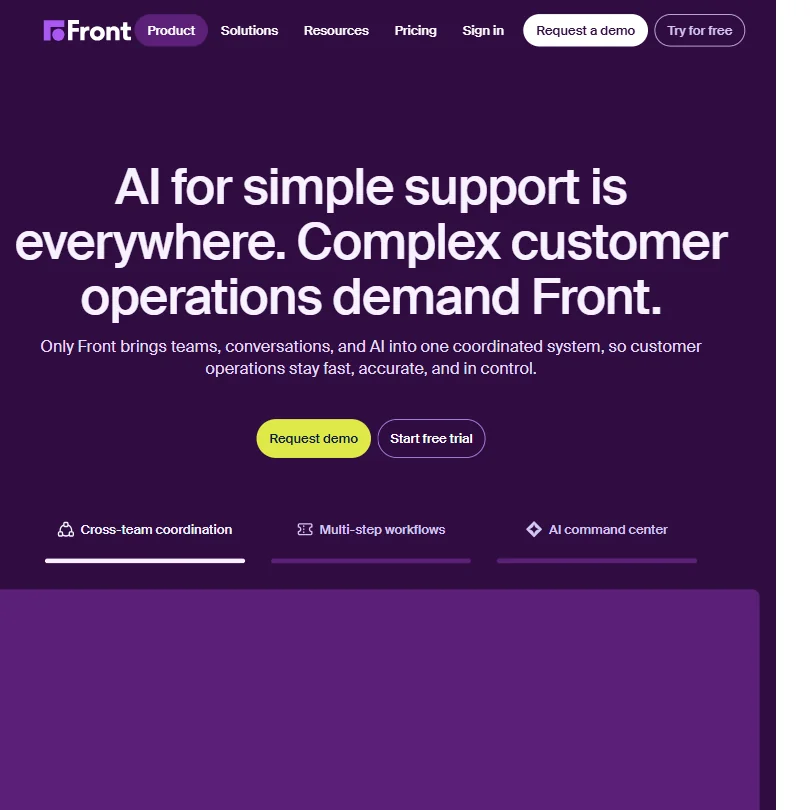
For teams on the smaller end of enterprise who want something closer to Freshdesk's ease of entry but with more AI depth, Fin sits interestingly between those two positions.
Who Should Use KaptureCX? (And Who Shouldn't)
Large enterprises in regulated industries. BFSI, travel ops, large retail with complex multi-system workflows and real auditability requirements. That's the fit.
Not SMBs. Full stop. The sales motion, the pricing opacity, the configuration depth required. None of that is calibrated for a team under 100 people.
E-commerce brands that are primarily ticketing-focused should look at Gorgias first. Built for that specific problem, transparent pricing to match.
Also a poor fit for teams that need to evaluate quickly. The demo-only gate means time-to-evaluation is measured in weeks.
KaptureCX Review Verdict
The AgentOS architecture is coherent. The layered approach across Vitos, Command, Calibrate, and Pulse is better thought through than most competitors at this tier, and the separation between Calibrate's interaction-level coaching and Pulse's operational pattern analysis shows architectural discipline that marketing copy usually papers over. The Calibrate layer, specifically the automatic quality scoring and Best Practice Library built from real interaction data, is the feature we kept coming back to. Compliance-heavy industries will find that genuinely useful.
The weak spots are real. Pricing opacity is the biggest problem for early-stage evaluation. No public review base means peer validation is absent, and you're left with vendor case studies. The integration list being hard to surface from outside a sales conversation isn't a confidence builder.
The design earns a closer look. Whether the execution matches the architecture is the open question, and there's currently no self-serve way to answer it.
How KaptureCX compares
KaptureCX scores 7.3 out of 10 among the helpdesks we rate. These two do the same job and are the closest to it, compared on what each vendor publishes.
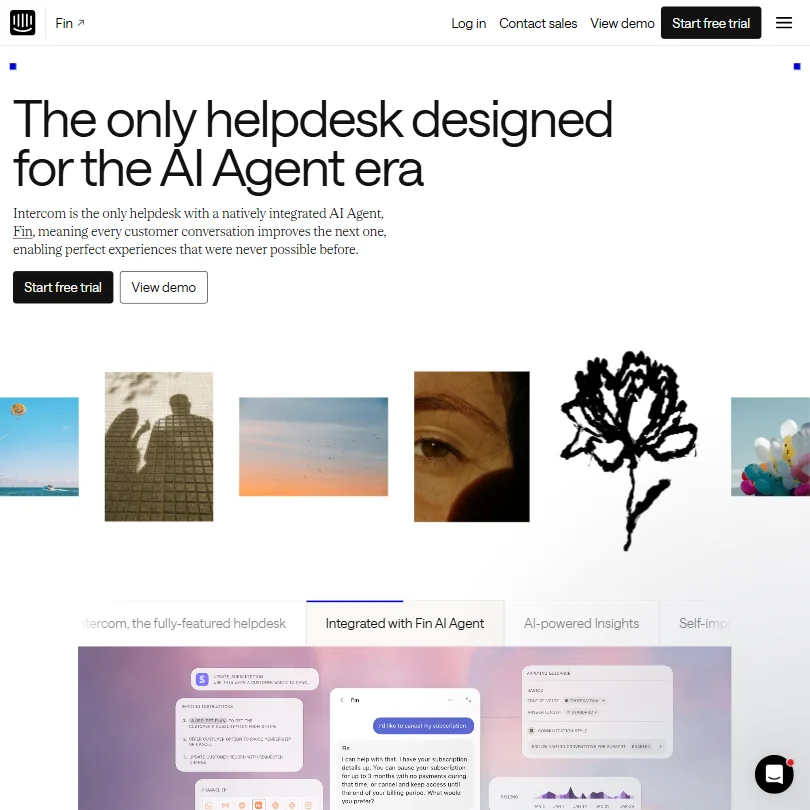
Intercom
KaptureCX's AI answers in 100 languages, more than double Intercom's 45. We could not find a published price for KaptureCX on its site, while Intercom's cheapest plan is $39 a month. KaptureCX offers phone support; Intercom's support options are email, chat and community, with no phone line. Both hold SOC 2, HIPAA, ISO 27001, SSO and keep an audit log.
Pick Intercom if you want a published price and slack as a channel.
Pick KaptureCX if you want more languages and phone support.
Zendesk
KaptureCX answers in 100 languages against Zendesk's 80, but we could not find a published price for KaptureCX on its site while Zendesk starts at $25 a month. Zendesk supports Slack and SMS as channels; KaptureCX does not list either. KaptureCX keeps your data out of AI training entirely; Zendesk trains its own machine learning models on sanitized customer data. Both offer phone support and hold the same security certifications.
Pick Zendesk if you want a published starting price and slack support.
Pick KaptureCX if you want the most languages and no AI training on your data.
Frequently Asked Questions
Does KaptureCX offer a free trial?
No active free trial exists. Older blog posts on the Kapture site reference one, but those links currently redirect to demo request pages rather than a live signup. Sandbox environments are described in the product documentation, including a private sandbox for employee-experience agents and Vitos's validation environment, but those are part of deployment, not pre-sales access. The only current entry point is a personalized demo request.
What industries does KaptureCX work best for?
Their own solution pages focus on BFSI (banking, financial services, insurance), retail, travel, and what they call digital native companies. The audit features in Calibrate and the compliance orientation of the Command oversight layer suggest the platform is genuinely designed for regulated environments. Not just marketed at them.
How does KaptureCX compare to Zendesk?
Zendesk has a much larger public review base, transparent pricing across most tiers, and a broader documented integration ecosystem. KaptureCX's agentic architecture is more ambitious, particularly the Command and Calibrate layers, but it's harder to evaluate without a sales engagement. For enterprises that need deep workflow automation and can absorb a longer procurement cycle, the comparison is worth making directly. For teams that want to move fast and self-evaluate, Zendesk is the easier path.