SAASINSPECTOR
Design logo

Design Review

Small business owners, entrepreneurs, and marketers needing AI-powered logo, branding, and social media design

Research-based review. We analyzed vendor documentation, customer reviews on G2, Capterra, and Reddit, and live pricing — not hands-on testing yet. We update as our team puts tools through real workflows.

The verdict

Design.com is an AI-powered branding tool aimed at small business owners and first-time founders who need logos, social graphics, and print materials without any design background. It covers a surprisingly broad feature set including brand kits, animation, and background removal, but it deliberately avoids professional workflows like team collaboration, Figma exports, or API access. With over a million users but minimal third-party review coverage, it scores well for its niche but has clear ceiling limitations.

Pros

  • AI Logo Maker generates multiple logo options from text prompts, making it accessible to users with zero design experience.
  • Brand kit functionality bundles logos with business cards, letterheads, and other print-ready materials in one workflow.
  • Supports social graphics across Facebook, Instagram, LinkedIn, and TikTok, covering major platforms in one tool.
  • Print-ready vector file output is included, which is essential for professional printing requirements.
  • Animation support for Reels and short-form video content was an unexpected and valuable addition.
  • Features an AI Background Remover, a presentation builder, and flyer templates, making the feature set broader than expected.
  • Over one million users suggests real-world validation for its target non-designer audience.

Cons

  • Design.com has no meaningful presence on G2 or Capterra, making independent review research significantly harder.
  • No team collaboration features are documented, limiting the platform's usefulness for small teams or agencies.
  • No Figma or Adobe export options, which locks users out of standard professional design workflows.
  • No API access mentioned, ruling out integration with other business tools or custom automation.
  • Customization is constrained rather than freeform, which may frustrate users who outgrow the basic editing options.
  • No support for UI wireframing, making it unsuitable for product or web design use cases.
Free plan Yes

We pulled vendor documentation, dug through Reddit threads, and cross-referenced whatever scattered review coverage we could find. Design.com has almost no footprint on G2 or Capterra, which made the research messier than usual. What we kept seeing was a picture of an AI design tool built squarely for the person who needs a logo by Thursday and has zero design background. That's a real market. Whether Design.com actually serves it well is a different question.

Design homepage screenshot
Design — Homepage

Founded in 2019, headquartered in Tel Aviv, over a million users claimed. Not nothing.

What is Design?

The pitch is a single platform for small business branding. You arrive needing a logo. You leave with a logo, a business card file, a social media template, and maybe a basic web presence. That's the loop.

At the center of it is an AI Logo Maker that takes a text prompt and generates options you can then adjust. Fonts, colors, layout. You're not drawing anything. You're selecting and nudging. For a first-time founder who doesn't own Illustrator and wouldn't know what to do with it anyway, that's genuinely useful.

Beyond logos, the platform covers social graphics for Facebook and Instagram, plus LinkedIn and TikTok. There's a presentation builder. Print-ready files for business cards and flyers. An AI Background Remover. Even animation support for Reels and short-form video. Honestly, the feature list ran longer than we expected.

What it doesn't do: UI wireframes, Figma or Adobe exports, anything resembling real team collaboration. No API access mentioned in their docs either. So it's not trying to be Figma. It knows what it is.

Design Features: Logo, Graphics, UI & Brand Design Capabilities

Design features screenshot
Design — Features

Prompt-based editing is the headline. You describe what you want, the AI proposes options, and from there the editor lets you swap font choices, adjust color palettes, and shift layouts. It's constrained customization rather than freeform design, and for this audience that's probably the right call.

The brand kit functionality packages your logo alongside supporting print files, business cards and letterheads primarily. Print-ready vector output is included, which actually matters if you're sending files to a real printer.

Animation support is listed too, which we didn't expect. Instagram Reels, TikTok Videos, YouTube formats. Whether those outputs are polished enough for real-world use, we can't say without hands-on testing, and user reports were thin on specifics here.

Collaboration is basically undocumented. No shared workspaces, no team seats, nothing in their public docs. That tracks for a solo-founder tool, but it does hard-cap the ceiling on who can realistically use it long-term.

Design Design Quality: How Good Are the AI-Generated Results?

This is where the tool lives or dies. The honest answer is it depends on what you're walking in expecting.

Because Design.com has almost no presence on G2 or Capterra, we leaned on Reddit threads and scattered product reviews. The pattern that kept surfacing: AI-generated logos are fine for a small business that needs something fast. Not fine for anyone with real brand sensitivity. Generic was the word we saw repeatedly.

High-resolution print file quality gets mentioned positively, more consistently than anything else we found. People seemed genuinely satisfied with what they could hand to a printer. That's a meaningful data point for the core audience.

The background remover gets mixed mentions. Works for simple subjects, struggles with anything complex. That tracks with most AI background tools in this price range. We're not entertaining the idea that this competes with a real designer. It doesn't. It's not supposed to.

Design Templates & Assets: How Deep Is the Library?

Templates cover the major social platforms. Facebook and Instagram are listed, plus LinkedIn, TikTok, YouTube formats, and presentations. Reasonable spread for a small business owner trying to keep a content calendar moving.

What we couldn't verify is depth. How many templates per category? How often does the library refresh? Their docs don't say. No changelog, no "new this month" section anywhere we could find publicly.

Compared to Canva, which has built an enormous template library over years with a community behind it, Design.com's asset depth is almost certainly thinner. Fair, though: most solo founders don't need 500 logo templates. They need one that works.

We don't buy the implicit positioning that this library is anywhere near Canva's scale. It probably doesn't need to be, but the gap is real.

Is Design Easy to Use for Non-Designers?

The whole product assumes you don't know what a kerning adjustment is and don't want to learn. Prompt-based generation means you type what you want, not dial in parameters.

That deliberate simplicity is the actual product, not a limitation of it. We found no meaningful reports of steep learning curve complaints, which makes sense. If the tool were confusing, it would be failing at its only real job.

What we did find in scattered reviews is frustration at hitting a wall fast. You can swap fonts and shift colors, but deep customization simply isn't on offer. Move elements pixel by pixel, work with complex layered assets, that's not this.

Web only. No mobile app mentioned in their docs. Minor limitation, though realistically this kind of work happens on a desktop anyway.

Design Pricing: Is It Worth It vs Hiring a Designer?

Here's where it gets frustrating. We went through the pricing page and found almost nothing usable. No plan names, no stated price tiers, no starting figure listed anywhere publicly.

There's a free plan. That much is clear. Most premium logo designs require payment for watermark-free files, but Design.com also offers a smaller selection of clean, downloadable free logos and templates under a Free Licence. Beyond that, you'd need to enter a checkout flow to see what anything costs. We don't love that approach. It creates friction and a faint distrust before you've committed to anything.

No refund policy is publicly stated, which is the bigger concern. If you pay for a download file and it's not what you needed, there's no obvious resolution path based on anything public.

Against hiring a freelance designer for a logo, which runs anywhere from $50 to several hundred dollars for basic work, Design.com is almost certainly cheaper. That's probably how they'd frame it. We're skeptical of that framing if the output quality doesn't match expectations going in.

Design vs Canva: Which AI Design Tool Wins?

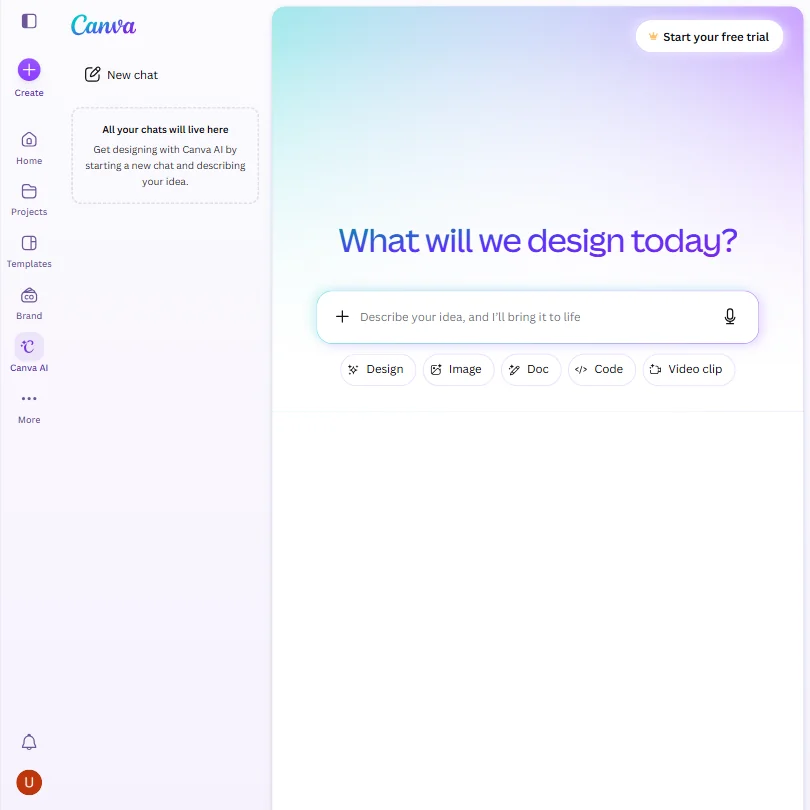
Canva is the obvious comparison and the harder fight. Canva has years of template library depth, a more developed free tier, transparent pricing, and a collaboration layer that's actually documented.

What Design.com has over Canva is the logo-first structure. Canva does logos, but it's not built around them. Design.com starts at branding identity and radiates outward from there. For someone whose primary need is a polished logo with matching business card files, Design.com might actually be the faster path.

The print-ready vector output is a real differentiator against Canva's free tier, which limits vector access to paid plans.

Looka is a closer competitor in the logo-specific category, similar prompt-based generation and similar audience. Based on user reports we've seen, Looka has more transparent pricing upfront, which matters. Tailor Brands sits in the same conversation.

We wouldn't call Design.com the winner against Canva across the board. Canva is deeper, better documented, and better supported. But Design.com isn't trying to be Canva. It's trying to be the first stop for someone building a brand from nothing. Different job.

Who Should Use Design? (And Who Shouldn't)

Solo founders and first-time entrepreneurs. That's the core fit. Someone launching a small business who needs a logo, a business card, and a handful of social graphics before the weekend.

Marketing teams needing collaboration features won't find them here. Designers needing Adobe or Figma file compatibility should look elsewhere. Anyone requiring team workflows should look at Picsart for broader creative production, or invest in something with real infrastructure behind it.

Not great for anyone who needs support documentation they can actually rely on either. The help center is described as basic, no community forum, no live chat listed anywhere in their docs.

Design Review Verdict

Design.com does one thing reasonably well. It turns a text prompt into a usable logo faster than most alternatives at the entry level. Vector output is solid. The brand kit packaging is a smart touch. For the right person, that's enough.

But the opacity around pricing is a genuine problem. No public tiers, no refund policy, almost no presence on major review platforms means there's very little external validation to point to. That's a meaningful gap in trust signals for a product asking you to pay before you can see what you're paying.

Support is weak. Email contact exists. That's about it.

It sits in a crowded space, with Canva having more depth, Looka having more pricing transparency, and Tailor Brands having more brand-building infrastructure around the edges. Design.com isn't obviously better than any of them. It isn't obviously worse for a very specific, narrow use case.

The audience is narrow and the expectations need to match that narrowness. Come in needing a logo and some basic brand files, keep customization expectations realistic, and you'll probably get something usable. Come in expecting Canva's depth or a tool your whole team can share, and you'll leave disappointed.

Frequently Asked Questions

Does Design.com have a free plan?

Yes. You can generate logos and design files without paying. Free downloads carry a watermark, so watermark-free files require a paid plan. A smaller selection of logos and templates can be downloaded cleanly under a Free Licence, which is worth knowing before you assume everything is paywalled. What paid plans actually cost isn't listed publicly, which is annoying before you've even signed up.

Can Design.com produce files ready for print?

Based on vendor documentation and user reports, yes. Print-ready vector files for business cards and flyers are included, and this is one of the more consistently praised aspects of the platform. We'd still recommend confirming file specs with your printer before committing to a large run.

Is Design.com good for someone with no design experience?

That's exactly who it's built for. The prompt-based generator doesn't require design knowledge, and the customization tools are kept simple enough that you're not staring at a blank canvas wondering where to start. The tradeoff is that anyone with real design experience will hit the ceiling fast. Deliberately constrained, and for its intended audience, that's probably the right call.

Design is featured in

Alternatives to Design

See all Design alternatives →

Other AI Design Tool options we've reviewed.

User reviews

Review Design

Your rating

Reviews are moderated and appear once approved.