We've spent time pulling apart CodeAnt AI's vendor documentation and pricing pages. Founded in 2023, headquartered in San Francisco, the company had a loud 2025 by its own admission: 4x team expansion, 15x revenue growth. Those are the kinds of numbers that make you want to look closer.
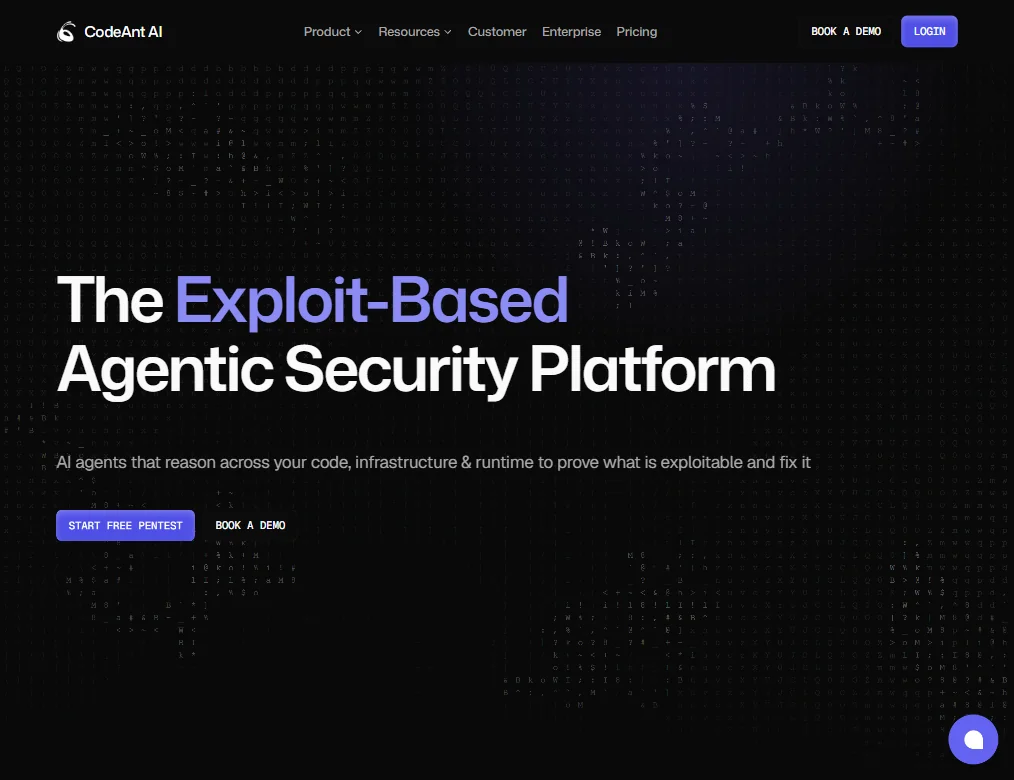
CodeAnt AI doesn't position itself as just another AI code review tool. It's going after a bigger target. That's an ambitious pitch from a two-year-old company.
What is CodeAnt AI?
A code quality and security platform built around AI-driven pull request review. The core idea is automated feedback on every PR, with the AI working from full codebase context rather than looking at the diff in isolation.
Beyond that, it ships with what the vendor calls AI SAST, meaning static application security testing, alongside secrets detection, infrastructure-as-code scanning, and software composition analysis. It also includes what they describe as an agentic penetration testing layer. Most security scanning tools don't try to go offensive. CodeAnt AI does, at least on paper.
The pitch is consolidation. Replace CodeRabbit for code review, replace Snyk for vulnerability detection, replace SonarQube for code quality gates. One platform. One bill. We're cautiously interested in whether that actually works in practice.
CodeAnt AI Features: Code Generation, Review & Developer Workflow
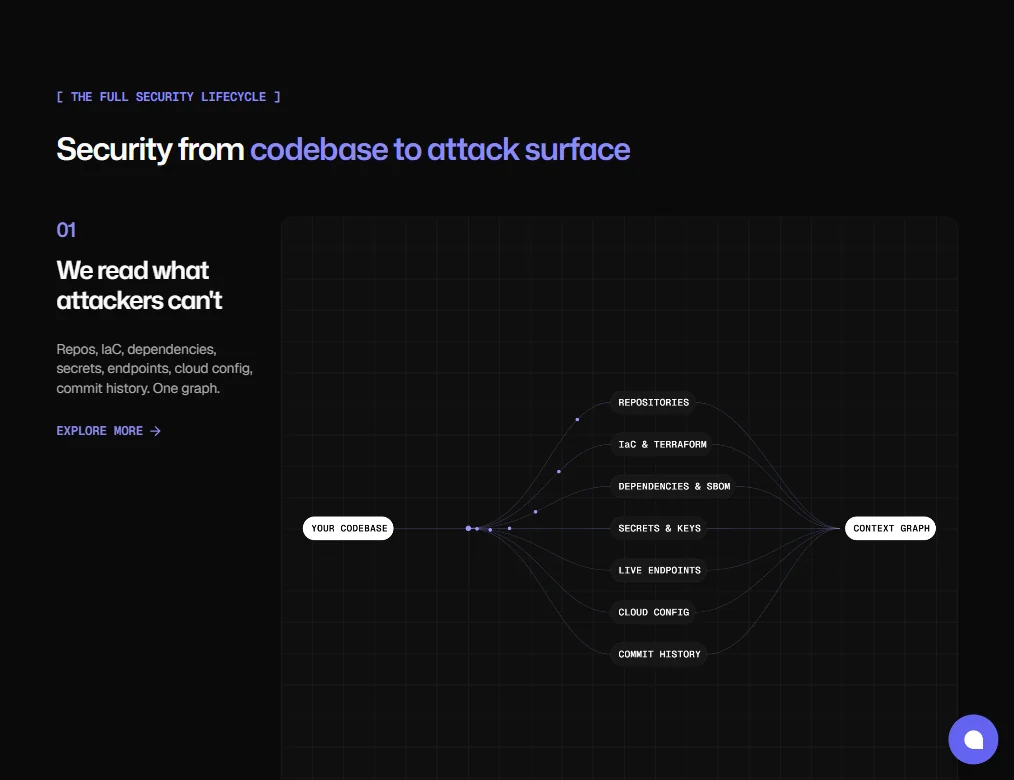
The AI code review is the main product. When a developer opens a pull request, CodeAnt analyzes it against the full codebase, not just the changed lines. A function change can look fine in isolation. Against the rest of the codebase it's a logic hole.
From there it generates PR summaries, flags issues, and suggests inline fixes. It also produces sequence diagrams. Honestly, that surprised us. CodeRabbit generates sequence diagrams too at the same price point, and so does Greptile, though Greptile currently starts at $30 per developer per month, so that feature alone doesn't differentiate CodeAnt cleanly.
On the security side, it covers SQL injection, cross-site scripting, and authentication bypass, plus BOLA/IDOR and SSRF. Defensive and offensive scanning, bundled into one workflow. The offensive piece is billed as contextual pentesting, meaning it uses what it knows about your codebase to simulate attacks rather than running generic probes.
IDE support covers VS Code and Cursor, and JetBrains too. There's also a CLI. Inline suggestions fire before a commit, which is the right moment to catch things. The git side covers GitHub and GitLab, plus Azure DevOps and Bitbucket. We cross-referenced the official integrations page and documentation, and Bitbucket is confirmed there, so teams on that platform aren't excluded.
One gap: we didn't find clear confirmation of automated test generation anywhere in the vendor documentation. Several competitors offer it. Worth knowing before you assume it's there.
CodeAnt AI Code Quality: How Accurate and Reliable Is It?
CodeAnt AI doesn't have a large enough G2 or Capterra footprint yet to give us a reliable pattern of user sentiment. Thin sample. We read carefully.
The vendor claims an 80% reduction in code review time. Large number. We're skeptical of that as a universal figure, though the underlying mechanism, full codebase context reducing async back-and-forth, is directionally plausible. Teams with long review cycles would feel it more than teams already running tight PR loops.
The proprietary AI model is a factor. CodeAnt doesn't disclose what's running underneath, which is common at this stage but means you're trusting their black box on code security decisions. For most teams that's fine. For regulated industries, it's a question to ask before signing anything.
Quality gate enforcement is built in at the org level. That's the right architecture for standardizing behavior across engineers with different habits. Not glamorous. Useful.
CodeAnt AI IDE & Workflow Integration: Where Does It Work?
The integration story is decent for a two-year-old product. VS Code and JetBrains cover most professional development environments, and Cursor support is a sensible addition given how quickly that editor has grown. CLI access means teams without standard IDE setups aren't excluded.
On the project management side, Jira and Azure Boards are both listed in the Premium plan. Premium includes dedicated Slack support. Enterprise includes all Premium features and adds a separately listed Slack integration, which reads more like a workflow capability than a support channel. That distinction matters if you were hoping to push CodeAnt alerts into a Slack channel for the whole team rather than just route support tickets.
CI/CD pipeline integration is documented and listed explicitly in the Premium plan. We cross-referenced the docs against user descriptions and found nothing alarming. Standard webhook-based setup, any DevOps-literate team should wire it up quickly.
Is CodeAnt AI Easy to Set Up and Use?
The 14-day free trial requires no credit card. Right call for a tool asking teams to hook into their git workflow. Unlimited seats during trial is also generous. Most competitors gate seats even in trial periods.
The documentation is functional. Not exceptional. Basic coverage of integrations and setup flows, but not much deeper than that. No community forum, no user-generated content to fill gaps. For a security-focused tool, thin documentation is a real problem. Security engineers want to understand exactly what a tool is doing before it touches production code.
The onboarding funnel routes through a demo booking for enterprise access, which is standard but can feel like friction for developers who'd rather just start scanning. The trial handles self-serve access, at least. Fair.
CodeAnt AI Pricing: Is It Worth It for Solo Devs and Teams?

The Premium plan runs $30 per user per month as listed on the pricing page. We've also seen $24 per user per month cited in vendor materials. Worth confirming the current rate directly before committing. Enterprise is custom pricing, no numbers on the page.
At either price point, this sits mid-range for the category. CodeRabbit has a free tier that functions reasonably well for smaller teams, and it currently charges $24 per user per month with annual billing on paid plans. Snyk has free access for open source projects. SonarQube Community Edition is free. So CodeAnt is asking for money to cover ground that partial alternatives offer at no cost.
The counter-argument is consolidation math. If your team already pays for a code review tool and a separate SAST scanner, the combined bill often exceeds what CodeAnt charges. Worth running the numbers for your specific stack. We dug through the pricing page and found no information about refund policy. Gap we don't love when the product is this new.
Solo developers. This probably isn't for you. The feature set is designed for teams with review workflows, security requirements, and someone to own the configuration.
CodeAnt AI vs CodeRabbit: Which AI Coding Tool Is Better?
The most direct comparison. Both tools do AI-powered PR review, both integrate with GitHub and GitLab, and both target review time reduction.
Where CodeRabbit stays focused on review quality and ergonomics, CodeAnt is trying to also be your security stack. That's the real difference. It's also worth being precise here: CodeRabbit does run security analysis, integrating tools like Semgrep and OpenGrep for SAST-related analysis, plus secret scanning and IaC tools including Checkov and Trivy. It isn't a standalone proprietary SAST platform, but framing it as having no security capability isn't accurate either.
CodeAnt's angle is a proprietary, unified security layer with offensive testing included. Whether that depth actually replaces Snyk or SonarQube in a serious production environment is something we can't confirm from research alone. That would require hands-on testing. Teams doing compliance work should evaluate both before deciding.
CodeRabbit has more public user feedback to judge from, and what we've seen skews positive. CodeAnt's review footprint is still thin. That asymmetry matters when you're making a purchasing decision. Not great.
If you want a tighter comparison on the codebase-context side, Greptile is worth checking before you commit. Different positioning, but relevant for teams prioritizing deep repo understanding over security coverage.
Who Should Use CodeAnt AI? (And Who Shouldn't)
Development teams at growth-stage companies with an existing review culture and real security requirements but no dedicated AppSec hire yet. That's the fit.
Enterprise teams with strict compliance requirements will want the on-prem option. Self-hosted VPC deployment is listed on the Enterprise plan. That matters for teams that can't send source code to a third-party cloud, and the fact that it's documented is a point in their favor.
Solo developers. Already covered above. Hard to justify at this price for one person.
Teams already deeply embedded in SonarQube with years of custom rule sets built up. Switching cost is real, and CodeAnt will need to demonstrate matching configurability before that migration effort makes sense. Ask pointed questions during the demo before you touch anything in production.
CodeAnt AI Review Verdict
Two years old, growing fast, attempting more than most tools in this category. That's either a strength or a warning sign depending on what you value.
The consolidation argument is the most interesting thing about CodeAnt AI. If the SAST coverage, secrets scanning, and penetration testing layer are all genuinely production-ready, the tool earns its per-seat cost at the team level. Possibly more. The problem is we don't have enough independent user data yet to confirm that. G2 presence is thin. Capterra presence is essentially nonexistent.
The trial is generous and low-friction. No credit card, unlimited seats, 14 days with everything unlocked. If your team already pays separately for a code review tool and a security scanner, the answer becomes obvious pretty fast. If you're starting fresh, the lack of a permanent free tier is the main friction point after trial ends.
We'd want to see better documentation and more third-party review data before recommending this as a wholesale replacement for established tools. Promising. Not proven.
How CodeAnt AI compares
CodeAnt AI scores 8.6 out of 10 among the code review and security tools we rate. These two do the same job and are the closest to it, compared on what each vendor publishes.
CodeRabbit
CodeAnt AI and CodeRabbit both charge $30 a month per developer for their entry paid plan, and both scan for security flaws, leaked keys, dependency issues and infrastructure code. CodeRabbit offers a free plan; CodeAnt AI does not, though it gives a 14 day free trial that CodeRabbit's page does not confirm. CodeAnt AI states it is HIPAA capable; that was not found for CodeRabbit. Neither holds ISO 27001 certification, and both can run on self-hosted GitHub, GitLab or Bitbucket Data Center.
Pick CodeRabbit if you want a free plan before committing to a paid seat.
Pick CodeAnt AI if you need a stated HIPAA-capable deployment.
Snyk
Snyk's Team plan costs $25 a month per developer, cheaper than CodeAnt AI's $30 Premium plan, and Snyk also has a free plan CodeAnt AI lacks. CodeAnt AI comments on specific lines of code and learns from team feedback; Snyk does neither, sticking to a single summary comment. Snyk holds ISO 27001 certification, which CodeAnt AI does not; CodeAnt AI can instead run on your own servers, including self-hosted GitHub Enterprise or GitLab, which Snyk does not offer.
Pick Snyk if you want ISO 27001 certification and a free plan.
Pick CodeAnt AI if you want line comments and self-hosted deployment options.
Frequently Asked Questions
Does CodeAnt AI support self-hosted deployment?
Yes, but only on the Enterprise plan. On-premises and VPC deployment are both listed as Enterprise features, which matters for teams that can't route source code through external infrastructure. You'll need to go through a sales conversation to access that, since Enterprise pricing is custom and not listed publicly.
What programming languages does CodeAnt AI support?
The vendor states support for 25 or more languages. A full list isn't published on the main pricing or features pages. If your stack includes something unusual, ask during the trial period rather than assuming. Most mainstream enterprise languages should be covered based on what the documentation implies, but confirmation is worth the email.
How does CodeAnt AI's penetration testing work?
CodeAnt calls it agentic penetration testing. The described mechanism uses full codebase context to simulate attacks rather than running generic vulnerability probes against an endpoint. It targets authentication bypass, BOLA/IDOR, and SSRF at the code level rather than the network level. Whether that constitutes genuine pentesting or thorough SAST under a different name is a question worth pushing on directly during a demo. We'd ask that question plainly before letting it influence a purchasing decision.