Price war erupts as Gemini loses ground to cheaper rivals
With Grok 4.6 matching GPT-5.6 Sol at a fraction of the price and Microsoft halving MAI-Code costs, Google's Gemini is caught in a race it appears to be losing.
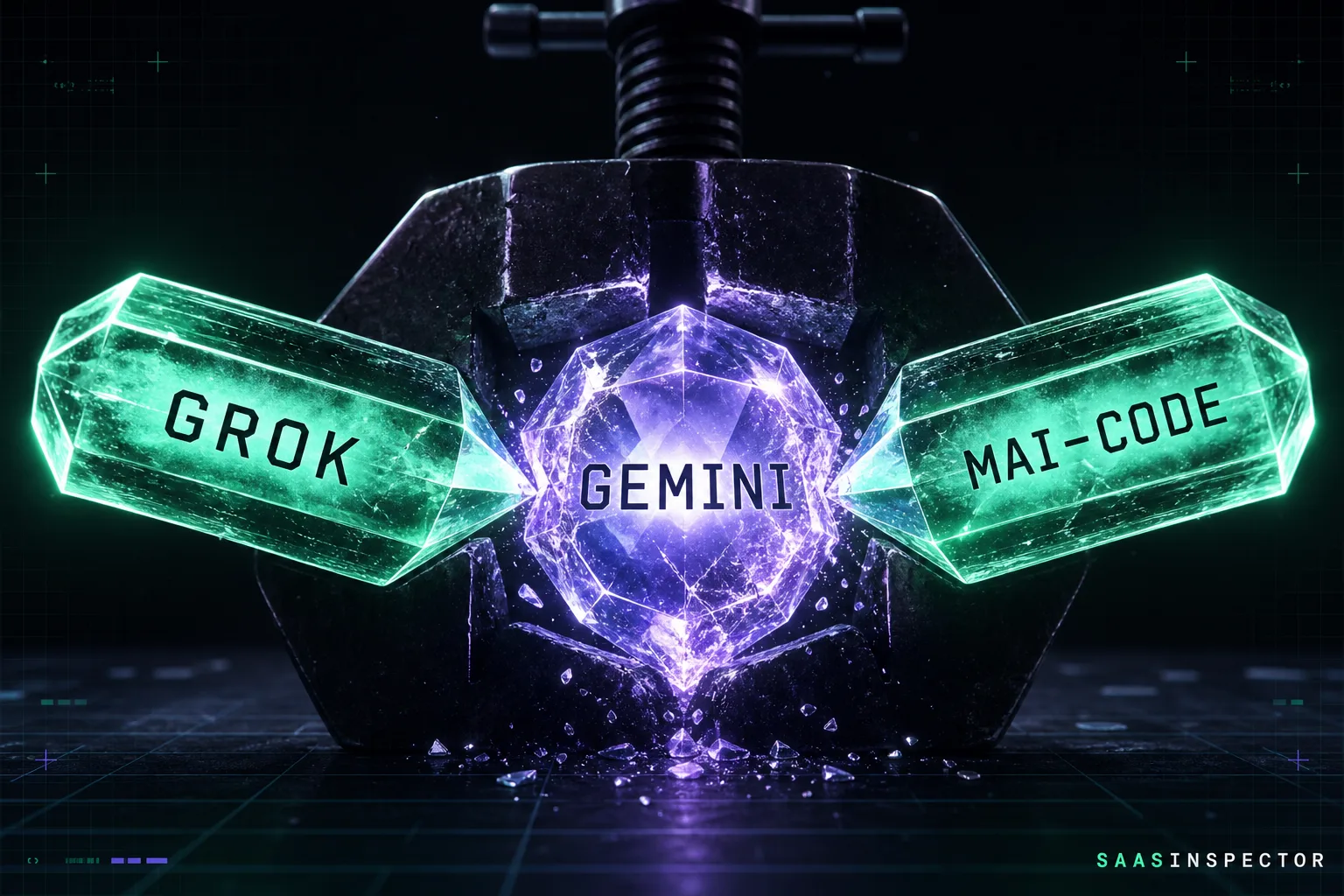
The AI model market is consolidating around a brutal new logic: frontier-level performance at commodity prices. Three separate developments this month paint the same picture. SpaceX AI's Grok 4.6 now ties OpenAI's GPT-5.6 Sol on benchmark performance while costing more than 60 percent less. Microsoft has slashed the price of its MAI-Code-1.1-Flash coding model to a quarter of its predecessor. And in the middle of all this movement, Google's Gemini is quietly losing users to both of them.
The timing matters. Google DeepMind recently saw several senior departures, at precisely the moment market data from Pangram shows Gemini's share of submitted AI text collapsing from 12 percent to just 1.9 percent between the start of the tracking period and July 2026. OpenAI has held above 50 percent throughout, and Anthropic climbed from 4.3 to 14.9 percent. Gemini is being squeezed from every direction, and cheaper rivals are the main reason.
Grok 4.6 matches Claude Opus 5 on agentic tasks for far less
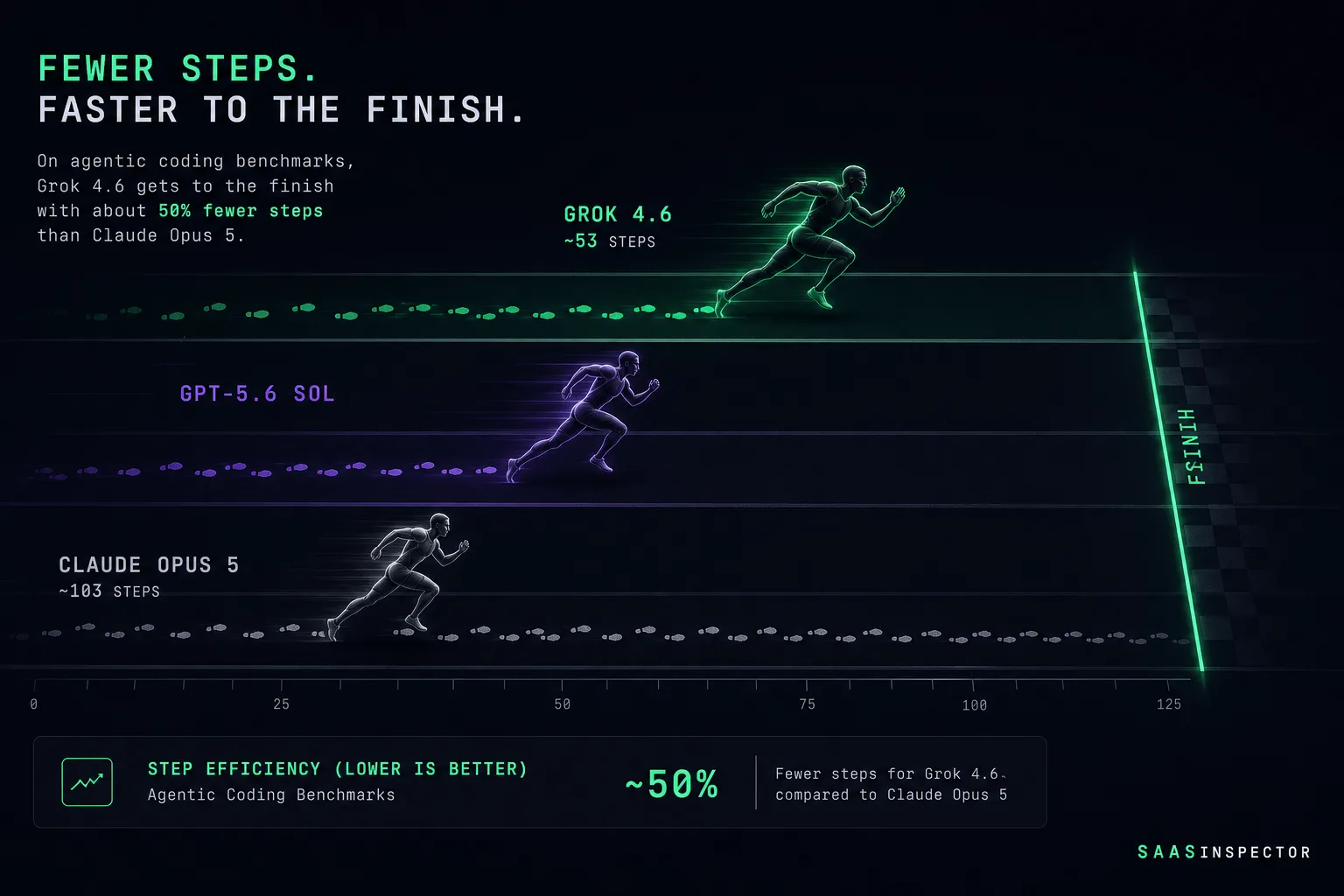
According to the Artificial Analysis Intelligence Index, Grok 4.6 scores 61 points, level with GPT-5.6 Sol and just two points below Anthropic's Claude Opus 5. What makes the comparison sharper is pricing. Grok 4.6 costs $2 per million input tokens and $6 per million output tokens. Claude Opus 5 charges $5 input and $25 output. GPT-5.6 Sol is $5 input and $30 output. On agentic benchmarks specifically, Grok 4.6 ranks second on the GDPval-AA v2 benchmark with an Elo score of 1,753, completing complex multi-step tasks in roughly 53 steps compared to Claude Opus 5's 103. For teams building agentic workflows, that combination of efficiency and cost is genuinely significant. Grok 4.6 is available now through the API, Cursor, Grok Build, and partners including OpenRouter, Vercel, and Cloudflare.
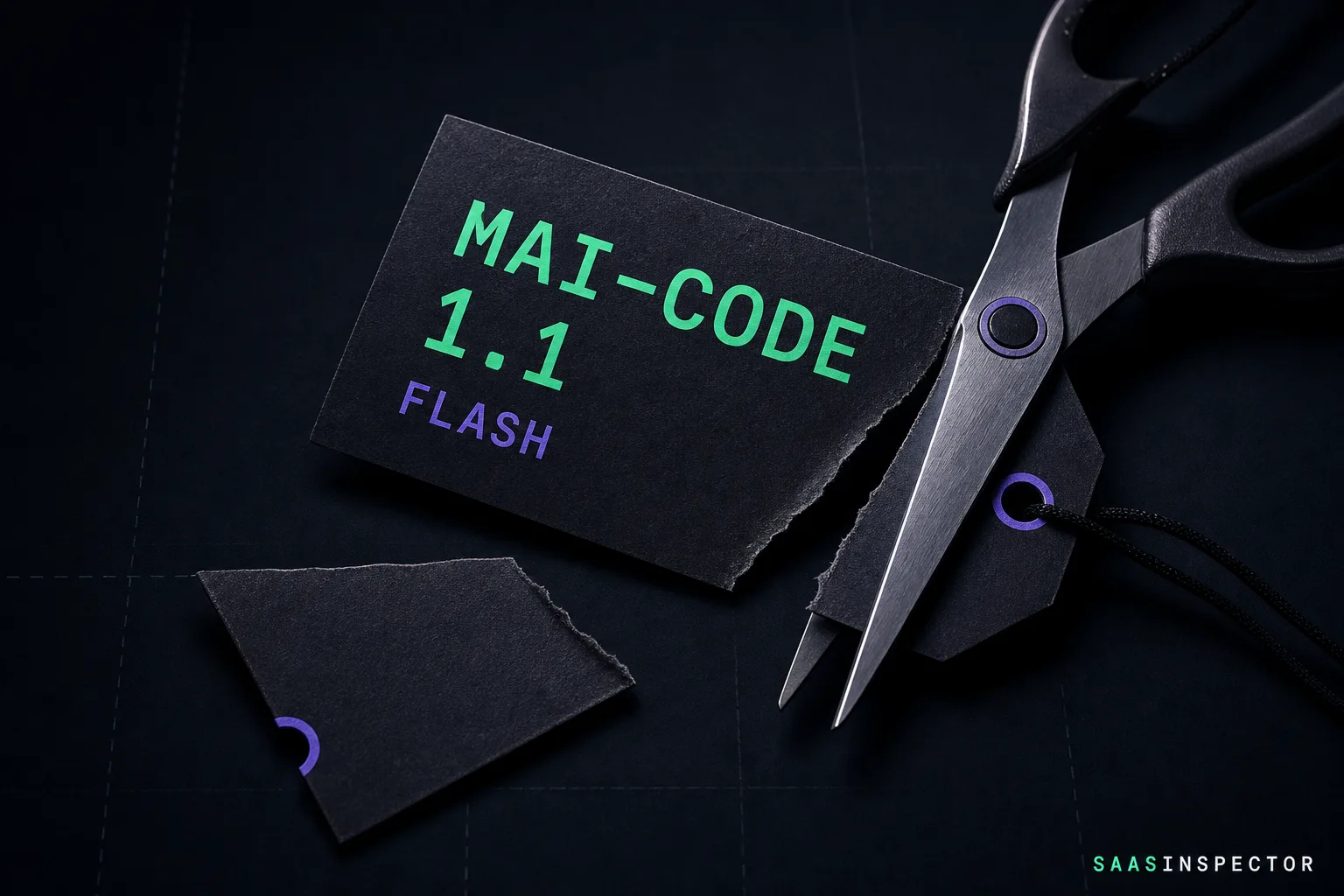
Microsoft cuts MAI-Code-1.1-Flash pricing by 75 percent
Microsoft released MAI-Code-1.1-Flash on 11 August, dropping input costs from $0.75 to $0.20 per million tokens and output costs from $4.50 to $1.20 per million tokens on GitHub. The model is designed around CLI tasks and generates more efficient code using fewer tokens, which compounds the savings in practice. The move is not purely about the model itself. Microsoft ended its exclusivity arrangement with OpenAI earlier this year, and MAI-Code is part of a broader push to demonstrate that Microsoft can develop competitive models independently, particularly for enterprise developers already embedded in GitHub and Copilot. Analyst Lian Jye Su at Omdia noted that token costs remain a critical concern for enterprises building agentic pipelines, and any model that reduces them without sacrificing accuracy is likely to gain traction.
Gemini's usage collapse creates real risk for Google's enterprise position
The Pangram data tracking submitted texts is not a perfect measure, and the firm acknowledges it skews toward writing tasks where Gemini has historically been weaker. OpenRouter data similarly skews toward open-weight model usage. But all three sources available, including Similarweb's website traffic figures, point in the same direction. Gemini is being used less, not more, even as Google claims one billion monthly Gemini App users. Monthly active user counts are a notoriously weak signal for genuine engagement, and the market share data suggests the underlying usage trend is unflattering. For teams currently evaluating AI tools, Gemini's position looks increasingly like that of a default choice being actively reconsidered.

What the price war means for teams choosing AI tools now
For anyone selecting models for production use in the second half of 2026, the competitive dynamics have shifted faster than most procurement cycles can track. Grok 4.6 offers a credible case for frontier-grade agentic performance at a price point previously associated with mid-tier models. MAI-Code-1.1-Flash gives Microsoft a meaningful entry in the coding model category at a cost that undercuts several established alternatives. Neither is a guaranteed fit for every use case, but both raise legitimate questions about whether paying premium rates for Claude Opus 5 or GPT-5.6 Sol is justified unless the performance gap is demonstrable in your specific workflow. Gemini, meanwhile, needs to respond with something more substantial than user count announcements if it wants to stop the current slide.