The AI stack is shifting: harness beats raw model power
New research from Nvidia and Deepseek's latest release both point to the same conclusion: the scaffolding around AI models now matters more than the models themselves.
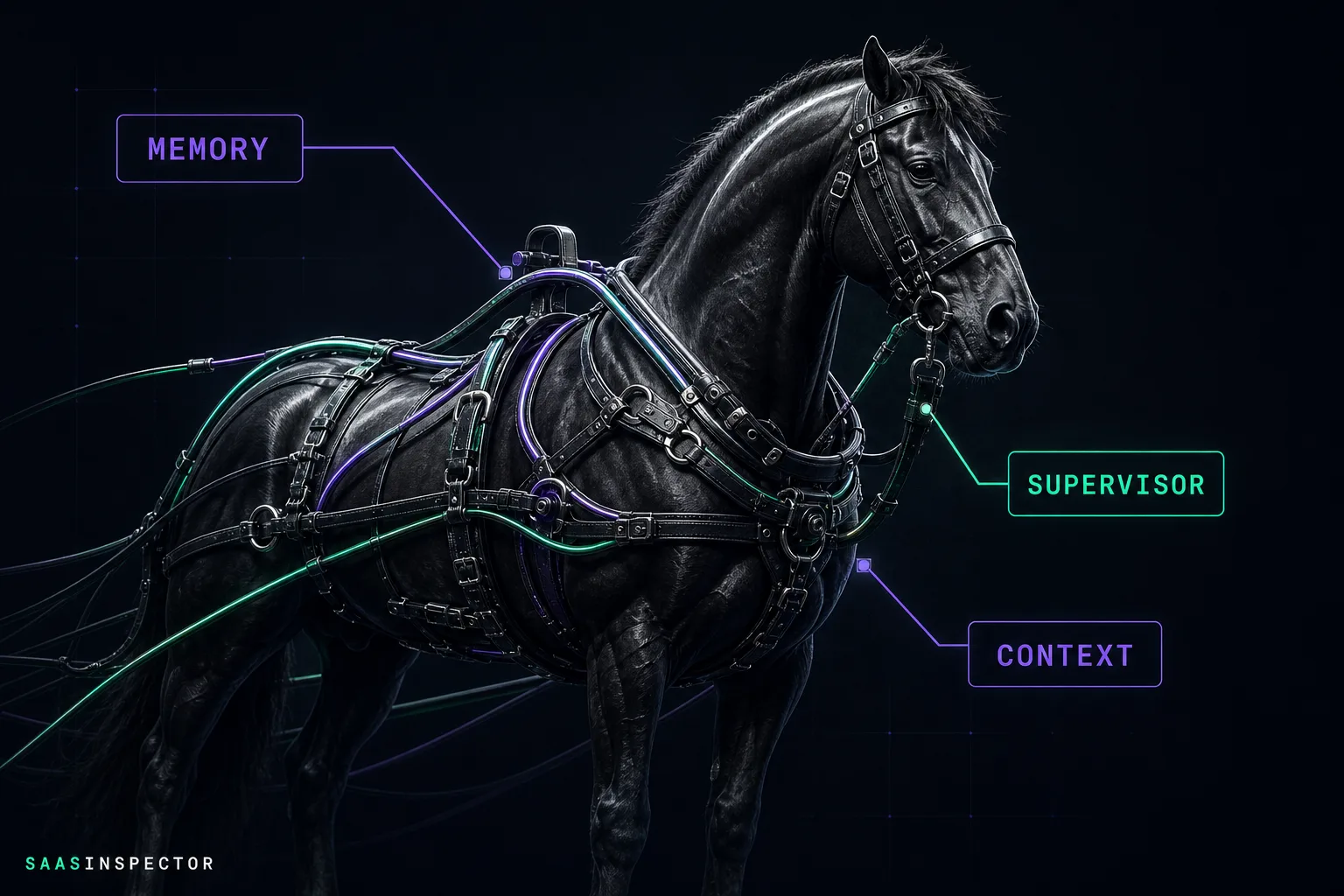
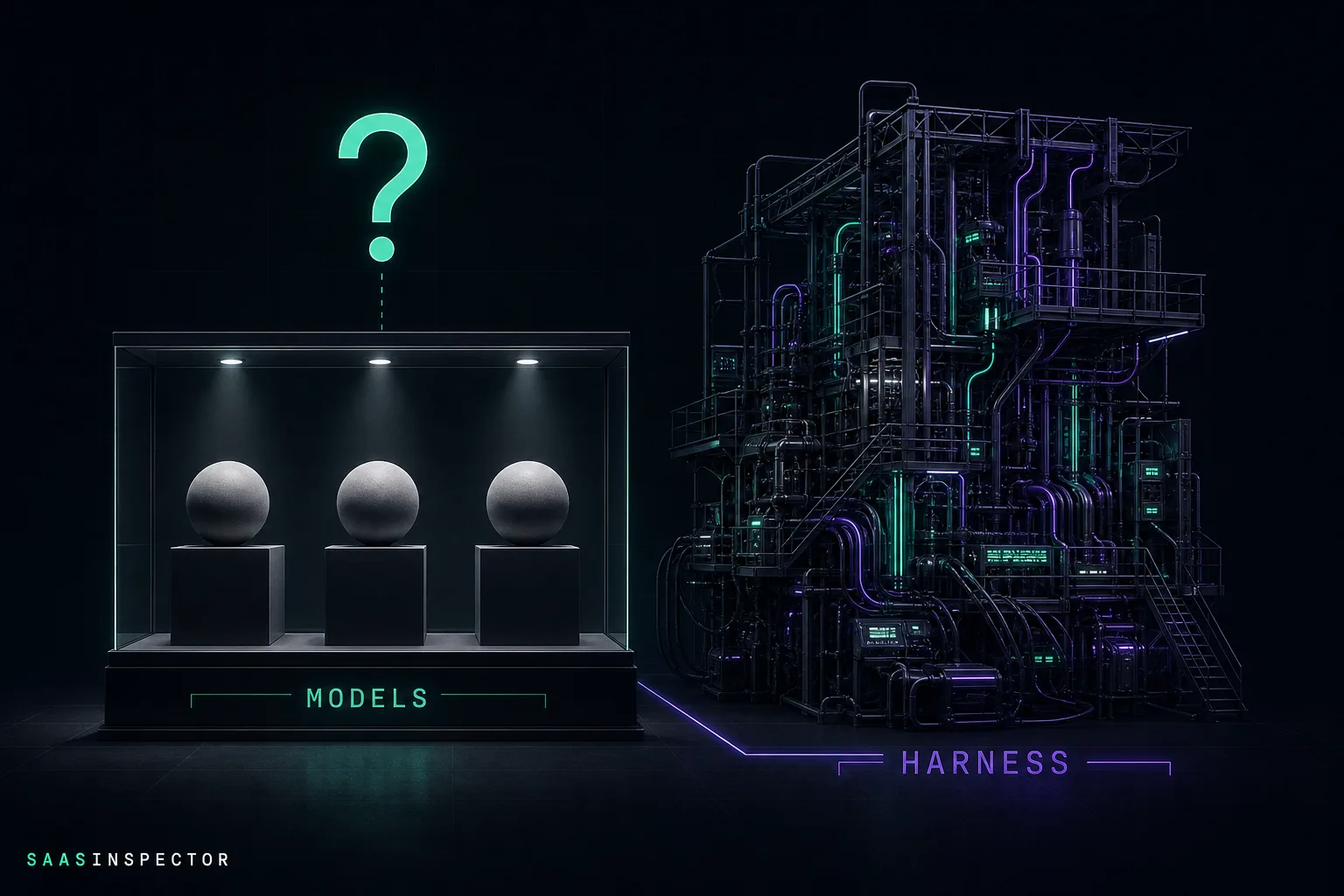
For the past two years, the dominant question in enterprise AI has been which model to pick. GPT-4o or Claude? Gemini or Llama? That framing is starting to look like the wrong question. A cluster of developments this week suggests the real competitive advantage is shifting toward the infrastructure wrapped around models, the harness, the memory management, the supervisor layers, and the agent frameworks that turn raw model capability into reliable, long-horizon work.
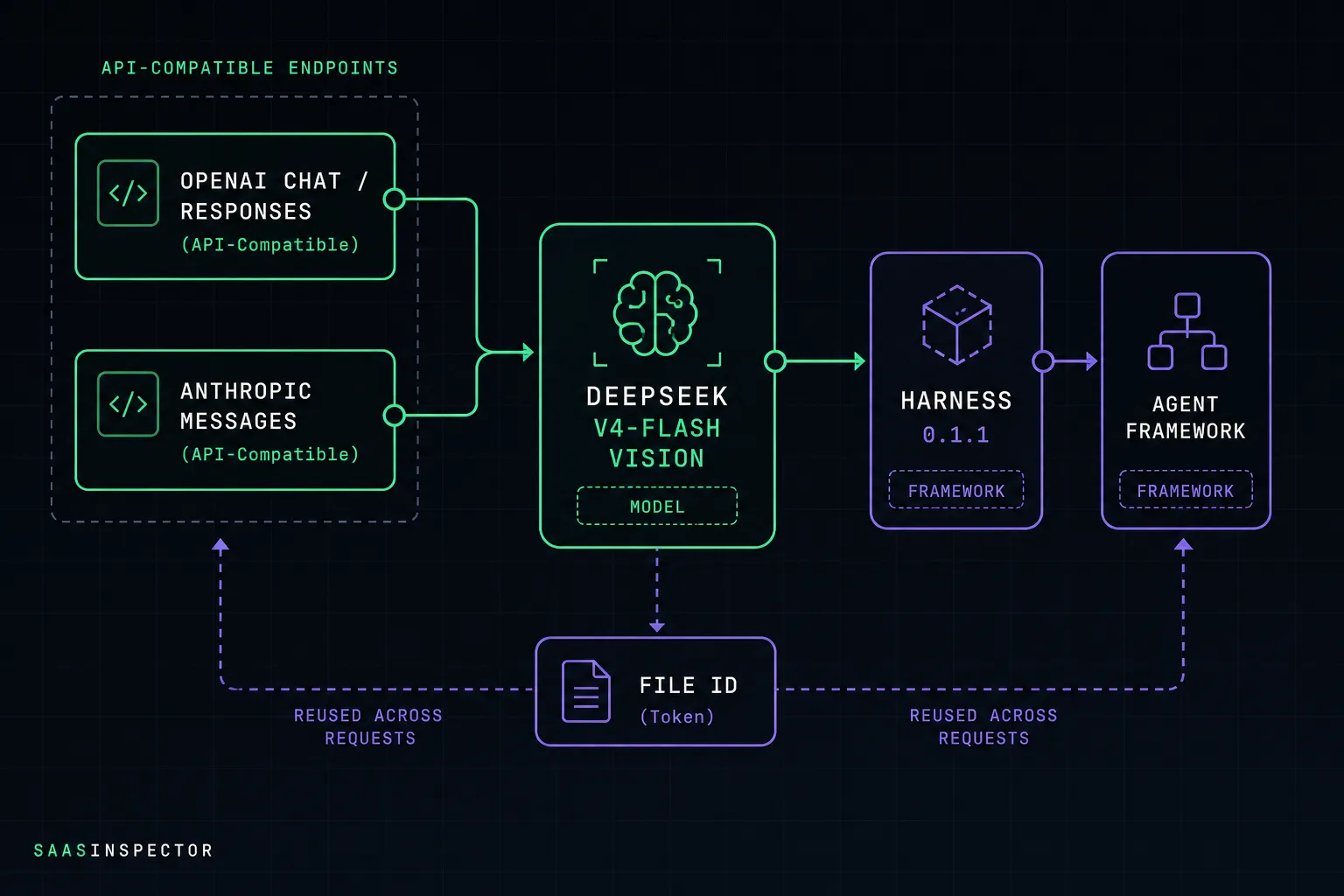
Two stories illustrate this cleanly. Nvidia published research showing that Claude Opus 5, given a custom harness with a supervisor component, scored 100% on the ARC-AGI-3 benchmark, a notoriously difficult suite of 2D reasoning games with no instructions. Without the harness, Opus 5 scored 30%, which was already the top result among all models tested. Separately, Deepseek released V4-Flash-Vision-Exp alongside version 0.1.1 of its own Harness framework, a multimodal model that nearly matches Anthropic's Opus 4.8 on Deepseek's own agent benchmarks, at Flash-tier pricing. Neither story is really about the model.
Nvidia's supervisor agent reshapes what ARC-AGI-3 scores mean
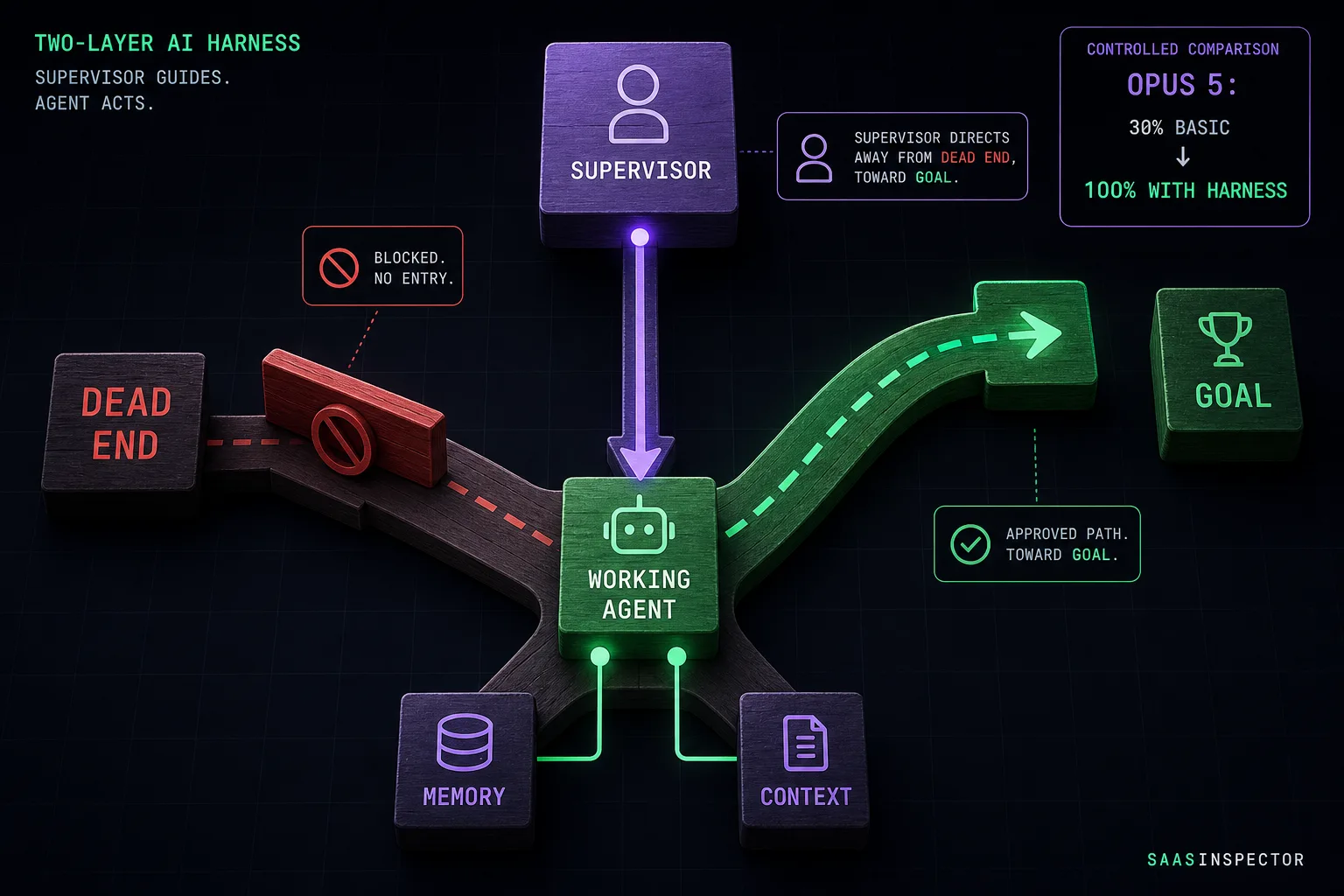
The Nvidia research is striking because the underlying model did not change. What changed was the scaffolding. The custom harness handled memory and context carefully, and a supervisor agent monitored progress, nudging the main agent when it drifted toward dead ends or started re-treading paths it had already explored. Nvidia VP of product Adel El Hallack described it as the supervisor acting like a CEO. The practical implication is significant: OpenAI ran similar experiments last month and found that tweaking two harness settings tripled its models' ARC-AGI-3 scores, yet none came close to 100%. The comparison with OpenAI cannot isolate the harness as the only variable because the underlying models differ. But Opus 5’s controlled jump from 30% to 100% shows that harness sophistication can radically change the result without changing the model. Most teams deploying agents today are using single-layer setups like Claude Code, Codex, or Hermes, without a supervisor layer at all.
Deepseek V4-Flash-Vision-Exp targets agent frameworks directly
The Nvidia research is striking because both results used Claude Opus 5, while the surrounding agent setup differed substantially. Nvidia's custom AVO harness handled memory and context carefully, and a supervisor agent monitored progress, nudging the main agent when it drifted toward dead ends or started re-treading paths it had already explored. Nvidia VP of product Adel El Hallack described the supervisor as acting almost like a CEO. The practical implication is significant: OpenAI ran similar experiments last month and found that changing two harness settings roughly tripled its ARC-AGI-3 score, yet the result remained well below Nvidia's 100%. The contrast is striking, but Nvidia cautions that its 100% AVO result and ARC Prize's roughly 30% Opus 5 baseline are not a controlled ablation. Most teams deploying agents today are still using single-layer setups such as Claude Code, Codex, or Hermes, without a separate supervisor layer.
Enterprises are deploying agents faster than they can govern them
A Deloitte survey published this week found that 75% of US business leaders expect AI agents to reshape roughly half of their processes within four years, but only 20% believe their organisations are currently equipped to redesign workflows for autonomous agents. Salesforce research adds a sharper edge to this: the average number of AI agents across organisations nearly tripled over 15 months, and the time to create and activate an agent fell 53% to under two days. Deployment is accelerating. Governance is not. Gartner has flagged that agentic AI may not benefit from traditional economies of scale, because complex reasoning and planning push inference costs up rather than down. HFS Research and TCS found that only 35% of executives say AI consistently delivers business outcomes with sufficient control. The infrastructure question is not abstract. Organisations that deploy agents without the harness, data, and supervisor layers to manage them are, as the Nvidia research suggests, leaving most of the potential performance on the table.
What tool buyers should take from this
If you are evaluating AI tooling, the model selection decision is now secondary to the framework question. A well-constructed harness can make the same frontier model dramatically outperform its own basic single-agent result, as Opus 5’s jump from 30% to 100% on ARC-AGI-3 demonstrates directly. Deepseek's move to ship V4-Flash-Vision-Exp alongside a framework update rather than just an API is a sign that model providers themselves are absorbing this lesson. For buyers, the practical questions to ask are whether a platform exposes memory management and context controls, whether it supports supervisor or orchestration layers, and whether its pricing holds up when inference complexity rises. The model is still important. It is just no longer the whole story.