Robots are everywhere, but they still cannot really see
Unitree humanoids are going viral, World Labs is solving the training data problem, and a new benchmark from Moonshot AI explains why none of it fully works yet.
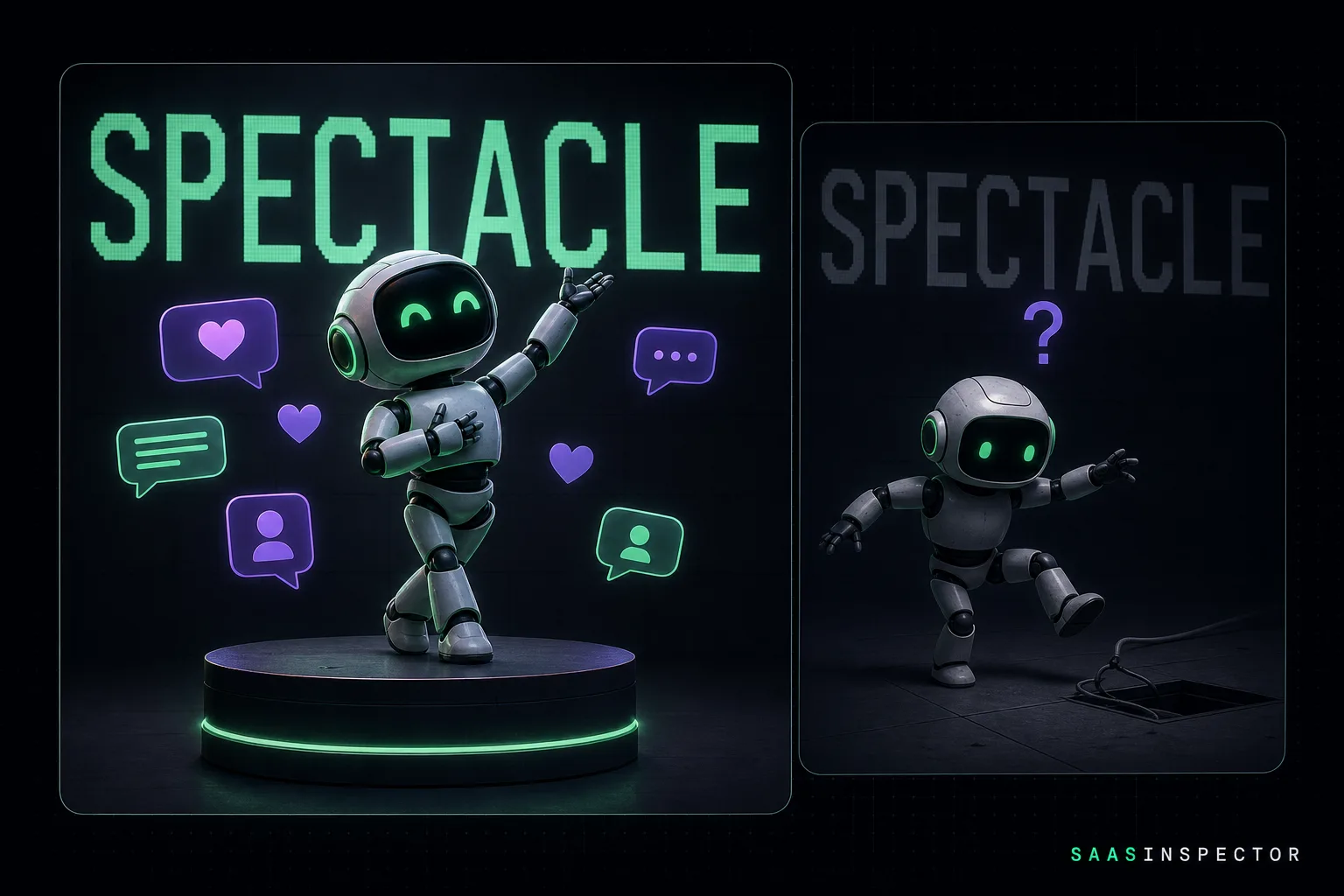
Humanoid robots are having a cultural moment. Unitree's G1, a roughly four-foot-tall machine from China costing less than $25,000, is now an influencer, a monk, a World Cup fan, and a boar-chaser. The same underlying hardware shows up under different names and cowboy hats across Austin, New York, and Dubai, accumulating billions of social media views. Unitree shipped 5,511 humanoids in 2025, made its first profit, and is days away from listing on the Chinese stock market. By any commercial measure, the age of the affordable humanoid robot has arrived.
But spectacle is not the same as capability. The robots that are going viral are performing scripted or loosely supervised routines in forgiving environments. The harder question, whether a humanoid can reliably do useful work without a handler nearby, runs straight into a problem the industry is only beginning to measure properly: robots, and the AI models that drive them, are surprisingly bad at understanding what they are actually looking at.
Unitree G1's viral success masks real capability limits
The G1's popularity is genuine and commercially meaningful. Bartosz Idzik, the Polish developer who turned one into the social media personality Edward Warchocki, notes that the robot was frightening and useless until it was connected to a large language model that let it hold live conversations. Speech made it human enough to be lovable. Without it, the hardware was just a machine people crossed the street to avoid. That gap between appearance and actual function is instructive. The tasks that go viral, dancing, flirting with strangers, wading in a lake, are compelling precisely because they require very little reliable perception of the environment. The robot does not need to know exactly where anything is; it just needs to move in a way that reads as charming on camera.
World Labs R2S2R engine tries to fix the robot training bottleneck
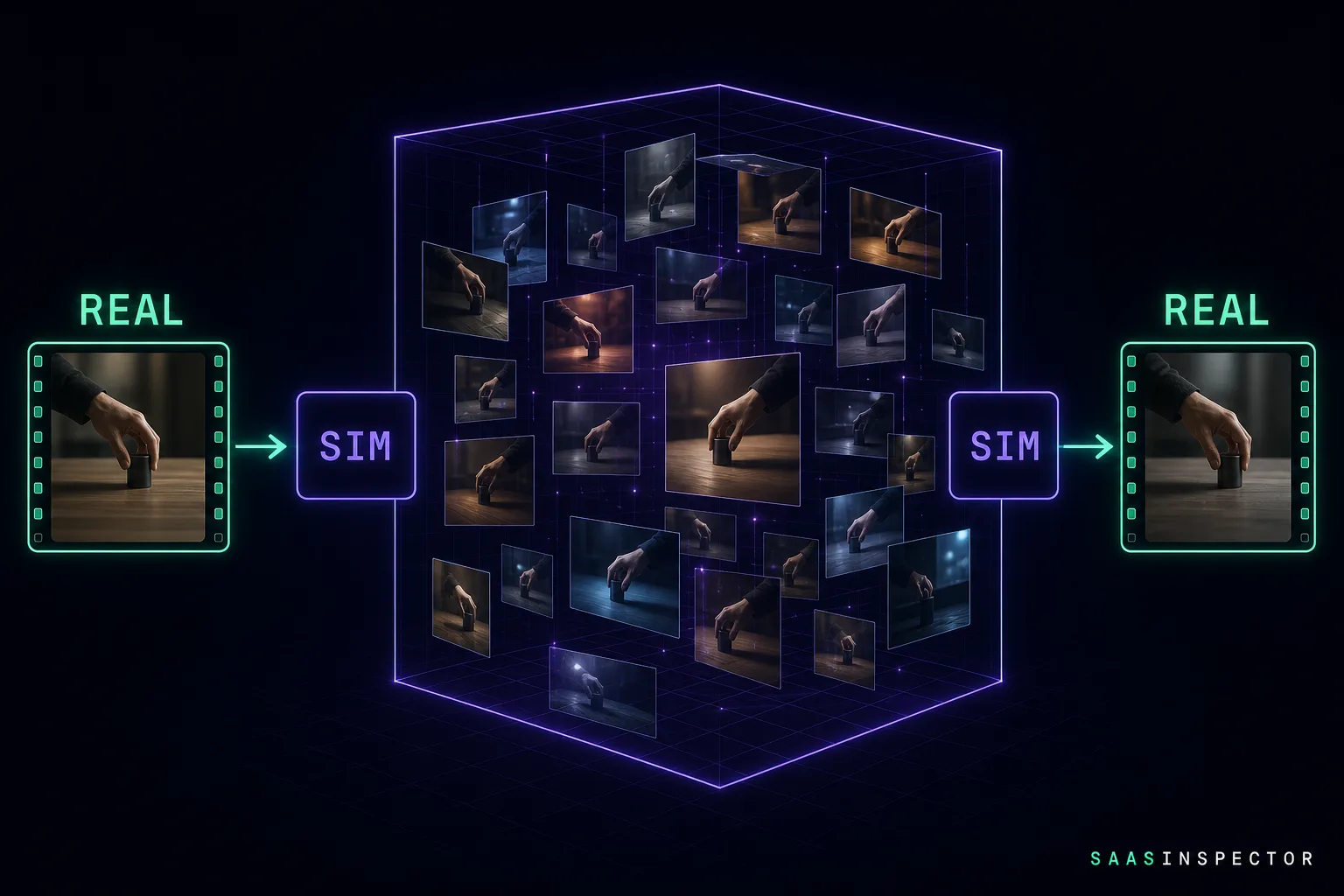
Fei-Fei Li's startup World Labs is attacking the problem from the training side. Its Real-to-Sim-to-Real engine, built on technology from the acquired startup SceniX, takes a single real-world task demonstration and reconstructs it as a physically accurate virtual environment. From that one recording, the system generates thousands of training variations by altering lighting, object positions, friction, and camera angles, then evaluates control models in simulation before transferring them to real hardware. World Labs tested models on platforms including the open-source Stanford ALOHA dual-arm robot, running tasks like cable routing, test tube repositioning, and separating objects from a dense pile. Models ran for one hour without human intervention across four different robot platforms. The core claim is that simulation rankings match real-world rankings reliably enough to filter out weak model versions before any physical testing begins. If that holds at scale, it would dramatically cut the cost of developing competent robot control. The system is not tied to a specific robot type or control architecture, so a reconstructed environment can be reused for new models later.
PerceptionBench shows AI vision is failing before reasoning even starts
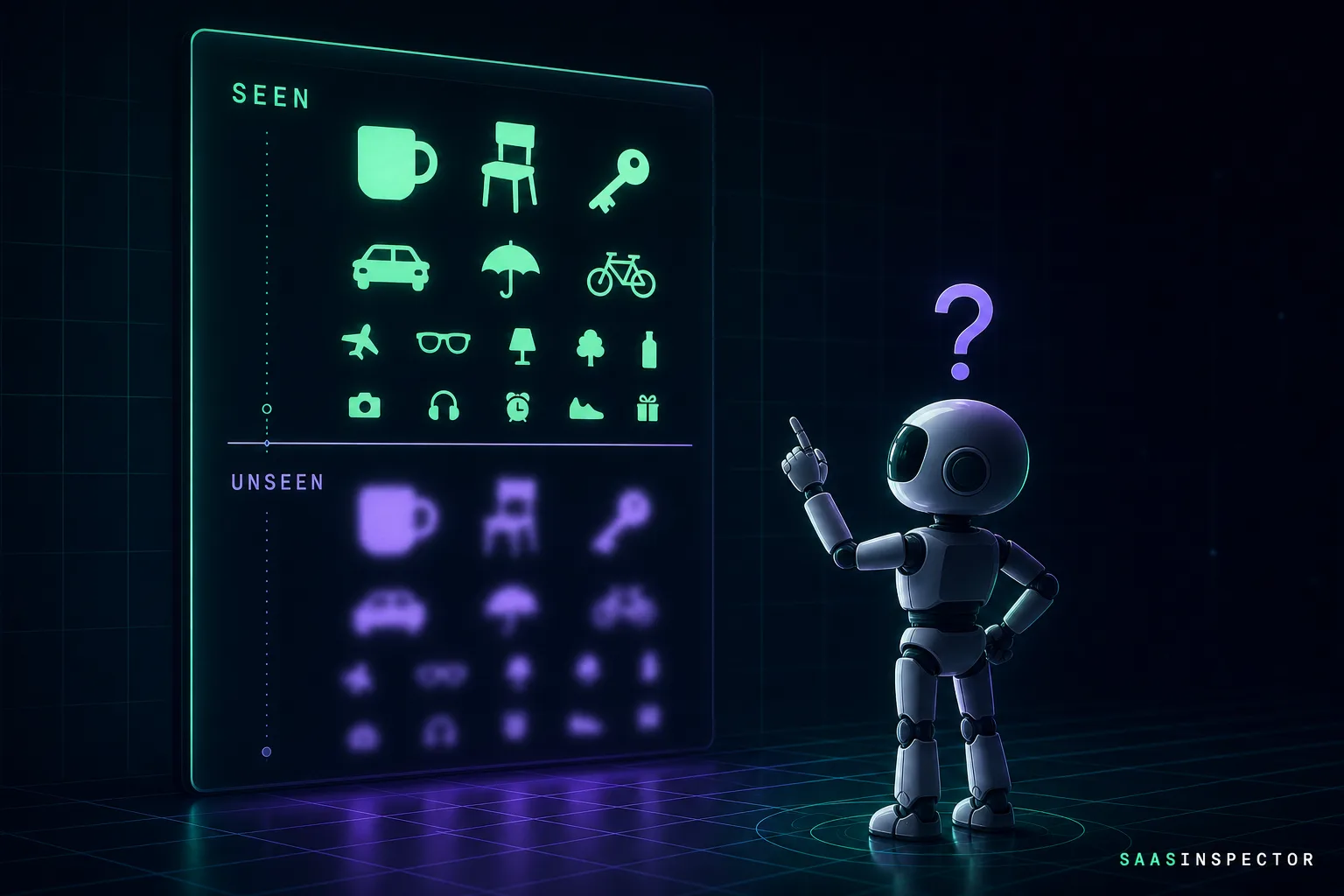
The deeper obstacle is exposed by Moonshot AI's PerceptionBench, a new benchmark that isolates visual perception from reasoning and knowledge. Across 16 frontier models, no system scores above 60 percent. GPT-5.6 Sol leads at 59.7 percent, with Kimi K3 at 58.5 percent, Claude Fable 5 at 57.2 percent, and Gemini 3.1 Pro at 56.2 percent. The benchmark breaks vision into ten specific sub-skills including counting, depth and 3D understanding, fine-grained recognition, and hallucination. The hallucination category, which tests whether a model correctly reports that an object is absent rather than inventing one, is the weakest across the board. GPT-5.6 Sol scores just 26.9 percent on that sub-task despite its overall lead. Moonshot AI's central finding is that many failures attributed to poor reasoning actually fail at the image-reading stage, before any reasoning has occurred. A robot or AI system that cannot reliably count objects in a box, or confirm that something is not there, will struggle with almost any real-world manipulation task regardless of how well the rest of its pipeline performs.
What the perception gap means for buyers evaluating AI and robotics tools
Taken together, these three stories describe the same structural problem from different angles. Robots are cheap enough and capable enough to entertain millions of people and to ship in commercial volumes. Training pipelines like World Labs R2S2R are reducing the cost of building better control models. But the visual foundation those models depend on, the ability to accurately read a scene, is still weak enough that the best available systems fail roughly four tasks in ten on questions a child could answer by looking at a picture. For anyone evaluating AI-powered robotics tools or multimodal AI systems for practical deployment, the PerceptionBench results are a useful calibration. High benchmark scores on standard vision tests do not guarantee reliable scene understanding, and the specific sub-skill that fails matters enormously depending on the task. A robot sorting objects needs accurate counting and fine-grained recognition. A system managing inventory needs to correctly report when something is missing, exactly where hallucination scores collapse. The viral moment is real. The production-ready perception is not yet.