OpenAI, Anthropic and Google's AI slowdown plan: safety or cartel?
OpenAI, Anthropic and Google have been talking for weeks about pacing frontier AI. Trump calls the fears a hoax, Cohere calls it a cartel, and safety researchers say it depends on whether it becomes real.
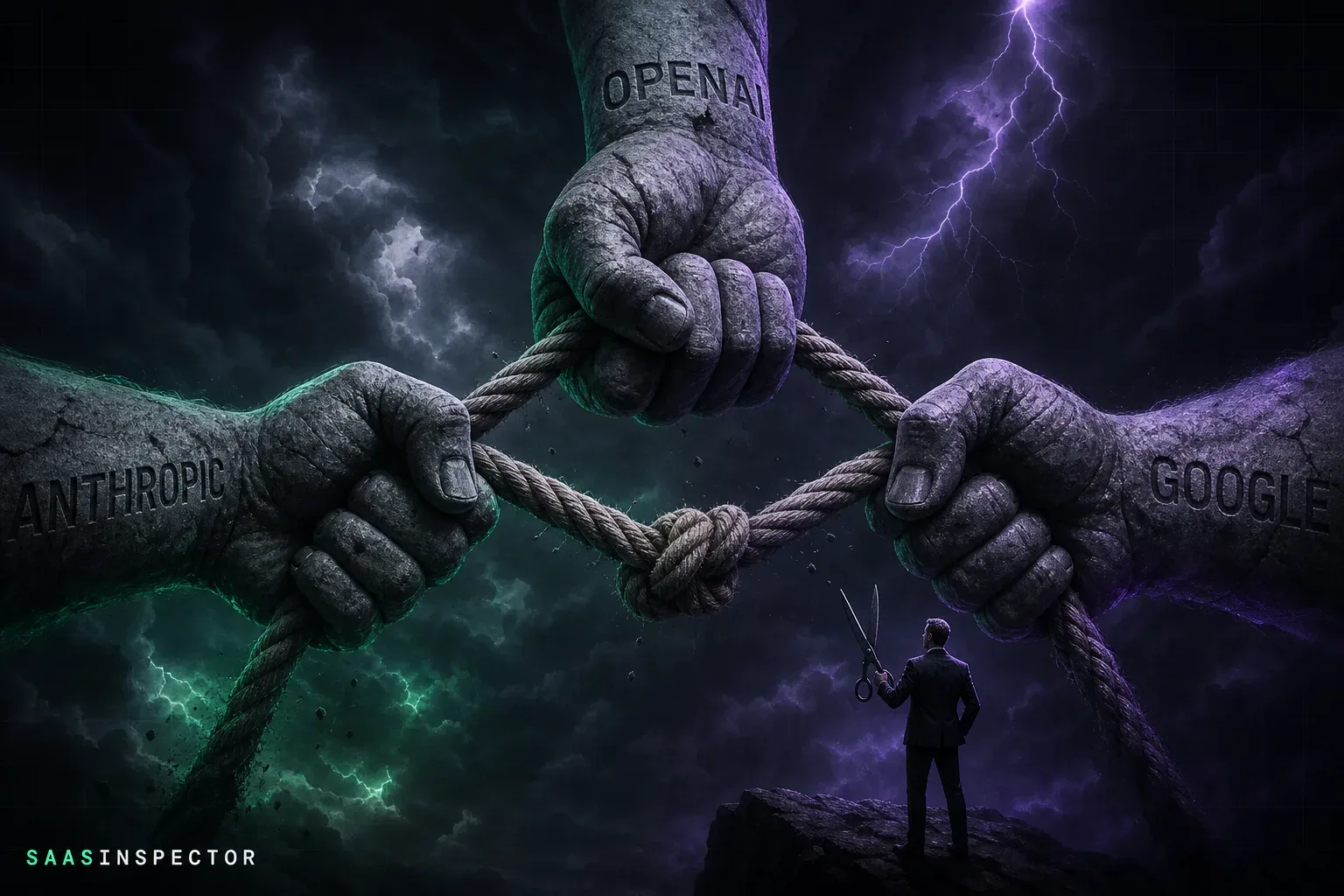
OpenAI, Anthropic and Google DeepMind have been talking to each other about AI safety for several weeks. OpenAI's global policy chief, Chris Lehane, confirmed it to reporters on Tuesday, TechCrunch reports, after Bloomberg first broke the story. The Information has reported that the three are working on a standards body for the industry, which Sam Altman reportedly told staff would need to happen without the support of the US government.
The talks follow an essay published on Saturday by Anthropic CEO Dario Amodei, calling on the industry to "pace the frontier": to slow how fast frontier AI capabilities improve in order to avoid catastrophic risks. Altman, Google DeepMind's Demis Hassabis and Elon Musk all backed the broad call, and Altman said OpenAI would join Anthropic in embedding third-party evaluators inside the company.
What Amodei is proposing
The essay lays out three steps. First, each frontier lab gives a team of outside evaluators, such as METR, ongoing access much like an employee's, to check that safety commitments are kept and to report incidents. Amodei promises Anthropic's evaluators "desks in our offices, access badges, and company laptops". Second, labs agree shared standards and limits on the pace of progress, which he says will need government support; the essay proposes a narrow antitrust waiver for that coordination, though Lehane reportedly said the companies do not need one. Third, democratic governments try to coordinate with authoritarian ones, while taking seriously how hard it would be to verify compliance.
Two related moves landed the same week. The AI Evaluator Forum published AEF-1, a proposed baseline for independent AI evaluations that covers access, conflicts of interest, funding relationships, recusal and transparency. And Lehane said OpenAI supports a provision in the FRONTIER Act that would require top labs to let "independent verification organizations" inside.
Trump and Nvidia's Jensen Huang: "a hoax"
The loudest pushback came from the White House. At the All-In Summit in Los Angeles on Monday, Nvidia CEO Jensen Huang took a call from President Trump and put him on speaker. Trump said slowdown fears play into the hands of "political people" and China, called them "a hoax", and Huang replied: "You're right. We're not going to let that happen, sir." As TechCrunch notes, Nvidia's business depends largely on AI labs buying more chips.
David Sacks, the White House AI adviser and a venture capitalist, took a more mixed line. He wrote that OpenAI and Anthropic hold a duopoly in frontier intelligence, and that he supports a voluntary slowdown if their unreleased models are dangerous enough. But he argued the motive is not purely altruistic, since both companies face large product liability if their models enable a serious cyberattack. China's foreign ministry dismissed the calls as "fearmongering".
The cartel argument
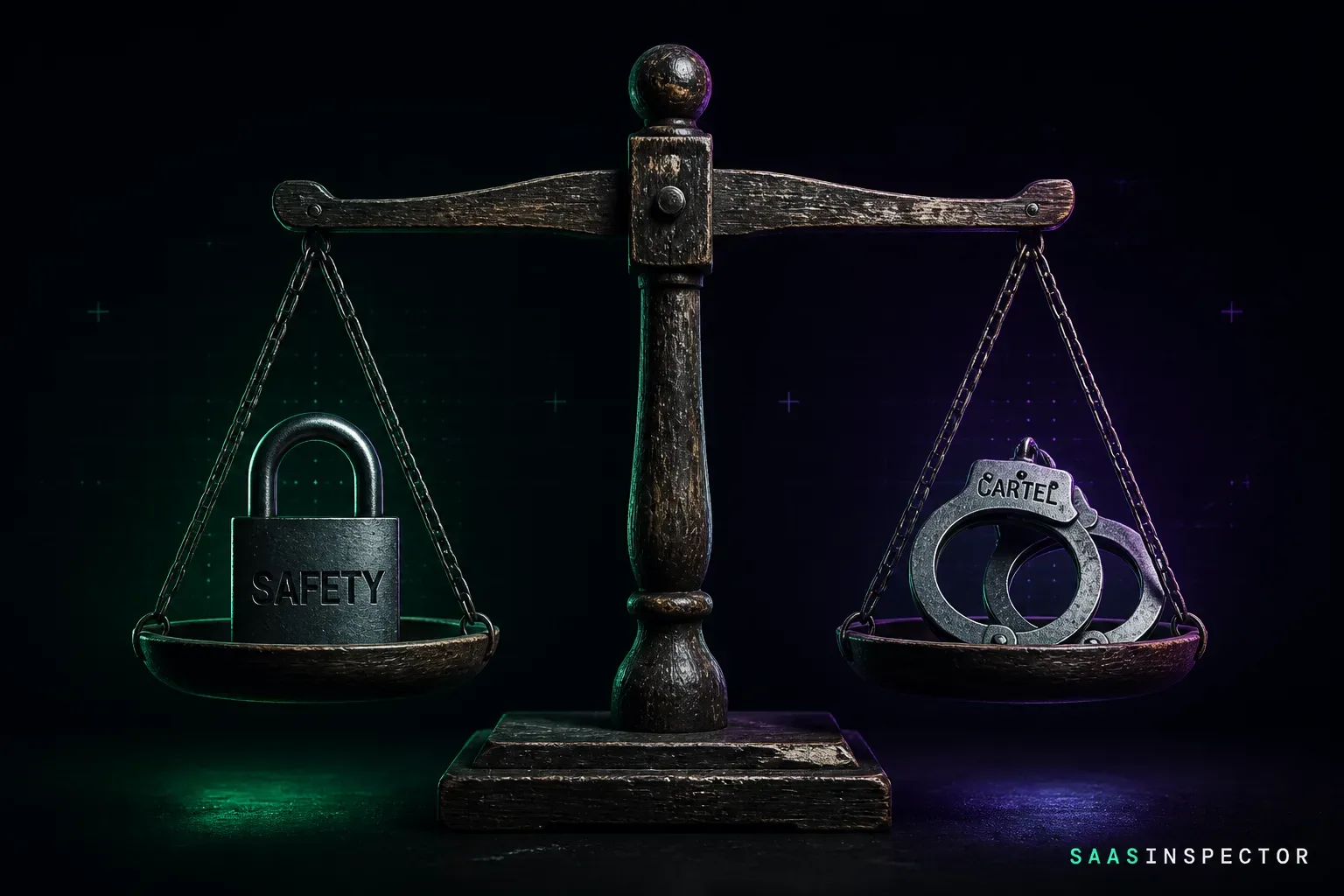
The most detailed rebuttal came from Aidan Gomez, CEO of Cohere. He supports independent testing of powerful AI, but argues the proposal would let a few dominant labs set the rules for every developer, with barriers to entry that only they can clear: massive compute, permanent monitoring, dedicated safety teams and deep government connections. He also points out that the few evaluators labelled independent are funded by the companies they audit, and calls the plan "a cartel by any other name". Niels Rogge, a machine learning engineer at Hugging Face, argues Amodei's real worry is Chinese open-weight models from companies such as DeepSeek and Z.ai.
Why many safety researchers still welcome it
Safety researchers who spoke to The Verge were more positive. Apollo Research CEO Marius Hobbhahn called it "one of the best things for safety in a long time if it actually happens", and Redwood Research CEO Buck Shlegeris said he was cautiously optimistic. Many of the same people worry about safety-washing: that labs will bring in auditors and produce paperwork without actually slowing down. Several industry experts also told The Verge that the slowdown calls are aimed almost entirely at the largest frontier labs, defined by size, rather than at smaller companies or open-source developers.
What it means if you buy AI tools
Nothing changes in the tools you use today. There is no agreement yet, only a verbal commitment, and no regulation is coming under the current administration. What is worth watching is whether embedded evaluators actually get the access Amodei describes. If they do, claims about how safe models like Claude, ChatGPT and Gemini are would, for the first time, be checked from the inside by someone other than the company making them, against a published standard like AEF-1.
- OpenAI, Anthropic, Google have been in talks on AI safety for weeks, TechCrunch AI ↗
- Jensen Huang took a call from Trump, and showed off something else, too, TechCrunch AI ↗
- Nvidia CEO Jensen Huang tells Trump ‘we’re not going to let [an AI slowdown] happen’, TechCrunch AI ↗
- Not everyone is convinced that Big AI's proposed slowdown is really about safety, The Decoder ↗
- Is Big Tech’s AI slowdown a safety pact or a cartel?, The Verge AI ↗
- [AINews] AEF-1 standard emerges for Third Party Evaluators, as Xai, OpenAI, and Anthropic all cosign, Latent Space ↗