Google Bets the Classroom on Gemini With Three Coordinated Moves
Google has simultaneously revamped Search, expanded Gemini Live, and launched a dedicated student hub, making a clear play to become the default AI tool for students before rivals can establish the habit.

Back-to-school season has become a competitive battleground for AI companies, and Google is not arriving quietly. This week the company announced a coordinated sweep of education features spanning Google Search, Gemini Live, and the Gemini app itself, timed deliberately to the start of the academic year. The moves cover the full study workflow, from initial research through practice and self-testing, in a way that no single feature update could achieve on its own.
The timing matters as much as the features. OpenAI, Knowt, and Gauth are all chasing the same student audience, and whichever tool a student adopts in September tends to stick. Google is using its distribution advantage across Search and the Google app to make Gemini the path of least resistance, rather than asking students to download something new.
Search gains interactive simulations and AI-generated quizzes
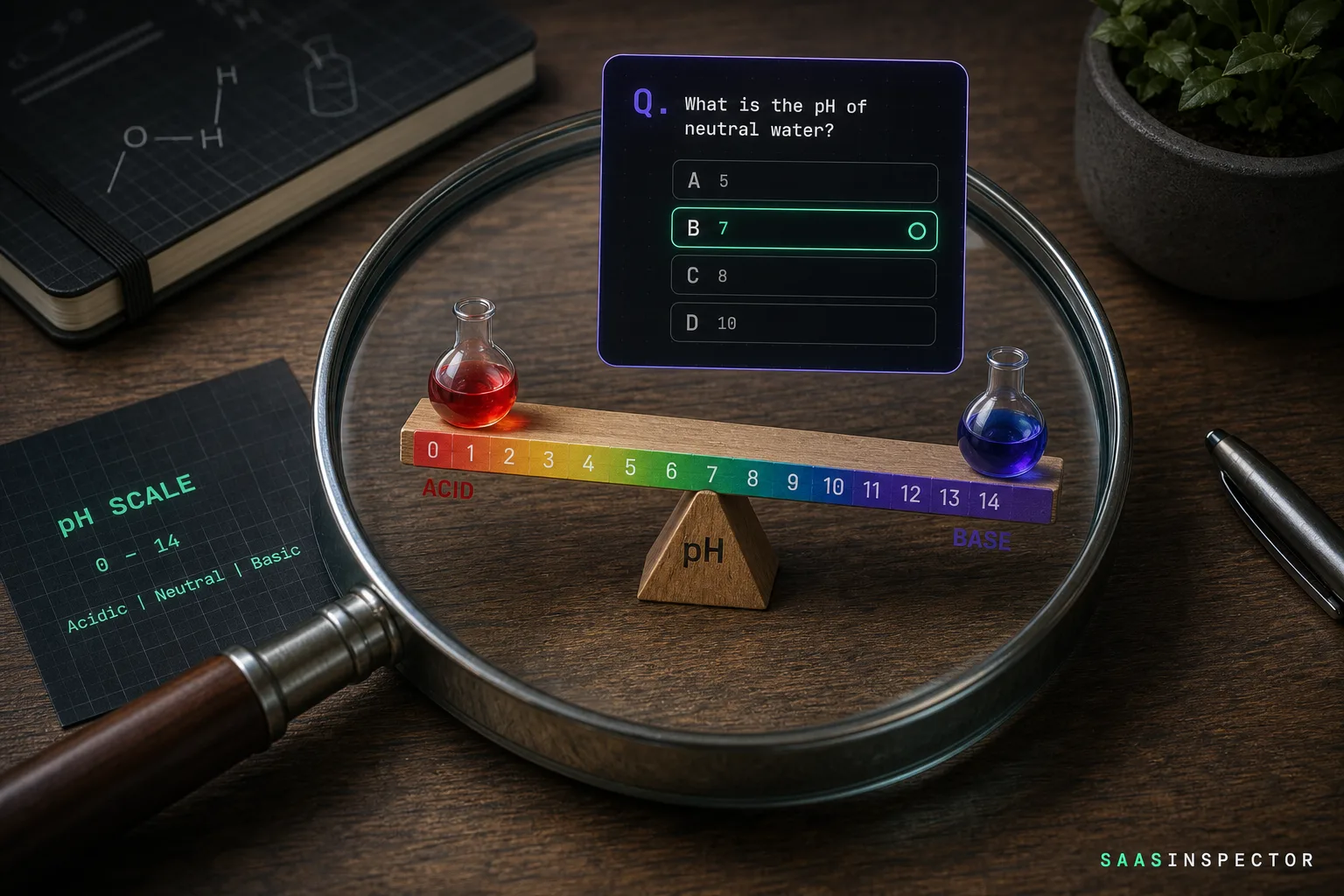
The most visible changes arrive in Google Search itself. AI Mode can now generate custom interactive visuals and simulations in response to subject-specific queries, so a search for "pH scale" can produce a manipulable diagram rather than a static image. Students can then push further with follow-up prompts, asking AI Mode to plot specific examples onto the visual. Separately, Search now generates customised practice quizzes covering science, mathematics, humanities, and foreign languages, as well as named standardised tests including the SAT, ACT, GRE, MCAT, LSAT, and others. Those test-prep quizzes draw on content from partners including The Princeton Review, Careers360, PhysicsWallah, and Akira Enem, which gives Google a defensible answer to quality concerns. Both the generative UI tools and practice quizzes are available globally in English; Google explicitly says the practice quizzes are free of charge. In the coming weeks, Google Lens inside the Google app will also gain the ability to analyse a photo of a student's handwritten work, identify errors, and provide coaching without simply giving away the answer.
Gemini Live adds Deep Research with background processing
On the Gemini side, Google is integrating Deep Research into Gemini Live so that students can commission a multi-step research report and then have a spoken conversation about the findings. Crucially, the report runs in the background, meaning a student can close the chat or lock their phone and receive a notification when the output is ready. This removes one of the more frustrating friction points of current AI research tools, where a user has to stay in the session while the model works. Gemini can also now generate functional 3D simulations directly inside a response, with a prompt such as "show me how DNA works in 3D" producing a rotatable, zoomable model rather than a diagram or a video link.

The Gemini student hub unifies flashcards, notebooks, and calendars
The third leg of the announcement is a dedicated student hub inside the Gemini app, which consolidates the tools a student might otherwise hunt across multiple products. From within the hub, users can maintain a study notebook, create flashcards, run practice quizzes, and, notably, have Gemini read a syllabus and push test dates and deadlines directly into Google Calendar. Google is also bringing notebook functionality into AI Mode in Search, so students can save research directly into a per-subject notebook without switching apps. Eligible US students get one year of Google AI Pro at no cost, which includes higher Gemini usage limits, 5TB of storage, and Google Health Premium. For students outside the US, Google points to Google AI Plus, a lighter subscription tier with 400GB of storage.
What this means for buyers and students evaluating AI tools
For anyone currently choosing between AI study tools, Google's announcement shifts the comparison significantly. The combination of Search integration, no-cost quiz access, and a unified hub means Gemini now covers ground that previously required separate apps or paid subscriptions elsewhere. The weak points to watch are consistency and depth: AI-generated quizzes and simulations are only useful if the content is accurate, and the partnership with established test-prep brands is a smart hedge but not a guarantee. The Lens homework feature is listed as rolling out over coming weeks rather than available now, while Gemini’s functional 3D simulations are already available. That said, Google's sheer reach inside Android, Chrome, and Search gives these features a distribution advantage that standalone education apps will struggle to match.

- Google packs Search and Gemini with new AI study tools, TechCrunch AI ↗
- Google Gemini is getting a dedicated student hub, The Verge AI ↗
- 5 new ways to level up your learning with Search, Google AI Blog ↗